REVIEW · CARTAGENA
Private Walking Tour in Cartagena Walled City & Getsemaní
Book on Viator →Operated by NEXPERIENCE · Bookable on Viator
Cartagena’s streets have a way of grabbing you fast. This private walking tour stitches together the Walled City and Getsemaní with a guide who helps you understand what you’re seeing, not just where to stand for photos. I love the way it moves from major colonial landmarks to the everyday Caribbean feel of Getsemaní, and I also like that it’s built for a custom pace so you can spend a little more time on what you care about.
The main drawback is practical: the route is mostly walking, and the heat can hit quickly. There’s also a lot packed into 2 to 3 hours, so you’ll want comfortable shoes and a game plan for what to prioritize if you arrive hungry, thirsty, or tired.
If you get a guide like William, Álvaro, Karen, Legaxy, Elis, Ingrid, Dimas, Alvaro David, or Mercedes (names that show up in strong feedback), you’ll likely get clear explanations and good local recommendations after the walk.
In This Review
- Key points worth knowing before you go
- Why this private walk makes sense for first-timers
- Price and value: what $49 buys (and what to watch for)
- Getting started at Camellón de los Mártires and Plaza de Cervantes
- The Clock Tower, the Golden Key area, and the enslavement route
- Heredia again, Portal de los Dulces, and Plaza de la Aduana
- Museums you pass: Museo de Arte Moderno and the Gold and Emerald collections
- San Pedro Claver to the Inquisition Palace: faith, human rights, and fear
- Plaza de la Proclamación and Santa Catalina Cathedral
- Parque Centenario and the San Juan street wall of art
- Calle San Juan, salsa and champeta, and Getsemaní’s umbrellas
- Finishing near Plaza Bolívar and pirate-defense vibes
- Tips to make your guide work for you (not against you)
- Who should book this tour, and who might want a different plan
- Should you book the Private Walking Tour in Cartagena Walled City & Getsemaní?
- FAQ
- How long is the private walking tour in Cartagena’s Walled City and Getsemaní?
- Where does the tour start and where does it end?
- Is this a private tour or a group tour?
- What’s included in the price?
- Is water provided during the tour?
- What areas will we cover during the walk?
- Are the sights along the route ticketed?
- Is there free cancellation?
Key points worth knowing before you go
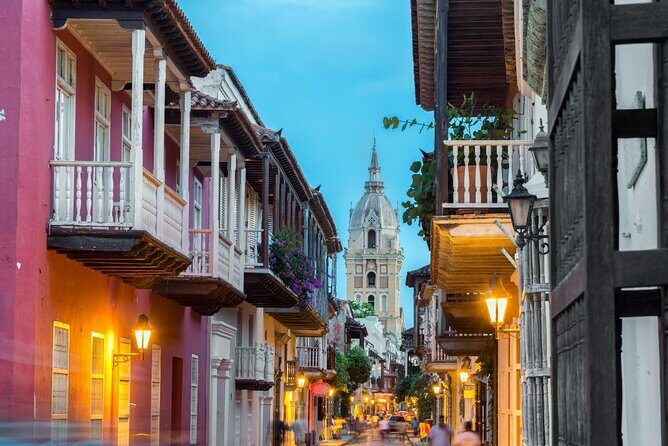
- Private format with your own pace, so you’re not stuck following a large group through tight corners
- Hotel pickup plus private transportation, which helps a lot if you’re short on time
- Landmarks that connect to real stories, from Indigenous roots to the enslavement routes and independence
- Getsemaní street art and culture, including the umbrellas and music vibe on Calle San Juan
- Most stops are quick, so plan for photo pauses rather than long museum time
- Bottled water is included, but I still recommend bringing a little extra if you run hot
Why this private walk makes sense for first-timers
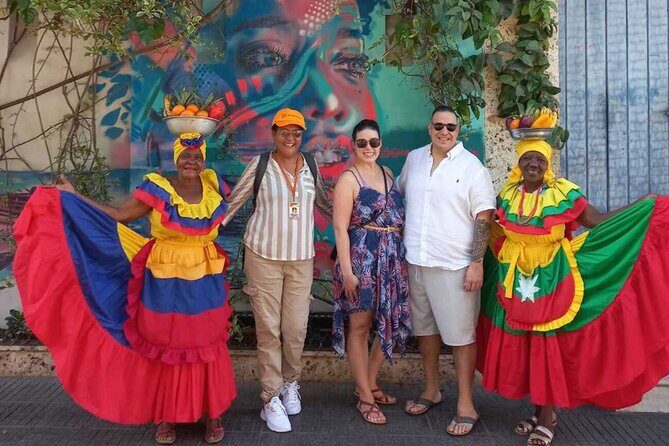
Cartagena can overwhelm you in a good way. The colors, the walls, the churches, the squares, the smells of fruit and street food. A private guide turns that swirl into something you can actually remember.
This walk works because it’s structured like a story. You start with orientation in the older core, then you move through the city’s major “big themes”: colonization, religion and power, slavery and human rights, and finally the independence story and Getsemaní’s street-level culture. It’s not just sightseeing; it’s a map in human form.
And since it’s private, you can ask for changes. If you care more about architecture, say so. If you’d rather trade some museum time for more time in Getsemaní, that’s the point of going this way.
Other Walled City and Old Town tours in Cartagena
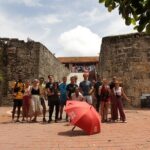
Price and value: what $49 buys (and what to watch for)
At $49 per person for about 2 to 3 hours, the value comes from three things: guidance, convenience, and efficiency.
First, you’re paying for an expert local guide who can explain the why behind the walls, plazas, and churches. Second, you get hotel pickup and private transportation included, so you’re not scrambling to get from your hotel to the starting streets. Third, the tour is paced so you cover a lot without feeling like you’re sprinting nonstop.
Two practical notes. Bottled water is listed as included, but in hot Cartagena I treat that as helpful, not as your only hydration plan. And while this is a guided experience, the route does include places linked to snacks, coffee, and sweets, so decide ahead of time how you want to handle optional purchases. If something isn’t your style, keep moving and let your guide know you’d rather not stop.
Getting started at Camellón de los Mártires and Plaza de Cervantes
The tour begins in El Centro, with orientation before you start walking. Your guide welcomes you and helps you get comfortable with the layout, which matters in Cartagena because streets loop and squares appear like surprises.
The first official stop is Camellón de los Mártires – Plaza de Cervantes. This is where the tour gives you a bigger-than-you-thought opening: it connects the land to Indigenous peoples who lived here long before the Spanish conquest, and it explains how their legacy shaped the city’s multicultural identity.
Why I like this start: it keeps you from treating Cartagena like it began in 1500-something. It also helps you read later parts of the walk, because you’ll notice how many layers are stacked in the same street view.
The Clock Tower, the Golden Key area, and the enslavement route
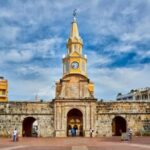
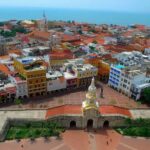
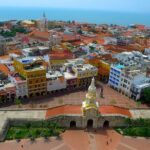
Next you head to the famous Monumento Torre del Reloj, often described as the city’s “Golden Key.” You’ll also spend time in Plaza del Ecuador, which the tour notes was formerly Plaza del Esclavo.
This part matters because it points you toward a darker thread in Cartagena’s colonial system. The guide sets up the route along Porto Carrero and Candilejo streets, described as the beginning of the old enslavement route.
Also at this stage, you meet Pedro de Heredia in monument form. Even if you don’t know who he is yet, your guide uses his presence to anchor what comes next: who built the early city, how it expanded, and why the walls and ports mattered so much.
Heredia again, Portal de los Dulces, and Plaza de la Aduana
From here the walk keeps flipping between story and street-level character.
At Monumento a Pedro de Heredia, the tour brings in a surprising connection involving Miguel de Cervantes and links it to Colombian literature. Then it returns to the grim side of the past with references to slave markets in the area. The guide uses that contrast to show how Cartagena can feel charming in the present and still carry violent history underneath.
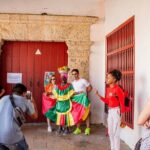
Then you get to Portal de los Dulces. This is where the tour becomes more sensory: colorful arcades, a traditional sweet market, and symbols tied to women’s roles during slavery and their descendants continuing traditions. If you like the idea of history that includes food and everyday culture (not only dates and battles), this stop hits.
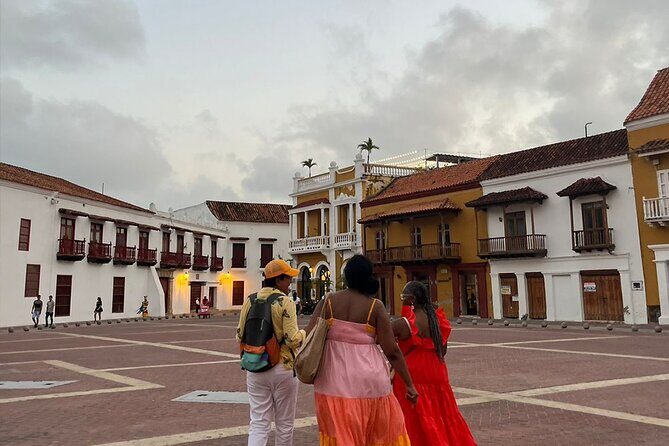
After that, you reach Plaza de la Aduana, described as the heart of colonial trade and commerce, and again tied to the trafficking of enslaved people. The guide also frames the square using key nearby architecture, including the Municipal Hall, one of Cartagena’s oldest civil buildings. You’ll get a sense of why plazas mattered: they were where economic power and social power overlapped.
Other Getsemani tours in Cartagena

Museums you pass: Museo de Arte Moderno and the Gold and Emerald collections
Art is part of this route. The tour passes by the Museo de Arte Moderno Cartagena, and it specifically points you toward two named collections mentioned in the tour description: the Gold Museum with Indigenous artifacts from Colombia’s Caribbean region, and the Emerald Museum with precious stones associated with royalty and celebrities.
Even if you don’t spend long inside, I like that the walk acknowledges that Cartagena’s culture isn’t only churches and forts. It’s also objects, craftsmanship, and the way modern identity connects back to older regions.
One caution: this is a walking tour with short stop times. If you want more museum time, ask your guide early in the walk. The private format is exactly what you want for trading a few minutes on the street for a longer look inside.
San Pedro Claver to the Inquisition Palace: faith, human rights, and fear
Religion shows up in two very different ways on this walk.
At Plaza de San Pedro Claver, the tour points to San Pedro Claver, Slave of the Slaves. You’ll see the architecture of the church and the museum-monastery bearing his name, described as the headquarters of Human Rights. This isn’t just a landmark stop; it’s a shift toward how moral action gets remembered alongside colonial brutality.
Then you head to Palacio de La Inquisicion, one of the most striking and infamous buildings on the route. The tour describes it as the early 17th-century seat of the Holy Office of the Inquisition in Cartagena, where people suspected of heresy or accused of witchcraft or blasphemy were interrogated and tried. The guide also notes that the museum includes original torture devices and exhibits on colonial history.
If you’re the type of person who prefers cheerful history, this stop may feel heavy. But if you want the truth of Cartagena’s past in one walk, this is where you feel the weight of the city’s power structures.
Practical tip: this is a building where photos and quick glances can’t replace attention. Give it a few focused minutes and let your guide explain what the building was designed to do.
Plaza de la Proclamación and Santa Catalina Cathedral
The tour then moves into independence and religious architecture.
At Plaza de la Proclamación, you learn that on November 11, 1811, Cartagena declared independence from Spanish rule, described as the first city in Colombia to do so. The square is framed by colonial-era buildings, including the Archbishop’s Palace. It’s one of those places where local life still flows around historical meaning.
After that comes the Catedral Santa Catalina de Alejandría. The tour calls out the construction span of 1577 to 1612, plus its bell tower and stone facade as major photo magnets. Inside, you’ll be pointed to religious art and original altars, and you’ll hear how the cathedral served as a spiritual and social center over centuries.
If you like architecture that shows you how politics and religion worked together, this is a highlight. You’ll walk away with a cleaner understanding of why the church domes and stone fronts look the way they do.
Parque Centenario and the San Juan street wall of art
Cartagena changes mood when you move beyond the heaviest monuments.
At Parque Centenario, the tour describes it as one of the city’s “lungs,” a former railway station that connects to the Tropical Dry Forest. The stop is short, but the framing matters. Your guide may point out animals you could spot in the area, like sloths, squirrels, and iguanas, and explains the shade-and-breath effect this kind of park provides during a walking day.
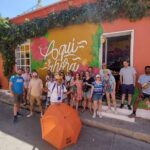
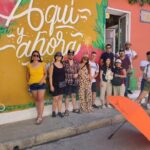
Then you enter the creative zone on Cl. de San Juan #25-25. Here the tour shifts toward modern culture: graffiti, café culture, and references to local and Colombian icons mentioned in the walk. The names included in the tour description include Blas de Lezo, Gabriel García Márquez, Mister Black, and Joe Arroyo.
Even if street art isn’t your main interest, I think this stop is a smart way to show how Cartagena’s identity continues after independence. It’s not stuck in the past; it keeps generating new voices.
Calle San Juan, salsa and champeta, and Getsemaní’s umbrellas
The tour reaches its most playful energy in Getsemaní.
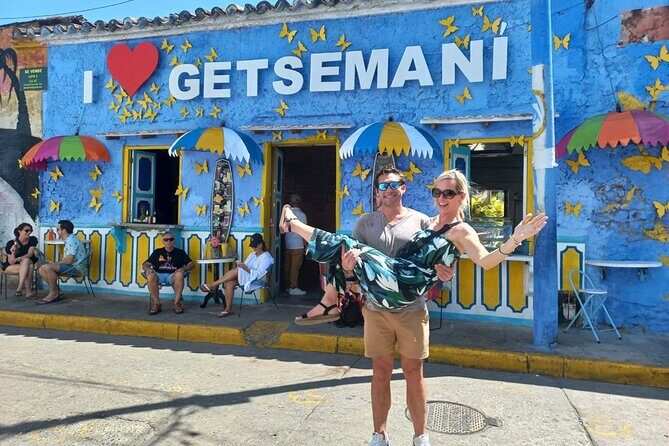
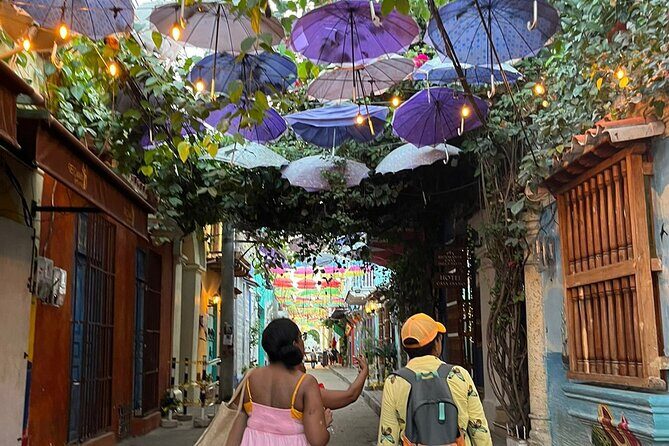
You’ll go through streets linked in the description to the Holy Trinity, and the walk references the sound of salsa and African champeta along Calle San Juan. Then you arrive in Barrio Getsemaní, known in the tour description for colorful umbrellas overhead, street art, and distinct colonial architecture.
This is the part of the walk where you feel the city’s everyday pace. It’s less about a single building and more about the atmosphere: music drifting in, murals changing your view of a street corner, and people treating the sidewalks like part of life.
If you want photos, schedule more time here. Getsemaní is also where it’s easy to forget how hot you are, so pace yourself.
Finishing near Plaza Bolívar and pirate-defense vibes
The ending phase brings you back to military and defensive history.
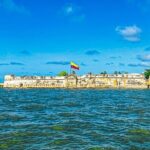
At Plaza de Bolivar, the tour references pirates and corsairs and connects the idea to bastions and Spanish military constructions. You’ll be directed toward a refresh moment in the square, and the guide links it to Cartagena’s defense strategy.
Finally, the tour ends in Getsemaní near Plaza del Pozo, though your guide can end in a different spot you prefer within the Walled City. That flexibility is more valuable than it sounds. If you want to walk less after the tour, you can arrange a drop-off-style end location rather than dragging yourself back toward your hotel.
Tips to make your guide work for you (not against you)
Here’s how I’d set yourself up for a smooth day:
- Go early if you can. One guide-feedback thread specifically points out morning walking helps because it gets hot fast.
- Wear shoes for cobblestones. The Walled City is gorgeous, but it’s also uneven underfoot.
- Tell your guide your top two priorities before you start. This tour is built for customization, so use that power.
- Decide your money boundaries up front. If sweets, coffee, or shops appear on the route, decide what you want to buy before you’re in the moment.
- If weather turns, stay flexible. Rain can disrupt plans, but the tour description and feedback show guides can keep things moving. If you’re planning heavy outdoor time, bring a small rain layer.
One more practical thought: bottled water is listed as included, and many guides are praised for being helpful and fun. Still, if you’re the type who hates running low on essentials, bring a second bottle or electrolytes just in case.
Who should book this tour, and who might want a different plan
This tour is best for you if you want:
- a first visit orientation to the Walled City and Getsemaní
- a guide to explain Indigenous roots, slavery-related history, religious sites, and independence in one walking loop
- the convenience of hotel pickup and private transport
- a walk that’s flexible enough to shift toward music, streets, and art
It may not be ideal if:
- you hate walking in heat and prefer slow museum time
- you want a long sit-down experience inside major museums and churches
- you’d rather avoid any stop that feels like it could involve shopping. (You’re not forced to buy anything, but deciding to skip stops is easiest when you plan mentally ahead.)
Should you book the Private Walking Tour in Cartagena Walled City & Getsemaní?
I’d book it if this is your first or second day in Cartagena and you want your bearings fast. The price is reasonable for what you get: a private guide, hotel pickup, and a route that balances major landmarks with Getsemaní street culture. It’s also a smart way to get the context that makes the photos mean something.
I’d think twice if heat and walking distance are big issues for you, or if you strongly prefer zero shopping stops at all costs. In that case, ask your guide to keep the route strictly to streets and monuments you care about.
If you do book, I’d recommend going early, bringing comfy shoes, and sharing your priorities at the start. That one move is usually what turns a good walking tour into the one you remember.
FAQ
How long is the private walking tour in Cartagena’s Walled City and Getsemaní?
The tour runs about 2 to 3 hours.
Where does the tour start and where does it end?
It starts at Cl. 29 #8b-124, El Centro, Cartagena de Indias. It ends at Cl. de San Juan #25-25 in Getsemaní near Plaza del Pozo, and your guide can end in another location you prefer within the Walled City.
Is this a private tour or a group tour?
It’s private. Only your group participates.
What’s included in the price?
The price includes bottled water, private transportation, a tour guide, and hotel pick-up.
Is water provided during the tour?
Yes, bottled water is listed as included.
What areas will we cover during the walk?
You’ll cover key parts of the Walled City and then move into Getsemaní, including major squares, churches, defensive bastions, and street-art culture on Calle San Juan.
Are the sights along the route ticketed?
The tour description lists admissions for the listed stops as free.
Is there free cancellation?
Yes. You can cancel up to 24 hours in advance for a full refund.