REVIEW · CARTAGENA
Cartagena: Historic Center and Getsemaní Shared Walking Tour
Book on GetYourGuide →Operated by Nexperience · Bookable on GetYourGuide
Cartagena has walls that talk back. This shared walk connects the Walled City to Getsemaní, with stories that jump from conquest and colony to independence, and then land on street-level music like salsa and African champeta. I especially like how the route reads like a map of cause-and-effect: what happened here still shows up in the streets you walk today.
I also like the balance between hard history and everyday culture. You’ll hear about Pedro de Heredia, the enslaved experience tied to squares and alleyways, and then you’ll cap it with rhythm in the streets around Calle San Juan. San Pedro Claver gets its moment too, including the way the site ties faith, human suffering, and human rights together.
One thing to plan for: it’s a 150-minute walking tour in open-air parts of Cartagena. If the sun is intense (or rain rolls in), you’ll feel it, so wear comfortable shoes and come ready for weather.
In This Review
- Key takeaways before you go
- Starting in the right spot: Plaza Cervantes and the Clock Tower
- Golden Key moments: Plaza del Ecuador and the Plaza del Esclavo story
- Porto Carrero, Candilejo, and Pedro de Heredia at street level
- Sweet-sounding stops: Portal de los dulces and the woman’s role
- Plaza de la Aduana, municipal buildings, and the trade behind the walls
- San Pedro Claver and the “Bay of Souls” defense story at San Ignacio Bastion
- Plaza Bolívar pause and Centennial Park: shade, animals, and a different Cartagena
- Getsemaní’s umbrellas and graffiti corridor, ending with salsa and champeta
- Price and value: why $12 feels like a bargain
- How to make the walk more comfortable in Cartagena heat
- Who should book this tour (and who might not)
- Should you book this Cartagena Historic Center and Getsemaní tour?
- FAQ
- How long is the Cartagena Historic Center and Getsemaní shared walking tour?
- Where do I meet for the tour?
- How much does the tour cost?
- What areas of Cartagena does the tour cover?
- What will I learn about during the tour?
- What languages are offered?
- Is the tour wheelchair accessible?
- Are food and drinks included?
- Is hotel pickup included?
Key takeaways before you go
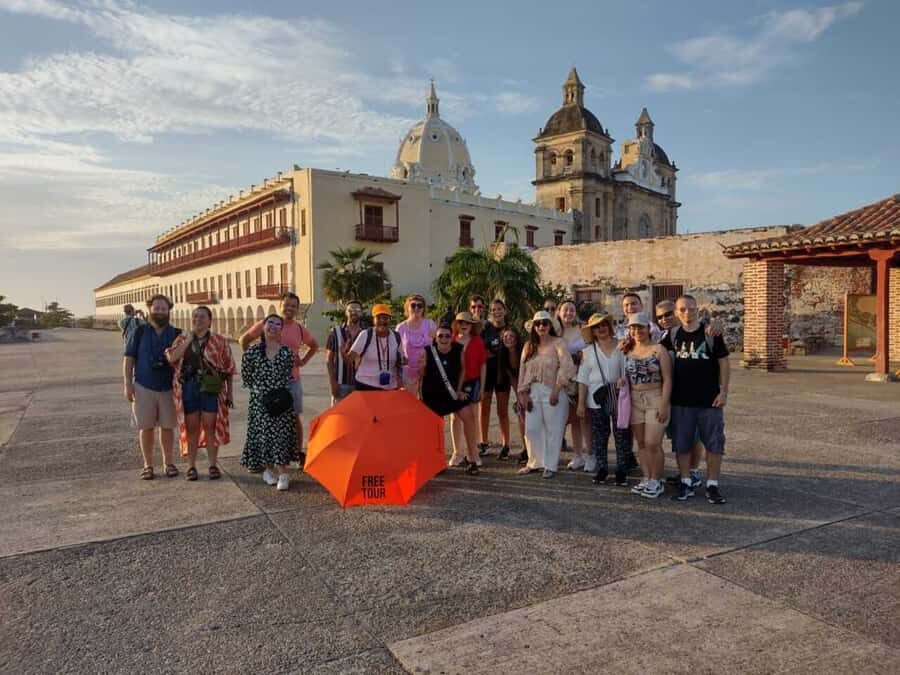
- Clock Tower orientation: You meet at Plaza Cervantes, right by the orange-umbrella meetup in front of the Clock Tower.
- A slavery-history route, explained respectfully: You’ll walk through places tied to commerce and enslavement, not just pretty stone.
- Guia energy matters: Many guides are praised for staying engaging, keeping groups in shade, and answering questions.
- Culture isn’t just background: Expect moments of salsa and African champeta, with a few guides teaching dance steps.
- Getsemaní has its own visual language: Umbrellas, graffiti, and street architecture aren’t decoration here, they’re the neighborhood speaking.
- Worth it at $12: For 2.5 hours of guided context in two key areas, it’s a low-cost way to get your bearings fast.
Starting in the right spot: Plaza Cervantes and the Clock Tower
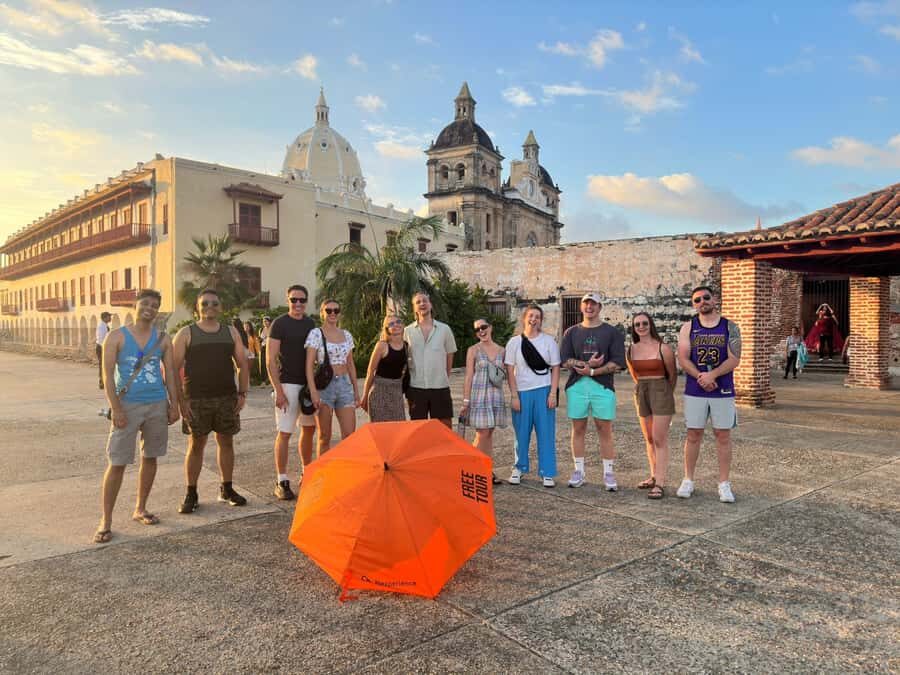
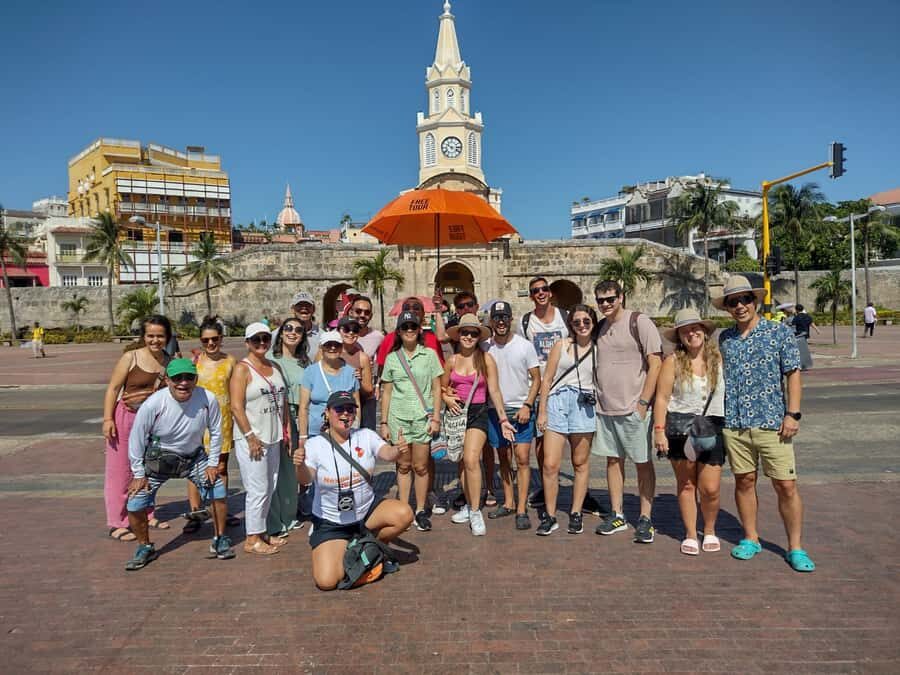
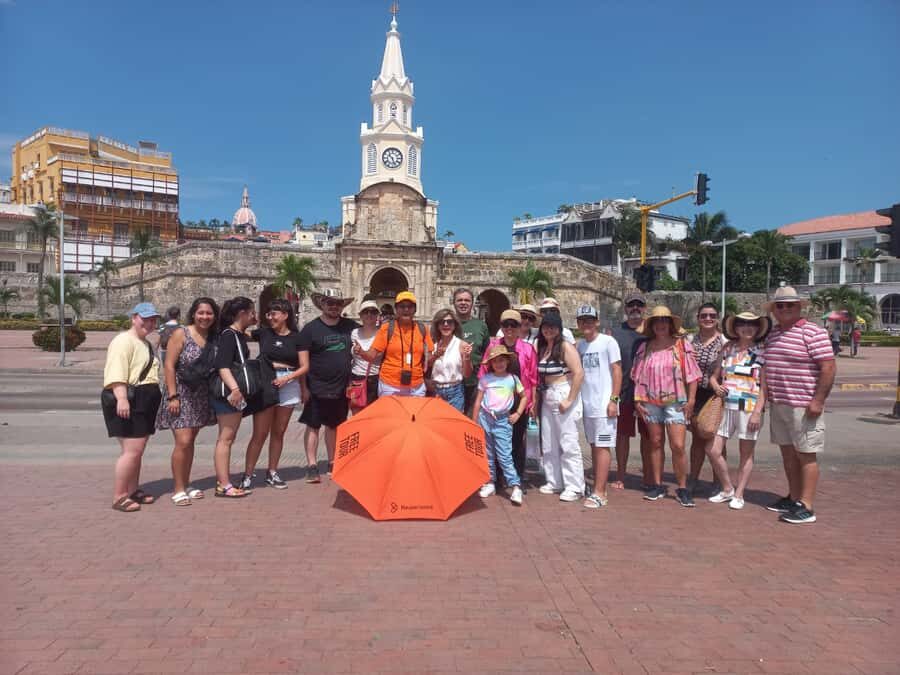
Your best move in Cartagena is simple: get oriented fast. This tour starts at Plaza Cervantes, in front of the Clock Tower area along Camellón de Los Mártires. Look for the orange umbrella. It’s an easy meetup, which matters because Cartagena’s streets can confuse you even when you think you’re on track.
From that first cluster of buildings, you get a framework for everything that follows. The guide doesn’t just rattle dates. You’ll hear how indigenous people were here before the Spanish arrival, and you’ll understand how the city’s power shifted once Europeans and empires showed up. That sets the tone for the whole walk: Cartagena isn’t treated as one time period. It’s treated like layers.
If you’re coming for photos, this spot also helps you settle in. The Clock Tower and surrounding plazas make a clean “start line,” so you can stop worrying about where to look next. And once you’re moving, you’ll keep getting those small orientation cues that make later wandering easier.
Other Walled City and Old Town tours in Cartagena


Golden Key moments: Plaza del Ecuador and the Plaza del Esclavo story
Next, the route takes you through the “Golden Key of Cartagena” / clock tower area and into the plaza network around Plaza del Ecuador and Plaza del Esclavo. It might sound like just another square hop, but here’s what makes it click: the guide uses these points to show how the city organized itself—who had power, who had to serve, and how that hierarchy shaped daily life.
Plaza del Esclavo isn’t just a name. The route treats it as a prelude to the enslavement path you’ll hear about next, including the streets tied to Porto Carrero and Candilejo. You’ll get context for what you’re seeing before you walk it. That means you’re not staring at stone and wondering what it means.
One practical tip: because this section happens in town-center streets and plazas, plan to stay alert. Some parts can be busy. Keep your spot with the guide, and don’t drift far for photos right at the transitions between plazas.
Porto Carrero, Candilejo, and Pedro de Heredia at street level
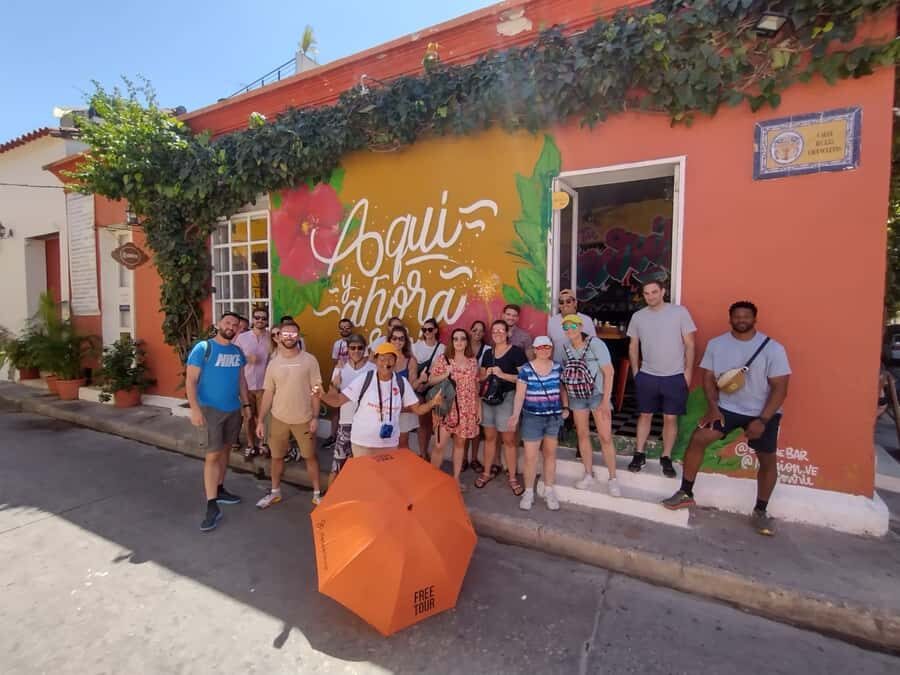
Cartagena’s past can feel enormous. What’s useful on this tour is that it shrinks the story down to the scale of a human street walk.
You’ll meet Pedro de Heredia in the timeline. The guide uses him to explain the early colonial push and the way Cartagena became a machine for wealth and control. Then you move into the streets tied to enslavement history—Porto Carrero and Candilejo—where the conversation shifts from broad empire to lived experience.
This is where the tour earns trust. The guide doesn’t treat slavery as a trivia topic. The route introduces the places connected to commerce and exploitation, and it keeps the tone respectful. You’ll also get the local framing of Caribbean miscegenation and inherited traditions, not as a clean “happy ending,” but as part of the city’s real makeup.
If you prefer history that feels grounded in what you can touch, you’ll like this portion. If you want only fortress views and colonial balconies, you might find this section emotionally heavy—but it’s still handled in a clear, guided way.
Sweet-sounding stops: Portal de los dulces and the woman’s role
Cartagena’s story isn’t all conquest and chains. In the middle of the darker chapters, the tour points you toward the Portal de los dulces, which the route connects to female activity during times of slavery—and to traditions that descendants still carry today.
This stop gives you a different angle on survival and culture. Food-related commerce often shows up in places like Cartagena, and the guide uses it to explain how daily work could support families, preserve customs, and shape community life long after the original systems changed.
You’ll walk away seeing streets differently. Instead of thinking only about the biggest buildings, you’ll notice small commercial corners and wonder about who used them and why. That’s one of the reasons a good guided walk matters: you start looking with better questions.
Plaza de la Aduana, municipal buildings, and the trade behind the walls
One of the most interesting segments comes through the Plaza de la Aduana area. Here the guide connects the commercialization of merchandise—including goods tied to the enslaved system—to the historic function of Cartagena as a port.
You also see important civic architecture around this area, including the municipal hall. It’s a strong moment because it shows how economic power and governance grew together. Cartagena wasn’t only a battlefield. It was also an administrative and trading hub, and the tour helps you connect those dots.
Then the tour adds art into the mix. You’ll hear about the Museum of Modern Art and the Gold Museum and Emerald Museum—Caribbean and Latin American art themes from the mid-1900s, plus indigenous pieces tied to the Colombian Caribbean, and the emerald story that people love to hear about in Cartagena.
Quick expectation note: the tour data doesn’t promise museum entry time. Treat these as guided context stops tied to what the museums represent, not as “you will spend an hour inside each.” If you want museum time later, you’ll be better at choosing which one to visit after the walk.
Other Getsemani tours in Cartagena



San Pedro Claver and the “Bay of Souls” defense story at San Ignacio Bastion
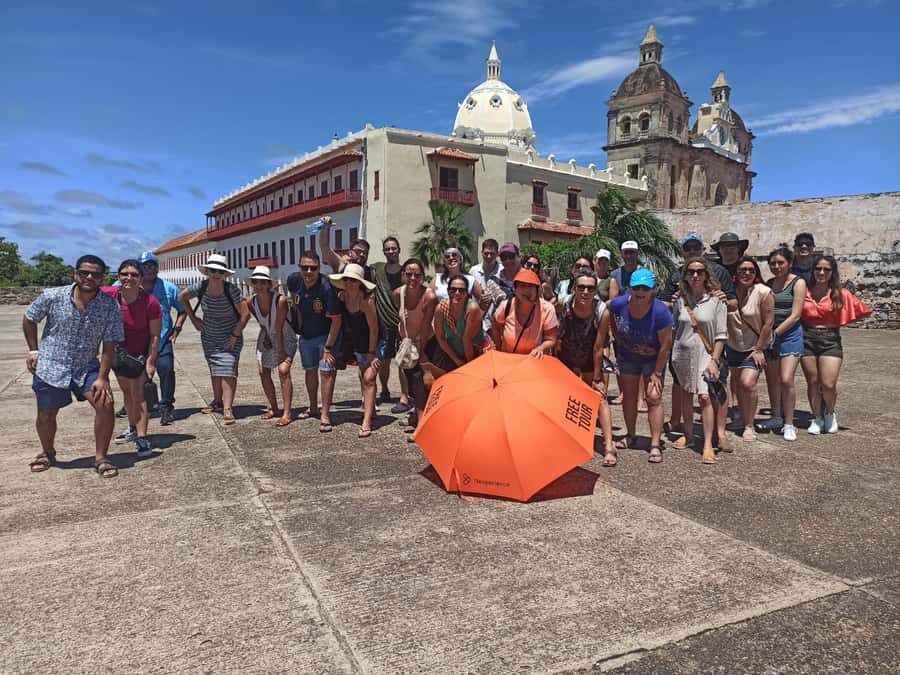
Religion has a visible footprint in Cartagena. You’ll visit the area around San Pedro Claver—Slave of the Slaves—and the church and museum-monastery that carry his name. The guide ties it to the Headquarters of Human Rights, which is a meaningful link: faith here isn’t just decoration. It’s part of how the city frames moral responsibility.
After that, the tour shifts from spiritual and social history to military architecture. You’ll reach San Ignacio Bastion, built to defend the Bay of Souls from pirate attacks. The guide’s focus is on the history behind the walls of Cartagena—why these structures exist, and what kind of threat they were designed for.
This is also where guides often get especially fun. Several past guides are praised for mixing facts about corsairs and pirates with explanations of Spanish military construction and strategy. That blend helps the bastion feel more than scenery.
If you’re prone to drifting into “facts mode,” keep your eye up and your questions on. This is the part where it’s worth asking how the walls worked in practice, not just who built them.
Plaza Bolívar pause and Centennial Park: shade, animals, and a different Cartagena
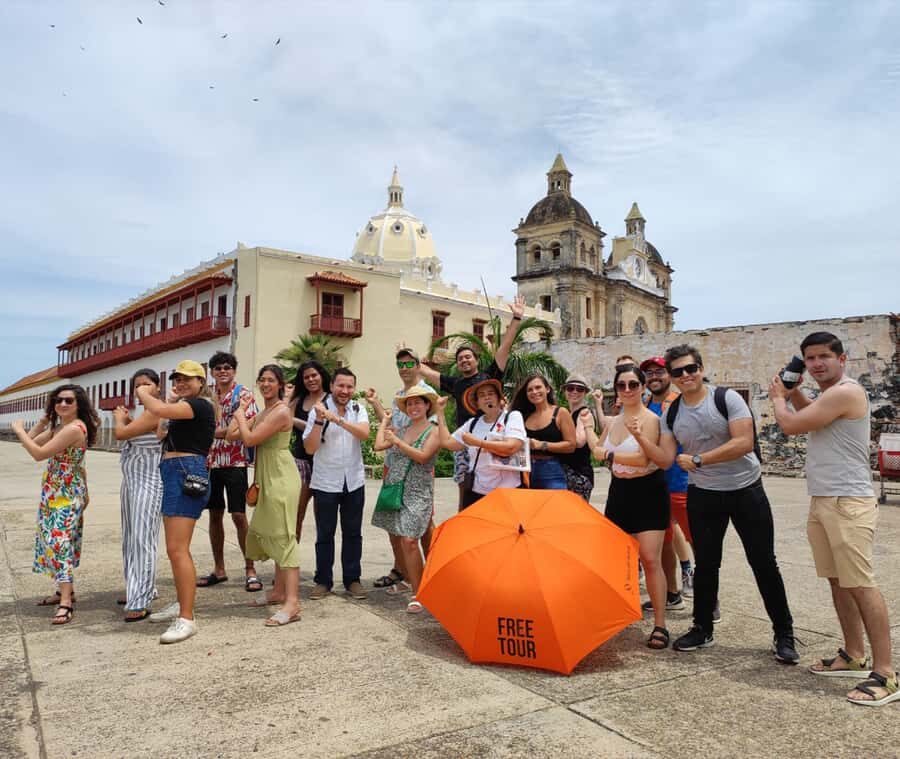
You’ll hit Plaza Bolívar as a refresh point. It’s not a long sit-down moment, but it gives you a chance to reset your water, your focus, and your energy. In a city like Cartagena, breaks are not luxury. They’re how you keep enjoying the walk.
Then you move into the lungs of Cartagena: Centennial Park. The tour explains it as the former railway station and highlights the idea of a tropical dry forest relic. That matters because it shows another side of Cartagena—one where nature and shade are part of the city’s rhythm, not an afterthought.
This is also where animal spotting enters. In the guidance and descriptions around the park, the tour points out things like sloths, squirrels, and iguanas. In reviews, people also describe seeing monkeys and other wildlife in this general area, so keep your eyes open and don’t be surprised if your guide helps you spot motion in the trees.
Drawback to note: this portion is still outdoors. Even with shade, Cartagena sun can feel relentless. If you’re sensitive to heat, take the guide’s shade-route seriously and don’t ignore sunscreen.
Getsemaní’s umbrellas and graffiti corridor, ending with salsa and champeta
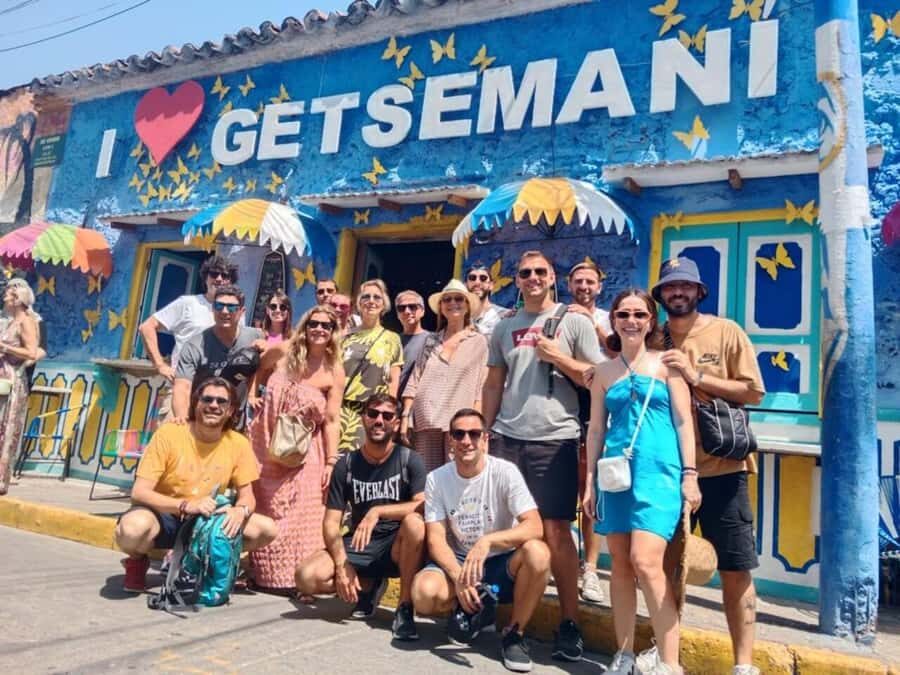
Getsemaní is where Cartagena stops being only historical. It becomes social. You’ll walk through a cultural corridor marked by umbrellas (a symbol of advertisement), graffiti, and the neighborhood’s unique architecture. The guide uses those details to explain the new social order in the city and how Caribbean culture reshapes older structures.
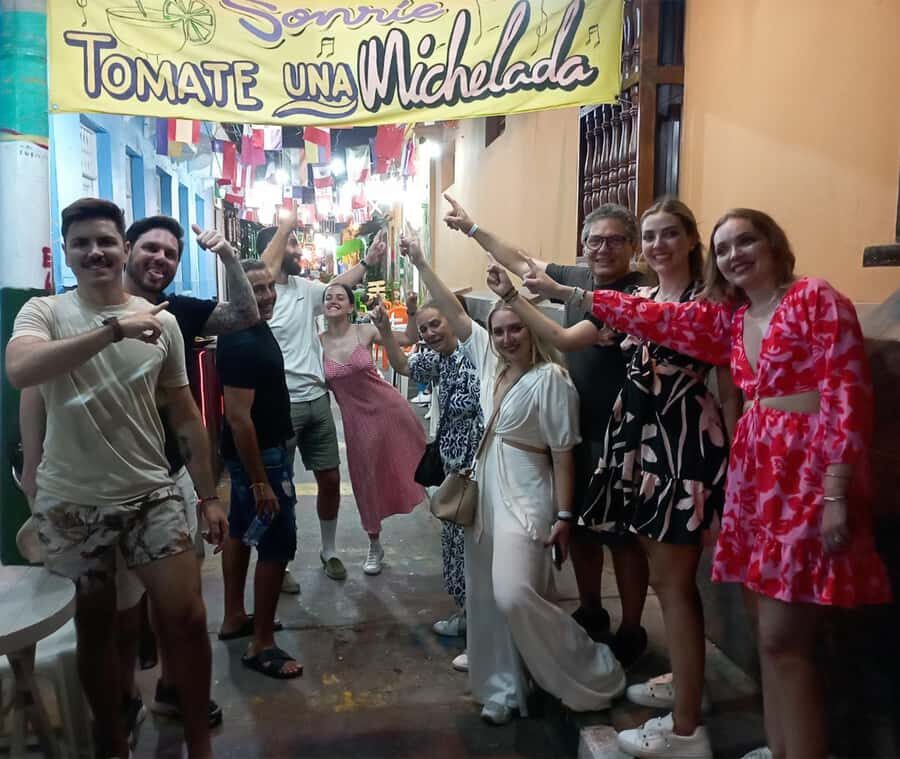
This segment also brings you closer to the “music city” side of Cartagena. The finish is around Callejón Ancho, leading you toward Calle San Juan to salsa and African champeta sounds. The goal isn’t just to hear music. It’s to connect the city’s African and Caribbean roots to what you see in the streets now.
Many guides are praised for creating playful, hands-on moments—some teach dance steps, and some encourage the group to participate multiple times. If you’re willing to look a little silly for 10 minutes, you’ll get one of those memories that sticks.
Practical tip: the end zone tends to feel lively. Keep an eye on where the group finishes, then decide how you want to continue—more nightlife, a calmer dinner spot, or just a walk back toward where you’re staying.
Price and value: why $12 feels like a bargain
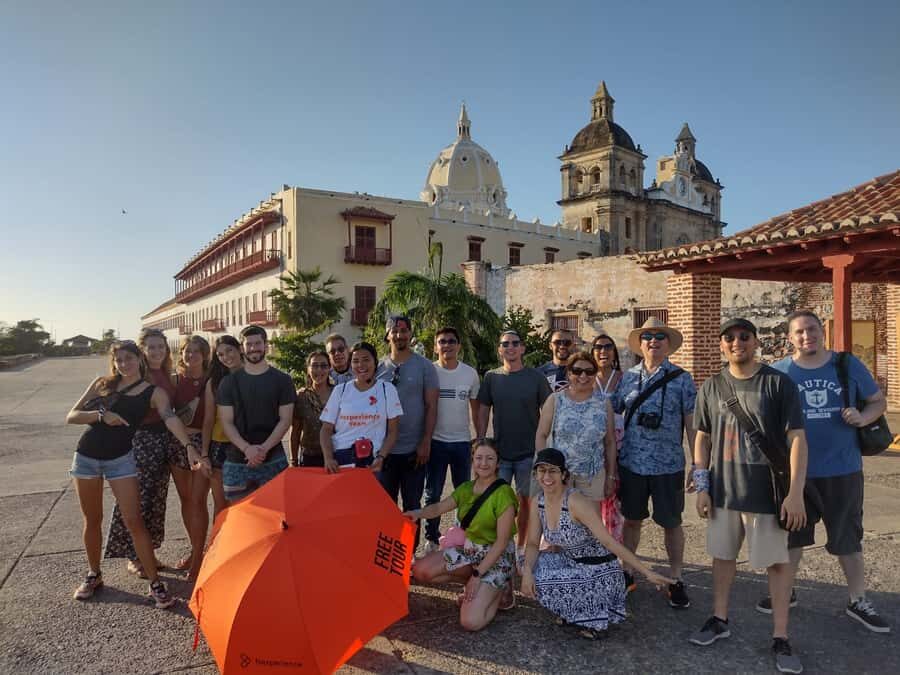
At $12 per person for about 150 minutes, you’re paying for two big things: interpretation and efficiency. Cartagena’s Historic Center and Getsemaní are huge. Doing them as a DIY wander can cost time, and time is the currency you lose in a walking city.
This price also includes a professional guide and tips. That’s a real factor for budget travelers. Guides who can explain the walls, the squares, and the neighborhood culture also help you avoid the common mistake: seeing impressive sights but missing what made them matter.
Think of it like this: you’re not just buying “a walking tour.” You’re buying the context that helps you choose what to do next. After this walk, you’ll know which streets you want to revisit, which museums you actually care about, and what kind of history you should pay attention to as you explore.
How to make the walk more comfortable in Cartagena heat
Cartagena rewards smart clothing and smart pacing. Since you’re outside for a long stretch, plan like you’re training for a warm-weather 5K.
Bring:
- Comfortable shoes (real soles)
- Sunscreen
- Weather-appropriate clothes
A couple of habits help a lot:
- Stay close to the guide during transitions between plazas and streets.
- Accept shade when it’s offered. Several guides are praised for keeping big groups in cooler shaded areas.
- Carry a small water plan, even if food and drinks aren’t included.
One more reality check: weather can change. Some tours have been described as rainy. If rain hits, you’ll likely keep moving but it may feel less pleasant. If you’re booking, pick the time that fits your energy, and don’t plan heavy outdoor activities right before this.
Who should book this tour (and who might not)
This tour is ideal if you:
- Want a first-day orientation to both the Historic Center and Getsemaní
- Like the mix of big events and street-level details, including the painful parts of Cartagena’s history
- Enjoy culture that shows up in music, not just museums
- Appreciate guides who keep energy up and invite questions
It might not be your best fit if you:
- Hate walking long stretches in the sun
- Want only fortress scenery with no emphasis on slavery history
- Need a quiet, sit-down style tour with minimal movement
That said, even people with small kids have described positive experiences when the guide handled pace and attention well. If you’re traveling with family, you’ll want to pick the time of day and wear gear that makes short breaks easy.
Should you book this Cartagena Historic Center and Getsemaní tour?
If you want a single, well-linked introduction to Cartagena—walls, plazas, museums-context, and neighborhood life—this is a strong choice. The $12 price is the kind of value that lets you spend your money on the rest of your trip, not just on “getting there.”
My decision rule: book it if you want to understand what you’re looking at, not just take photos. Skip it if you’re only after passive sightseeing and you’d rather not walk through the places tied to the enslaved history of the city.
If you book, show up with comfortable shoes, sunscreen, and a curious mindset. Then ask questions. The best part of tours like this is that the guide’s stories often turn into a better way to walk Cartagena long after the tour ends.
FAQ
How long is the Cartagena Historic Center and Getsemaní shared walking tour?
It lasts about 150 minutes.
Where do I meet for the tour?
Meet at Plaza Cervantes (Camellón de Los Mártires), in front of the Clock Tower. Look for the orange umbrella.
How much does the tour cost?
The price is listed as $12 per person.
What areas of Cartagena does the tour cover?
It covers the Historic Center (including the Walled City) and the Getsemaní neighborhood.
What will I learn about during the tour?
You’ll hear about conquest, colony, independence, the history behind Cartagena’s walls, and cultural topics tied to salsa and African champeta.
What languages are offered?
The tour is offered in English and Spanish.
Is the tour wheelchair accessible?
Yes, it’s listed as wheelchair accessible.
Are food and drinks included?
No, food and drinks are not included.
Is hotel pickup included?
No hotel pickup and drop-off are included.