REVIEW · CARTAGENA
Tour to San Basilio Palenque with Bilingual Native Guide
Book on Viator →Operated by Unique Travel Colombia · Bookable on Viator
One day in Palenque teaches a lot. I loved the Bilingual Native Guide helping you understand daily life through the Palenquero community, from home museums to the local language, and then shifting to celebration at San Basilio de Palenque with music and hands-on culture. The main trade-off is time: the schedule can feel tight, and you may not catch every kind of performance you hoped for.
You’ll also spend part of the day on the road. The tour runs about 4 to 5 hours total, with a longer drive from Cartagena and weather playing a role, since this experience requires good conditions.
In This Review
- Key highlights at a glance
- San Basilio de Palenque: what you’re really seeing from Cartagena
- Price and value: what $140 gets you (and why it’s not overpriced)
- Getting there at 9:00 am: meeting point, ride comfort, and weather
- Stop 1 in Palenque: homes, home museums, language, and everyday traditions
- Benkos Biohó Monument: a short stop with big meaning
- Casa Kombilesa Mi: drumming, dancing, singing, and joining in
- Antonio Cervantes boxing gym and the Kid Pambele link
- Medicinal house visit: traditional healing and respectful questions
- How the 4-5 hour schedule works (and how to avoid feeling rushed)
- Who should book this tour, and who might prefer a slower day
- Should you book this San Basilio de Palenque tour from Cartagena?
- FAQ
- How long is the San Basilio de Palenque tour from Cartagena?
- What time does the tour start, and where do we meet?
- What’s included in the price?
- Are there admission tickets for the stops?
- Is this tour private?
- Do I need to send passport information?
- What happens if the tour is canceled due to weather?
Key highlights at a glance
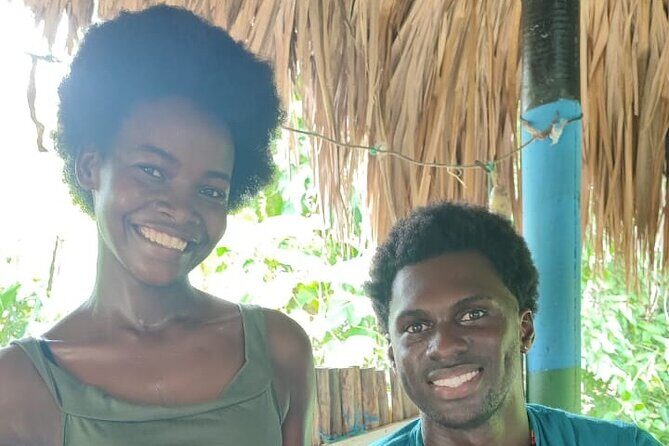
- Bilingual, native guidance for culture, traditions, and Palenquero language
- Benkos Biohó Monument connects the rebellion story to the town today
- Casa Kombilesa Mi brings drumming, singing, and dancing, with chances to join in
- Boxing stop tied to Antonio Cervantes (Kid Pambele) adds a different side of local life
- Medicinal house visit shows how traditional healing is learned and practiced
- Lunch + bottled water + typical liquor, plus AC transport and umbrella lending
San Basilio de Palenque: what you’re really seeing from Cartagena
San Basilio de Palenque isn’t a museum set up for tourists. It’s a living Afro-Colombian community where culture isn’t something you only watch—it’s something you hear, see, and talk about. That’s why this trip works so well as a Cartagena add-on: you go far enough to feel like you changed places, but you return the same day.
The heart of the experience is the local, bilingual perspective. When your guide can explain meanings in more than one language, it cuts through the usual guesswork. You’re not just seeing traditions—you’re getting context for how they fit into everyday life.
You’ll also notice the tour balances two moods: story + celebration. One part of the day focuses on heritage and identity. Another part leans into rhythm—drums, singing, and dance—where the culture becomes something you can participate in rather than observe from the edge.
Other San Basilio de Palenque tours from Cartagena



Price and value: what $140 gets you (and why it’s not overpriced)
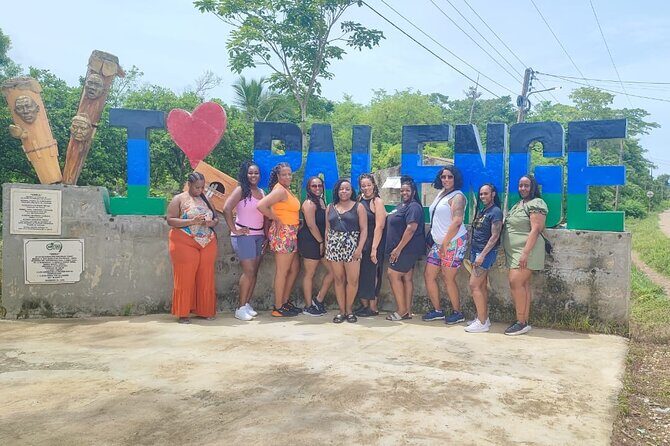
At $140 per person for about 4 to 5 hours, this tour is priced like a real day trip, not a quick shuttle. The value comes from the full package: you get lunch, bottled water, and typical liquor, plus an air-conditioned vehicle with umbrella lending if the weather turns.
You also get time with key cultural stops, and multiple admissions are listed as free (including most parts inside Palenque). That matters because day trips often charge extra once you’re already committed. Here, you’re paying upfront for a structured route, with fewer surprise add-ons.
Practical note: the price includes a service element through the provider, but it’s still smart to budget for any personal extras you might want on your own in Cartagena before you go or after you return. For the tour day itself, though, you’re set.
Getting there at 9:00 am: meeting point, ride comfort, and weather
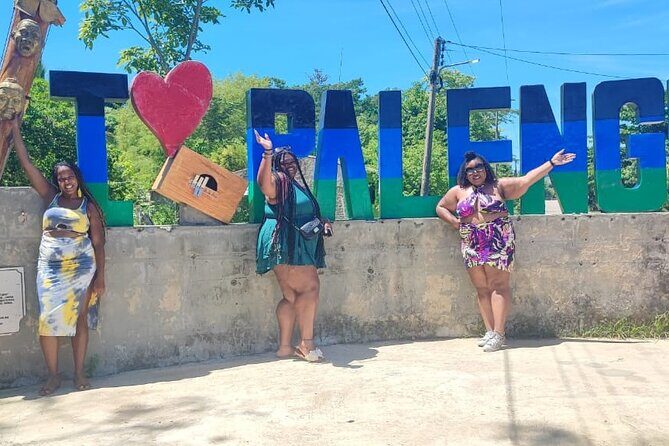
Your morning starts with a meet-up at Monumento Torre del Reloj, Boca del Puente, El Centro, Cartagena de Indias. The start time is 9:00 am. If you’re staying in the old city, give yourself margin to reach the pickup area without rushing.
The long drive is part of the deal. This tour includes a 2-hour journey from Cartagena and back in the overall timing, and the total tour window is about 4 to 5 hours. That’s not a full-day excursion, so you should plan to stay mentally flexible—this is a packed cultural route, not a slow wander.
Weather is also a deciding factor. The experience requires good weather, and if it’s canceled because of bad conditions, you’ll either get a different date or a full refund. If you’re visiting Cartagena on a day with uncertain forecasts, it’s worth asking when you book how they handle weather changes so you’re not left scrambling.
Stop 1 in Palenque: homes, home museums, language, and everyday traditions
The first major block of time is spent directly in San Basilio de Palenque, with about 2 hours there. This is the part of the trip that feels most personal, because you’re not arriving and leaving immediately. You’re walking through the community with someone who knows the place from the inside.
Expect to see culture in a practical, lived-in way: typical houses, home museums, and the native language. That language element can be especially meaningful if you care about how communities preserve identity even when the outside world changes around them.
A helpful way to think about this stop: it sets your “filter” for everything that comes next. When you understand what the guide is pointing out—why certain traditions exist, how daily life works—it’s easier to interpret the music center, the commemorations, and even the medicinal stop later on.
Possible consideration: because the tour is time-limited, you might feel a bit of a sprint-through mode if you’re the type who wants to sit and ask lots of follow-up questions for an hour. If that’s you, keep a short list of questions and ask early, while the group is still in the thick of the cultural walk.
Benkos Biohó Monument: a short stop with big meaning
Next comes Monumento a Benkos Bioho, a quick 15-minute stop with admission included. Even in a short time window, the monument does its job: it honors Benkos Biohó, an African enslaved man who led a rebellion against Spanish colonial forces in the 17th century and helped found San Basilio de Palenque, described here as the first free African town in the Americas.
The monument typically includes statues and plaques and other commemorations. Because it’s a brief stop, you won’t be doing a long, heavy lecture. Instead, it gives you a framework—so when you later see music centers and traditional practices, you can connect them to resilience and community continuity, not just “cool culture to photograph.”
If you’re the kind of traveler who likes to understand what you’re standing in front of, this stop is worth your attention even if it feels short. Read the plaques when you can, and let the rest of the day feel more grounded.
Other guided tours in Cartagena


Casa Kombilesa Mi: drumming, dancing, singing, and joining in
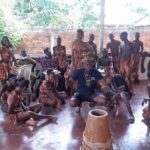
One of the most fun parts of the day centers on Casa Kombilesa Mi, a cultural center dedicated to preserving Afro-Colombian heritage. You’ll have about 40 minutes here, and admission is listed as free.
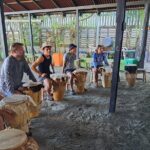
This is where the tour leans hard into participation. The setting includes murals, traditional instruments, and artwork tied to local legends. Then the music comes alive: the group offers demonstrations of drumming, dancing, and singing, and visitors are invited to join in.
For you, this is the difference between a day trip that just feels like sightseeing and one that feels like cultural exchange. You’ll likely leave with the rhythm in your head longer than the facts you read on a plaque.
A practical tip: if you’re nervous about joining in, start with the simplest role—clapping, basic steps, or answering the guide when they ask. Cultural events often work best when you participate lightly at first.
Also, don’t treat this as a “one song and done” moment. Casa Kombilesa Mi is also described as a space that hosts workshops and educational programs. Even if you only experience a slice of that in 40 minutes, it’s good to remember you’re visiting a real community hub, not a performance stage.
Antonio Cervantes boxing gym and the Kid Pambele link
Another stop adds a surprising angle: Gimnasio Antonio Cervantes in San Basilio de Palenque, visited for about 20 minutes with free admission.
Here’s the key name connection: Antonio Cervantes is also known as Kid Pambele. So while you’re not walking into a museum display, you are stepping into a place that honors a sporting legacy. That makes the day feel more complete—because culture isn’t only music and language. Sports and physical training are part of how communities express pride and identity too.
What to expect in this stop: it’s brief, so you’re more likely to see the gym environment and learn the connection than to do a full workout. If you’re a boxing fan, ask the guide what’s known locally about Cervantes and how people today relate to that name.
Medicinal house visit: traditional healing and respectful questions
The final culture stop is about traditional medicine, visited for about 1 hour at what’s described as a medicinal house.
The important context here is that in Palenque, traditional healing knowledge is tied to cultural heritage. You may hear that remedies are drawn from knowledge passed down through generations, often using medicinal plants and herbs, and sometimes involving rituals for healing.
Because the tour description focuses on community practice rather than a formal clinic, the experience here depends on who you meet and what you’re shown during your visit. The best mindset is respectful curiosity: listen first, then ask what you truly want to understand.
If you’re someone who travels with a health background—herbal medicine, folk healing, or community-based wellness—this stop could be especially meaningful. Just keep in mind that medicinal practices aren’t always explained in a way that matches western expectations, so patience matters.
How the 4-5 hour schedule works (and how to avoid feeling rushed)
This is a compact route, and that’s both a strength and a risk.
On the strength side, you get a full story arc in one day:
- community life and language
- the Benkos Biohó foundation and rebellion memory
- culture in action through music at Casa Kombilesa Mi
- local identity through boxing legacy
- traditional healing practices
On the risk side, if you want to linger, the timing can feel rushed. The stop durations are fixed, so if you get carried away with questions at stop 1 or want more time at Casa Kombilesa Mi, the later parts can feel like quick chapters.
Here’s how you can make it smoother:
- Choose your “musts” before you go (music participation? language talk? medicinal questions?).
- Ask your biggest questions early, when the guide has more time in that specific setting.
- If you’re hoping for a particular type of performance, manage expectations and focus on the format you actually see that day.
Also, keep an eye on guide handoffs. The tour uses an AC vehicle, but you may still spend time meeting up with a native Palenquero guide once you arrive in Palenque. Build in a calm mindset: you’re not late, you’re switching from transport to walking and guiding.
Who should book this tour, and who might prefer a slower day
This is a great choice if you want:
- Afro-Colombian culture you can see with a local guide
- a day trip that covers multiple cultural angles (music, sports, medicinal traditions, identity)
- a structured route that still leaves room for participation
It’s also a good pick if you appreciate bilingual explanation. Language can be a big deal in Palenque, and this tour is designed around that.
You might want a different option if you know you hate time pressure. Because the route is limited to 4 to 5 hours, you won’t get the kind of slow, open-ended experience where you can spend half a day in one place. If you’re the “one stop, three hours” type, look for a longer, more flexible itinerary.
Still, for most visitors, the payoff is real. The tour is rated very highly and recommended by a large share of people, which usually means the structure works and the guide presence matters.
Should you book this San Basilio de Palenque tour from Cartagena?
I think it’s a strong yes for the right traveler. If you’re in Cartagena for a short time and you want a meaningful cultural day that isn’t just photos and drive-by stops, this one fits.
Book it if:
- you want bilingual native guidance
- you like hands-on cultural moments at Casa Kombilesa Mi
- you’re interested in the Benkos Biohó story in a grounded, real-world setting
- you value having lunch and basic comforts handled (AC vehicle, bottled water, umbrella lending)
Skip or switch if:
- you hate tight schedules
- you’re hoping for a specific entertainment style without variation
- your day can’t handle weather-related changes, even though you can receive a refund or a different date if canceled due to bad weather
If you do book, do one thing that pays off: arrive early to the meeting point and come with 3 questions you truly care about. With that mindset, the day won’t feel rushed—it’ll feel like you made real contact with the place.
FAQ
How long is the San Basilio de Palenque tour from Cartagena?
It’s about 4 to 5 hours total, including an estimated 2-hour time in San Basilio de Palenque plus the drive time from Cartagena and back.
What time does the tour start, and where do we meet?
The tour starts at 9:00 am. You meet at Monumento Torre del Reloj, Boca del Puente, El Centro, Cartagena de Indias, Provincia de Cartagena, Bolívar, Colombia.
What’s included in the price?
Lunch, bottled water, typical liquor, an air-conditioned vehicle, and umbrella lending service are included.
Are there admission tickets for the stops?
Admission ticket status is listed per stop. Several stops in San Basilio de Palenque (including the main cultural stop and Casa Kombilesa Mi, plus the boxing gym and medicinal house) are listed as free. The Benkos Biohó monument stop includes admission.
Is this tour private?
It’s listed as private, meaning only your group participates. The experience description also notes it can be done for an individual or a group depending on reservation requests.
Do I need to send passport information?
Yes. You’ll be required to provide your full name and passport number to add it to traveler insurance assistance.
What happens if the tour is canceled due to weather?
This experience requires good weather. If it’s canceled due to bad weather, you’ll be offered a different date or a full refund.