REVIEW · CARTAGENA
Freetour Cartagena and Gethsemane, Caribbean Heritage and Tradition
Book on Viator →Bookable on Viator
Cartagena’s old streets turn into a living timeline. I like the stop-by-stop flow through plazas and fort views, and I love finishing in Getsemaní for that real neighborhood feel. The one drawback to plan for: English comfort can vary with the guide.
This tour keeps things tight and doable: a 2-to-3 hour stroll with short hangs at each landmark, plus free entry at every stop. You’ll walk from the old-city entrance all the way into the streets where Cartagena’s identity feels louder than the postcard.
If you’re traveling with limited time and want context fast, this is a smart pick. If you need highly fluent English the whole way, do a quick check before you go so you’re not stuck playing history charades.
In This Review
- Key highlights at a glance
- Entering Old Cartagena via Torre del Reloj
- Plaza de los Coches and Plaza de la Aduana: power in the open air
- Plaza de San Pedro Claver and Baluarte de San Ignacio: faith and fort views
- Plaza de Bolívar and Catedral de Santa Catalina: the main-stage center
- Plaza de Santo Domingo: legends, stories, and sunset energy
- Barrio Getsemaní: street-level Cartagena and resistance
- How long the walk really feels (2 to 3 hours)
- Price and value: why $12 makes sense here
- The guide factor: Nancy’s storytelling, and the English question
- Pace, group size, and meeting-up sanity
- Who should book this Cartagena and Getsemaní walk
- Should you book this tour?
- FAQ
- How much does the tour cost?
- How long is the walking tour?
- Where does the tour start and where does it end?
- Is admission included for the main stops?
- What’s included in the price?
- How big is the group?
- Is the tour in English?
- What is the cancellation window?
- FAQ
- When should I expect confirmation after booking?
Key highlights at a glance
- Torre del Reloj to Getsemaní in one smooth arc: start at the old-city gateway, end inside the neighborhood
- Plazas explained by who built Cartagena: indigenous, Afro, and Spanish influences connected to real spaces
- San Pedro Claver’s story at Plaza de San Pedro Claver: slavery, faith, and civic identity in one stop
- Baluarte de San Ignacio for the best “how the city works” views: forts, angles, and city rhythm
- Santa Catalina Cathedral as the crown detail: why Cartagena’s main church matters
- Getsemaní streets for resistance and everyday culture: walls, characters, legends, and tradition
Entering Old Cartagena via Torre del Reloj
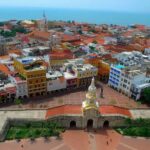
You start at Monumento Torre del Reloj (Boca del Puente) in El Centro. It’s the kind of meeting point that does two jobs: it helps you orient instantly, and it sets the tone. You’re not starting inside a museum or a slow introduction. You’re stepping into the main entrance logic of Cartagena de Indias.
From here, the tour works well because it teaches you how the city was meant to be understood: gates, squares, and sightlines. In about 10 minutes, you’ll likely get the quick version of what this spot represents and why the old city’s layout matters for everything that follows.
Practical tip: wear grippy shoes. Even when the time at each stop is short, Cartagena’s stones can be slick in the wrong light.
Other Getsemani tours in Cartagena


Plaza de los Coches and Plaza de la Aduana: power in the open air

Next comes Plaza de Los Coches, which is used as a springboard for Cartagena’s cultural mix: indigenous, Afro, and Spanish. The idea isn’t vague. It’s grounded in how you read the city around you—who had influence, who carried traditions forward, and how those layers end up living side-by-side.
Then you move to Plaza de la Aduana, a place connected to trade and the Spanish Crown’s early commercial ambitions. When you hear commerce tied to this square, it stops being abstract. You begin picturing the flow of goods, people, and money that shaped where big institutions went up and where daily life formed around it.
Why this matters: Cartagena’s beauty can make you forget it was also a business hub, built on relationships that weren’t always equal. These two plazas help you hold both truths at once.
Small consideration: both stops are short, so if you’re the type who likes to linger and read every plaque, you may want to leave yourself time to return afterward on your own.
Plaza de San Pedro Claver and Baluarte de San Ignacio: faith and fort views
At Plaza de San Pedro Claver, the tour centers on an emblematic figure: San Pedro Claver, a defender of enslaved people and a city patron. This is one of those stops where you’re standing in public space, but the meaning is deeply personal and historical. It’s not just a statue moment. It’s a reminder that major humanitarian work can become part of civic identity, not only church walls.
Then you head to Baluarte de San Ignacio. This is where the tour shifts gears toward the city’s defensive intelligence. You get a unique view and a story about what makes this area feel like the vibrant heart of Cartagena.
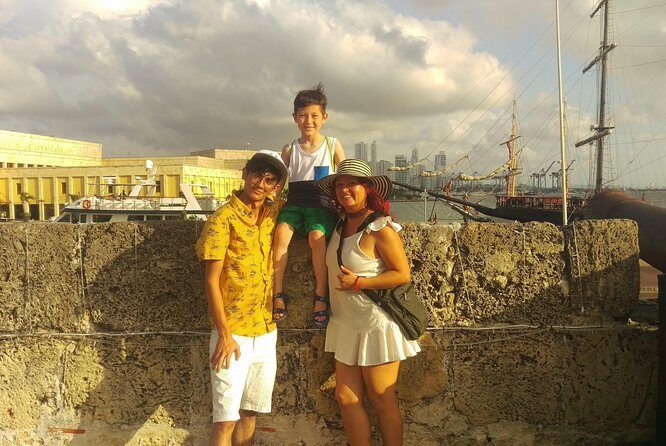
In the additional notes, there’s also mention that the Presidios were key pieces in the defense of Cartagena and are now among the best places to watch the sunset. That fits the feeling you’ll get here: once you see the city from fort logic, the skyline makes more sense.
What you’ll enjoy if you like visuals: angles, rooftops, and the way the old city sits within a larger urban map.
Plaza de Bolívar and Catedral de Santa Catalina: the main-stage center
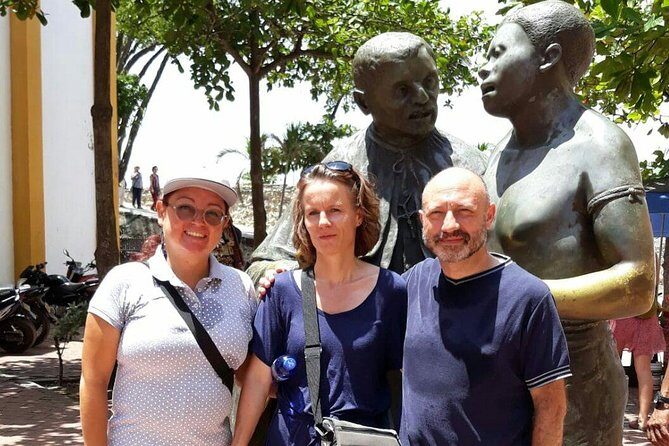
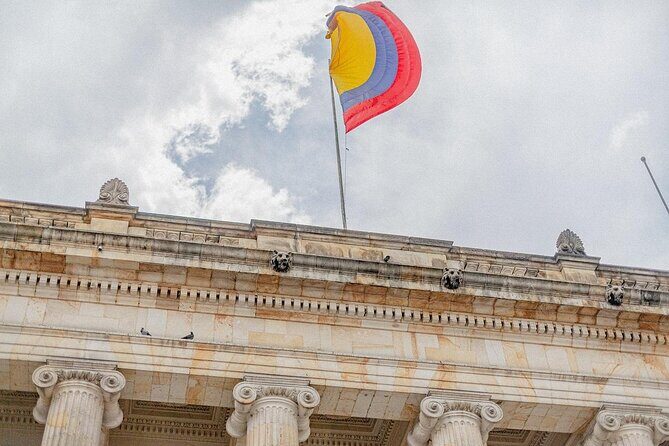
Plaza de Bolivar is described as the main square to know. It’s also connected to the palace tied to the same name, now home of the Liberator Simón Bolívar. Even if you’re not a “flag and uniforms” history person, it’s hard not to notice how central squares like this are for power: speeches, processions, decisions, and the daily pause where everything seems to revolve.
From there, you step into Catedral de Santa Catalina de Alejandría, often treated as the city’s crown jewel. Expect this stop to feel different from the plazas: it’s a landmark that changes the scale of your attention. You look longer because the building asks for it.
Practical tip: keep your camera ready, but also set it down for a minute. This kind of stop rewards quiet attention more than fast snapping.
Plaza de Santo Domingo: legends, stories, and sunset energy
At Plaza de Santo Domingo, the emphasis is on beauty, symbolism, and the kind of storytelling that hangs around old squares. This is also where you’ll hear about legends and the layered character of the area, the kind you can’t fully get from a guidebook photo.
Two extra details in the notes make this stop even more useful:
- the Presidios are pointed out as a strong place to observe Cartagena and catch a beautiful sunset
- in Santo Domingo you’ll find the famous Café del Mar
That doesn’t mean you must stop for a drink, but it helps you understand why this area keeps drawing people in late day. It’s a natural meeting zone for views plus atmosphere.
One consideration: if you’re sensitive to crowds, plan for the fact that iconic viewpoints and café zones can get busy as the day cools.
Other historical tours in Cartagena



Barrio Getsemaní: street-level Cartagena and resistance
The last stop is Barrio Getsemaní, and this is the part that tends to stick. The description frames it as the real Cartagena: streets that breathe resistance, walls full of characters and legends, and a mix of taste, tradition, and heritage.
This is where the tour stops being only about monuments. It starts feeling like you’re walking through a living neighborhood with memory in the pavement. Even the way the tour spends time here matters: it’s the longest stop at about 20 minutes, which signals you should slow slightly and pay attention.
What to look for: the “everyday museum” effect. Getsemaní is the kind of place where history shows up in small details—signs, street textures, and how people use public space.
Value for your trip: this ending point sets you up to keep exploring after the tour, rather than sending you back to the same postcard loop.
How long the walk really feels (2 to 3 hours)
The tour is listed as 2 to 3 hours with short time blocks at each location. Many stops are around 10 minutes, and Getsemaní gets about 20 minutes.
That timing is a big deal. It means you’re not stuck on one long lecture. You’re moving often enough to keep energy up, but not so fast that you miss meaning. You’ll likely walk away feeling like you understand what you saw, not just that you walked past it.
Tip: if it’s hot (and it often is), treat the short stops as hydration checkpoints too. Pace yourself, and don’t save all your water for the end.
Price and value: why $12 makes sense here
The price is $12.00 per person, and you’re not paying for entry fees along the way—admission is listed as free for the stops. The tour includes a guide, and the format is designed for quick context without adding costs for transport or special tickets.
So the math is pretty clear:
- You pay a low fee for guided interpretation
- You avoid paid admissions at the listed stops
- You get a route that covers a lot of “core Cartagena” without private transport
If you’re on a budget, this format is hard to beat. The only way it gets less attractive is if your language needs don’t match the guide’s comfort level—more on that next.
The guide factor: Nancy’s storytelling, and the English question
A strong pattern in the feedback is the impact of the guide’s approach. Nancy is mentioned by name repeatedly, and the positive accounts emphasize her passion for Cartagena’s architecture and history, plus her enthusiasm for weaving stories together (including ghost-like imagery rising from the Caribbean Sea, and attention to biodiversity and Colombia’s future).
There’s also a useful detail: one positive account describes her patience with a traveler learning Spanish. That matters because the best version of this tour may be the version where you can follow along at least comfortably in Spanish, even if you’re not fluent.
Now for the caution, because it’s real: one account describes a situation where Nancy spoke very little English, and the guide framed the experience as her English-learning practice. When the group asked to pause or adjust, an alternative guide was mentioned, and the situation didn’t go smoothly. That’s not the same for everyone, but it’s enough that you should plan smart.
My advice before booking: message the operator and ask plainly about the guide’s working language for your date. If you need fully fluent English, don’t assume it will happen.
Pace, group size, and meeting-up sanity
The tour has a maximum of 20 travelers, which usually keeps it from turning into a herd problem. It also makes it easier for a guide to answer questions without losing the group.
It’s near public transportation, so getting to the Torre del Reloj meeting point is generally manageable. The tour ends in Barrio Getsemaní (Crra 9 No 39-12, San Diego area), so you’ll be dropping into a neighborhood where you can keep walking afterward.
Practical note: because the end point is in Getsemaní, it helps to plan your next meal or activity nearby instead of hopping across town.
Who should book this Cartagena and Getsemaní walk
You’ll likely enjoy this tour if:
- you want an efficient route through major plazas and key landmarks
- you care about how different cultures and eras shaped Cartagena
- you like story-driven walking tours rather than silent sightseeing
- you’re okay with short stops and a steady pace
It may not be the best fit if:
- you require fluent English the entire time and can’t tolerate language gaps
- you need long seated rests at indoor sites (this is primarily outdoors and walking)
The good news is that the format is designed for most people who can comfortably walk a compact old-city loop.
Should you book this tour?
If you’re trying to get a lot of meaning out of a short Cartagena visit, this is a solid value. The route covers the old-city entrance, commerce and civic squares, a cathedral stop, and a neighborhood ending that feels more human than museum-like.
Book it with confidence if you’re either comfortable with Spanish or you confirm the guide’s English level ahead of time. If you need guaranteed fluent English, ask first and don’t be shy about switching plans if the answer isn’t clear. The difference between a great walk and a frustrating one here is usually language.
FAQ
How much does the tour cost?
The tour price is listed as $12.00 per person.
How long is the walking tour?
It lasts about 2 to 3 hours.
Where does the tour start and where does it end?
It starts at Monumento Torre del Reloj (Boca del Puente) in El Centro and ends in Barrio Getsemaní in the San Diego area at Crra 9 No 39-12.
Is admission included for the main stops?
Admission tickets are listed as free for the stops on the itinerary.
What’s included in the price?
A guide is included. Private transportation is not included.
How big is the group?
The tour lists a maximum of 20 travelers.
Is the tour in English?
The tour details don’t explicitly promise a language in the provided info, and there is at least one account describing limited English. If English is important for you, confirm the guide’s language before you go.
What is the cancellation window?
Free cancellation is available up to 24 hours in advance for a full refund.
FAQ
When should I expect confirmation after booking?
You should receive confirmation at the time of booking.