REVIEW · CARTAGENA
5-Hour Cooking and Tasting Class with Market Small Group Tour
Book on Viator →Operated by Cartagena Cooking school · Bookable on Viator
Smell the market, then cook your way through it. I love starting at Mercado de Bazurto with a guide who helps you read the stalls, and I love the hands-on cooking back at the Cartagena Cooking School, where the chaos turns into a calm, focused class. The one drawback to plan for is the market itself: it’s hot, crowded, and can have strong odors, so come ready for sensory overload.
After about 40 minutes exploring the market, the day shifts into a fruit tasting set up at the school, with around a dozen exotic fruits from what you just saw. Owar (the chef in some sessions) and assistant Deyanis help you understand what each fruit tastes like and how people use it, not just what it looks like.
This is a 5-hour small-group class (maximum 12 travelers) that runs from 9:00 am back at the meeting point in Cartagena’s Centro Histórico. It’s not recommended for young children, and service animals are allowed.
In This Review
- Key highlights
- Mercado de Bazurto: where your appetite meets reality
- Fruit tasting at Cartagena Cooking School: learning what you actually need to know
- The hands-on cooking menu: expect a full lunch, not a snack
- Meet the chefs: Owar, Deyanis, and Romario in the classroom
- Price and value: what $170 buys you in real terms
- Timing, meeting point, and what to wear for a market-first day
- Who should book this class, and who might want to skip
- Should you book this Cartagena cooking and market tasting class?
- FAQ
- How long is the cooking and tasting class?
- How much does the tour cost?
- Where does the tour start and end?
- What time does the class begin?
- How big is the group?
- Is there a market visit before the cooking?
- What happens during the tasting?
- Is the tour okay for families with young children?
- Do I get confirmation after booking?
Key highlights
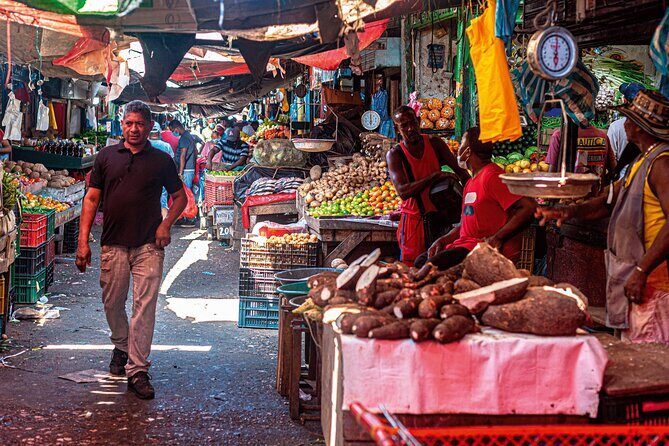
- Mercado de Bazurto with a local guide: learn what to look for in a crowded, noisy, fragrant chaos of stalls
- Fruit tasting pulled from the market: about a dozen exotic fruits, with explanations of flavor and uses
- A real Cartagena menu, not just demos: arepas, patacones, shrimp topping, creole pepper sauce, yuca puree, and more
- Hands-on cooking time: cutting, chopping, stirring, and cooking while the chef coaches techniques
- Calm kitchen after the street market: the school feels like a reset button once you get inside
- Small group size: up to 12 people, which makes it easier to ask questions and work at your station
Mercado de Bazurto: where your appetite meets reality
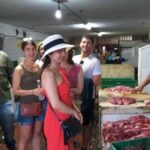
Bazurto Market is one of those places that makes you sit up a little. It’s untidy and very busy, with strong smells that can hit before your brain catches up. It’s also colorful in the literal sense, with bright produce piled everywhere, seafood on display, and constant motion across the aisles.
I like that the tour doesn’t treat this as a postcard. You get about 40 minutes to explore with guidance, so you’re not just walking through noise and guessing what is safe, fresh, or worth tasting. This kind of market visit is also the fastest way to understand how food culture works in Cartagena: ingredients aren’t separated into categories like they are at home. They’re just there, side by side, ready to be cooked.
Practical consideration: this is not a walk for people who get easily overwhelmed by heat, crowds, or smells. Even on a good day, the market can feel dark, hot, and crowded. If that sounds like a stress test, you might prefer a more controlled food tour elsewhere.
Other Colombian cooking classes in Cartagena


Fruit tasting at Cartagena Cooking School: learning what you actually need to know
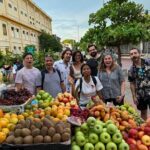
Right after the market, you head to the Cartagena Cooking School for a fruit tasting designed around what was picked there. You should expect bite-sized pieces arranged for easy comparison, with fruit presented across a range of flavors and textures, from sour to sweet to pulpy.
Here’s what makes this tasting useful instead of just fun: the chef explains each fruit in a way that connects flavor to cooking. You’re not only learning that a fruit exists. You’re learning what you might do with it, since many of these flavors show up in local dishes, sauces, and desserts.
In particular, one standout is dessert: the class can include ice cream made from lolo, a fruit purchased from the market. Another fruit that shows up in the class experience is marañón, which guests have specifically mentioned tasting during their time with the chef and assistant. These details matter because they tell you the tasting isn’t generic. It reflects real market finds, and it’s tied to what the kitchen ends up making.
The hands-on cooking menu: expect a full lunch, not a snack
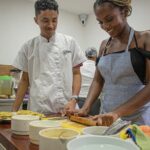
The heart of the experience is the cooking portion, where you get to work at your own pace while the chef guides you through technique. Depending on the class day, the menu can include dishes like arepas, hogao, empanadas, posta, arroz con coco, and enyucada. You may also see the full structured menu with items like:
- Two types of arepas
- Chicken salsa
- Patacones topped with a shrimp mix
- Filete de lomo de res with creole pepper sauce
- Yuca puree
- Dessert: ice cream made from lolo
- A side of cooked plantains in a flavorful sauce
What I like here is the balance. You get starchy comfort (arepas, yuca puree), crisp elements (patacones), seafood-forward moments (shrimp topping), and meat with sauce (lomo de res). Then you end with something sweet that still traces back to the market fruits you saw earlier.
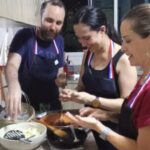
And because it’s hands-on, you’re not just watching. The guidance covers the subtleties that make a difference: how to cut and prep, how to stir and cook, and how to adjust the process so the food lands right.
Possible drawback: the cooking part can still feel hot and active, especially right after the market. If you’re sensitive to heat, pace yourself, drink water, and don’t feel pressured to rush through every station at once.
Meet the chefs: Owar, Deyanis, and Romario in the classroom
A food class lives or dies on the people teaching it. This one is led by chefs such as Owar and Romario in different sessions, with Deyanis appearing as an assistant in Owar-led formats.
What stands out from the way the class is described is the combination of calm kitchen energy and practical instruction. Owar is highlighted for leading the market purchase for the fruit tasting and for guiding the cooking steps, while Deyanis supports the class flow and help at the cutting and cooking stages.
If you’re the type of traveler who likes to ask why something tastes the way it does, this setup is a good match. You get explanations as you go, tied to the ingredient in front of you.
Price and value: what $170 buys you in real terms
At $170 per person for about 5 hours, it’s not the cheapest food activity in Cartagena. But you’re paying for a full arc: market experience, structured fruit tasting, and a hands-on cooking session that results in lunch and dessert.
Here’s the value math that matters to me:
- You get ingredients picked from the market and then tasted and cooked into the meal.
- You get a full menu, not only one dish or a quick sampler plate.
- You get small-group attention with a cap of 12 travelers, which makes hands-on cooking possible without feeling lost.
- You get technique coaching, including time for chopping, cooking, and assembling with guidance.
If you’ve taken cooking classes elsewhere, you’ll recognize this as the difference between a demo you watch and a class where you work. That’s the part worth paying for.
Booking is also a factor: this class is commonly booked about 22 days in advance on average, so waiting until the last minute can shrink your options.
Other food & drink experiences in Cartagena




Timing, meeting point, and what to wear for a market-first day
The class starts at 9:00 am at Cartagena Cooking School, located at Calle del Estanco del Aguardiente 38 # 5 – 92 interior 3, Centro Histórico, El Centro, Provincia de Cartagena. It ends back at the meeting point.
Because the market portion happens early and outdoors, the biggest comfort issue is heat. Wear breathable clothing, keep water handy when appropriate, and consider closed-toe shoes since the market can be crowded and uneven. This isn’t a formal event, but being comfortable helps you focus on the flavors.
Logistics are also pretty friendly: it’s near public transportation, and if you bring a service animal, it’s allowed. The tour isn’t recommended for young children, likely because of crowding, heat, and sensory intensity at the market.
One more planning point: the experience requires good weather. If weather doesn’t cooperate, you’ll be offered a different date or a refund, so keep an eye on forecasts when your day gets close.
Who should book this class, and who might want to skip
This tour fits best if you:
- Like markets but want help navigating them without stress
- Want to learn how ingredients taste and where they show up in local cooking
- Prefer cooking with guidance, then eating the results while they are fresh
- Are happy with a 5-hour schedule that includes active time both outside and inside
Consider skipping if you:
- Don’t handle strong odors or crowded spaces well
- Are traveling with very young children (the class is not recommended)
- Want a gentle, low-heat experience with minimal sensory intensity
If you’re a solo traveler, you may find this class particularly appealing because the format is small-group and teaching-focused. One solo guest specifically appreciated that they were not charged extra for traveling alone.
Should you book this Cartagena cooking and market tasting class?
I think you should book if you want something more “learn to taste and cook” than “watch and snack.” The market-to-kitchen flow gives you a clear storyline: see the ingredients, taste them, then turn them into a full meal that reflects Cartagena flavors.
It’s also a smart choice if you’re curious about exotic fruit beyond the usual highlights. The fruit tasting is not an afterthought, and dessert like lolo ice cream connects the market to what you eat at the end of the day.
Just be honest with yourself about the market segment. If heat, crowds, and strong smells sound like a problem, this part will be the challenge. If that doesn’t scare you off, the payoff is real: you leave with practical know-how, full plates, and the kind of food memories that don’t fade fast.
FAQ
How long is the cooking and tasting class?
It runs for about 5 hours.
How much does the tour cost?
The price is $170.00 per person.
Where does the tour start and end?
It starts at Cartagena Cooking School, Calle del Estanco del Aguardiente 38 # 5 – 92 interior 3 in Centro Histórico, and it ends back at the same meeting point.
What time does the class begin?
The start time is 9:00 am.
How big is the group?
The class has a maximum of 12 travelers.
Is there a market visit before the cooking?
Yes. You visit Mercado de Bazurto first, and you explore it for about 40 minutes before heading to the cooking school.
What happens during the tasting?
You get a fruit tasting set up at the cooking school with around a dozen exotic fruits from the market, plus explanations of each fruit and how it’s used.
Is the tour okay for families with young children?
It is not recommended for young children.
Do I get confirmation after booking?
You should receive confirmation within 48 hours of booking, subject to availability.