REVIEW · CARTAGENA
Historical Tour of Cartagena
Book on Viator →Operated by Hanging out in cartagena · Bookable on Viator
Cartagena comes alive when you walk it. This historical tour strings together plazas, monuments, and postcard-worthy streets—from the Torre del Reloj clock tower to the street-art corners of Getsemaní. I love how the route gives you quick orientation in a city that can feel like a maze, while keeping the pace light and the stops short.
I also like the mix of “big story” and “small details.” You’ll hear about founders and colonial landmarks, then hop to places tied to queens, art, and everyday neighborhood life. One guide name that stands out in the feedback is Alvarito, praised for clear English and strong knowledge.
A small consideration: you should be ready for a city walk in daylight. The tour needs good weather, and there’s a moderate fitness level expectation, plus no bottled water is included.
In This Review
- Key highlights you’ll actually feel on the ground
- A 2.5-hour walk that turns Cartagena into something you can read
- Price and value: $45 buys a guide, not just a stroll
- The route starts at Torre del Reloj, then keeps widening your view
- Founder monuments and colonial squares: the city’s backbone (Torre del Reloj to Plaza de San Pedro Claver)
- Queens, memory, and a long pause in Bolivar Park (National Beauty Contest to Plaza de Bolívar)
- Santo Domingo, Botero, and the art you’ll recognize without needing context
- Proclamación and Roma Street: government details and balcony-level views (Plaza de la Proclamación and Calle Carulla Express/Roma)
- Parque Centenario: a French-style break with animals and birds
- Getsemaní street art and benderines: where Cartagena turns playful (Calle de la Sierpe to Callejón Ancho)
- What to bring, how to handle the pace, and how to get the most out of it
- Who should book this historical tour?
- Should you book this historical tour of Cartagena?
- FAQ
- Where does the tour start and where does it end?
- How long is the historical tour of Cartagena?
- What is included in the tour price?
- Are admission tickets included for the stops?
- Is water or a drink included?
- What happens if the weather is bad or I need to cancel?
Key highlights you’ll actually feel on the ground
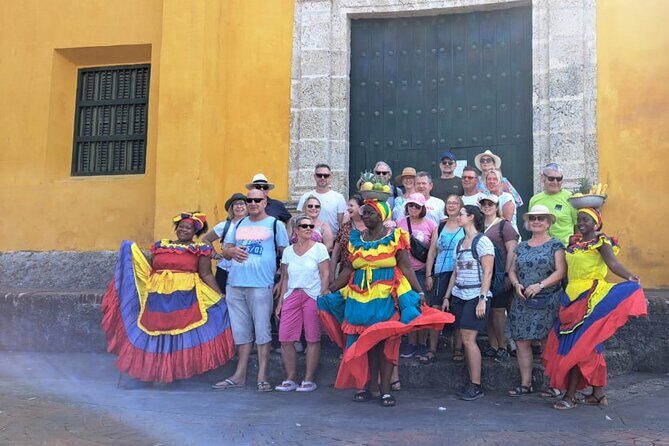
- Fourteen guided stops across Cartagena’s historic center and Getsemaní, each around 10 minutes, so you’re never stuck too long in one place
- Accredited professional guide who can explain what you’re seeing without slowing the group down
- Plaza-to-plaza context for the city’s founders, monuments, and colonial layout
- Botero and classic Cartagena icons showing up in the middle of regular street life
- Parque Centenario wildlife break (including mentions of titi monkeys and sloth bears) before you head back to the streets
- Getsemaní street art photos with murals and benderines tied to countries around Calle de la Sierpe
A 2.5-hour walk that turns Cartagena into something you can read
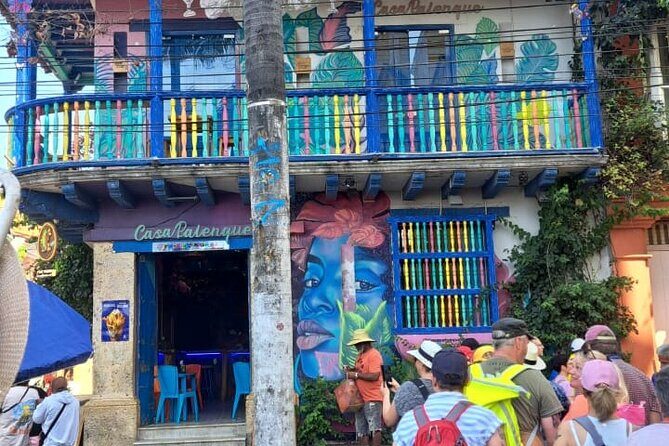
If Cartagena feels overwhelming at first, this tour helps you get your bearings fast. You’re not just taking in views. You’re getting a guided route that connects key public squares and streets so you start recognizing how the city “moves.” In a place where the best photos often depend on where you stand, that navigation help matters.
The timing also works. The full experience is about 2 hours 30 minutes, with brief stops along the way. That’s long enough to learn a lot, but short enough that you’re not exhausted by the time you hit the best evening spots nearby.
And because it’s led by an accredited guide, you’re not left guessing what you’re looking at—especially in plazas where the statues, plaques, and buildings can look similar from a distance.
Other historical tours in Cartagena


Price and value: $45 buys a guide, not just a stroll
At $45 per person, the main value is the guided interpretation. You’re paying for someone to point out what’s historically meaningful and visually worth noticing—then keep you moving between locations.
Also, many of the stops are listed as admission ticket free, which helps your budget stay predictable. You’re not constantly worried about extra fees popping up mid-walk.
One practical note: soda/pop water isn’t included, so if you want a cold drink you’ll need to grab it on your own. Cartagena heat can sneak up on you, even on a “short” tour.
The route starts at Torre del Reloj, then keeps widening your view
Your walk begins at the Monumento Torre del Reloj area near Boca del Puente in El Centro. Expect a quick introduction from your accredited guide before you head to the first plaza.
From there, the pattern is smart:
- You start with a landmark clock tower and major early-center plazas.
- Then you move through government and monument areas.
- After that, the tour shifts into art, shopping streets, and finally Getsemaní’s street-life zones.
By the time you reach the neighborhood streets, the city layout usually makes more sense. You’re seeing the “why” behind where things are placed, not just the “what.”
The group size is capped at 30 travelers, which tends to keep things organized and makes it easier to hear your guide when you pause at corners.
Founder monuments and colonial squares: the city’s backbone (Torre del Reloj to Plaza de San Pedro Claver)
The first stop is Torre del Reloj, the clock tower that serves as a starting signal. Your guide typically sets the theme here: Cartagena’s historic center isn’t random. It’s organized around squares and key civic points.
From there, you head to Plaza de los Coches. This square matters for two reasons: it’s emblematic in the historic center, and it connects you to the founder story. You’ll see references to Don Pedro de Heredia, the founder of the city, plus a portal of sweets that adds a local, lived-in vibe. Even if you don’t buy anything, it’s a good cue that this isn’t a “dead” museum area.
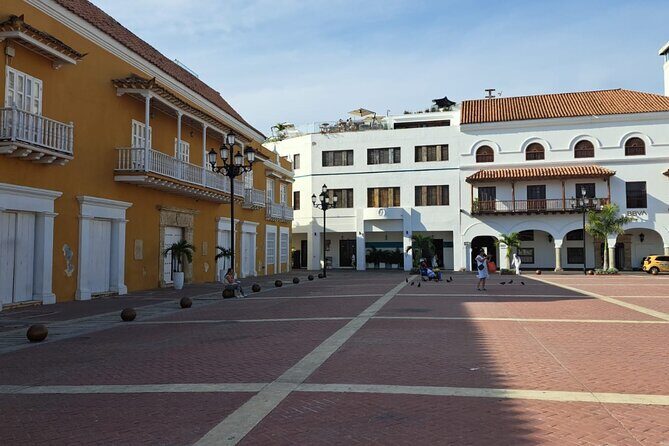
Next comes Plaza de la Aduana, the Customs Square. This one is about the civic center—where you find the Mayor’s Office, the mansion where the founder lived, and the monument to Cristóbal Colón (Christopher Columbus). Cartagena’s history isn’t only religious or romantic. It’s also political and administrative, and this square shows that side clearly.
Then you arrive at Plaza de San Pedro Claver, tied to the church of the same name. This is where the tour blends history with day-to-day commerce: restaurants, jewelry stores, and craft spots. Your guide also points out avant-garde works that decorate the square. That “public art in the middle of real life” angle is a good reminder that the historic center still functions as a neighborhood.
Queens, memory, and a long pause in Bolivar Park (National Beauty Contest to Plaza de Bolívar)
One of the more charming stops is the National Beauty Contest – Colombia area, described as a portal of the queens. This is where you can appreciate photos of queens in Colombia dating back to 1934, planted in the ground. It’s not a typical historical marker, but that’s what makes it fun: you’re watching culture evolve through pageantry, not only through wars, treaties, and statues.
Next, you reach Plaza de Bolívar, also known as Bolívar Park. This is where the tour gives you an actual resting point. It’s an urban park with vegetation—so you get a break from constant walking and direct sun.
In this park you’ll see:
- A monument to Simón Bolívar
- A statue of Gabriel García Márquez
- And right in front of the museum of the history of the Inquisition (as named on the tour)
Even if you don’t go inside anywhere, standing in that space helps connect literature and politics in the same breath. It also shows how Cartagena layers different types of memory in one location.




Santo Domingo, Botero, and the art you’ll recognize without needing context
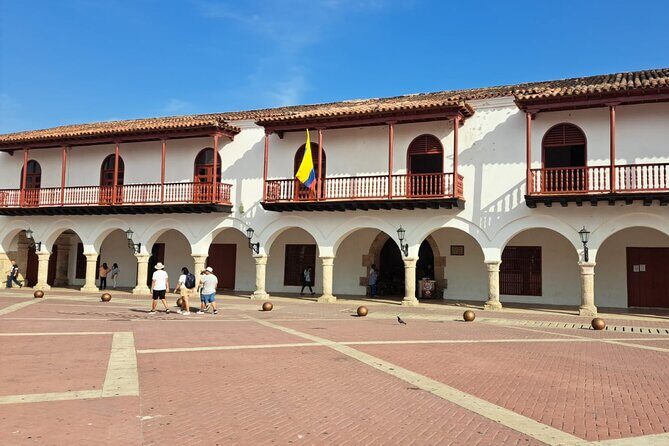
From Bolívar Park you move to Plaza de Santo Domingo. This square is described as one of the cheerful, popular ones in the historic center, with bars, restaurants, and shops all around. In other words: it feels like a place you could hang out after your tour, not just pass through.
There’s also a well-known art moment here. You’ll have the chance to admire Fernando Botero’s work Gertrude. If you’ve seen Botero before, this is the fun part: you instantly recognize the style, then your guide can explain why these works belong in public spaces like this.
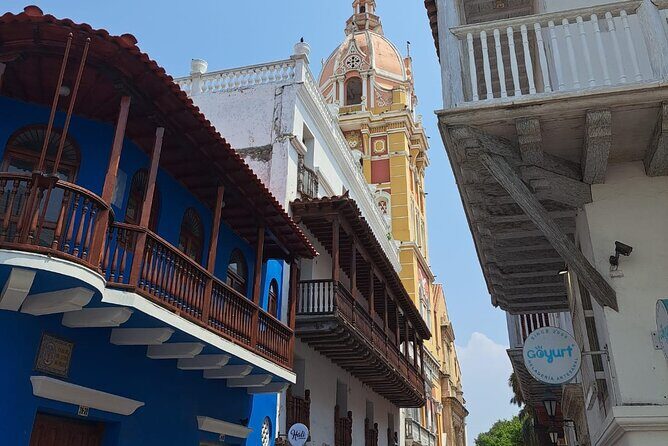
Right after, you reach Catedral de Santa Catalina de Alejandría. The tour’s wording highlights the lively surroundings around this stop too—so think: historic building in a regular street-world setting, not a quiet isolated landmark.
If you’re the type who likes getting photos of doors, facades, and statues without waiting in line, this stretch is built for you.
Proclamación and Roma Street: government details and balcony-level views (Plaza de la Proclamación and Calle Carulla Express/Roma)
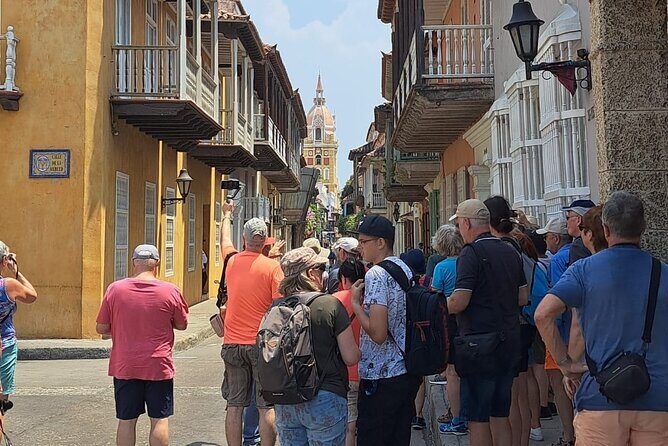
Plaza de la Proclamación is another civic-laced stop. Here you’ll see the Governorate and a statue paying tribute to Pope John Paul II. It’s an unusual mix: government architecture plus a papal monument, which helps explain how much of Cartagena’s identity is tied to multiple power sources across time.
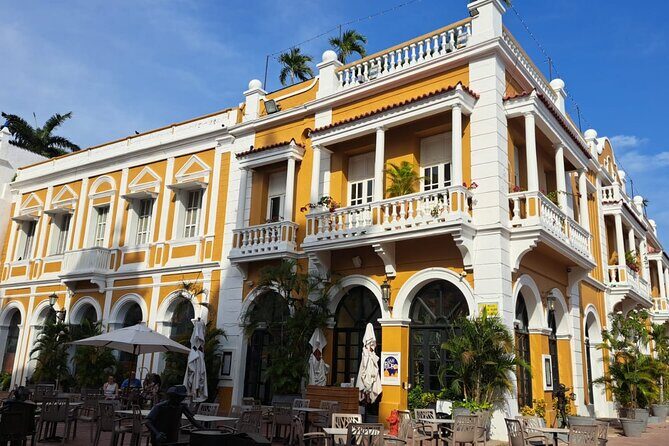
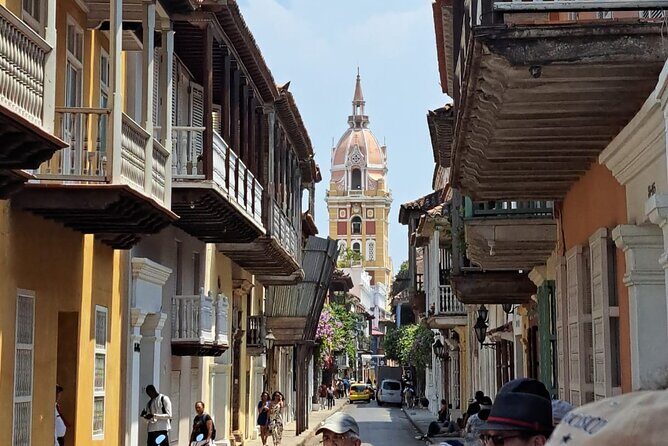
Then the tour shifts to Roma Street (noted as a busy street in the historic center). Expect colorful colonial houses with high balconies and attractive facades. This is a great photo zone because the buildings are designed to be seen from street level and from corners. When you walk with a guide, you don’t just look forward—you learn where to stop so the balconies frame your shot.
Parque Centenario: a French-style break with animals and birds
After the streets and squares, you’ll reach Parque Centenario—a French-style park with an obelisk. This is a smart mid-tour reset.
One reason this stop stands out is the wildlife mention. The park is described as a place to observe biodiversity, with animals such as:
- monkey titi
- sloth bear
- and quantities of birds typical of the Colombian Caribbean coast
Now, keep your expectations realistic. The tour doesn’t promise constant animal sightings. But even if you don’t catch animals at that moment, the park break is still valuable because it gives you shade, breathing room, and a calmer feel before you head back into dense neighborhood streets.
Getsemaní street art and benderines: where Cartagena turns playful (Calle de la Sierpe to Callejón Ancho)
Then you head into Getsemaní, where the mood shifts from civic plazas to community energy and street art.
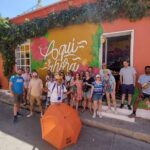
At Calle de la Sierpe, the focus is on bold visual culture: benderines hanging with the countries of the world, surrounded by graffiti and urban art. This is one of those places where photos look good even if you arrive mid-day, because there’s texture everywhere—walls, fabric decorations, and layered street details.
Your guide also helps you take better pictures by suggesting where to stand to capture murals and building facades. If you’ve ever tried photographing street art and felt like the best angle was always ten steps ahead, this is exactly why a guide helps.
Next is Plaza de La Trinidad, described as the heart of Getsemaní and the epicenter of nightlife. Expect life around the square and fast food selling points with strong aromas and flavor. The important thing here is that you get a sense of how locals and visitors mix after dark, while still experiencing it safely and organized within a daytime walk.
Finally, you reach Callejón Ancho, a wide-and-narrow alley block. This stop is about neighborhood character: native neighborhood life, rich local history, and valuable architectural legacy. It’s the kind of passage that makes Getsemaní feel like a real place you’d wander again after the tour ends.
At the end, your guide gives recommendations and instructions so you can finish the tour on your own terms.
What to bring, how to handle the pace, and how to get the most out of it
This experience is built for comfort and clarity, but you should plan for city walking.
Bring:
- Comfortable shoes for uneven historic-center streets
- Sun protection and a light layer, since weather needs to be good and conditions can change quickly
- Water or a drink of your choice (since soda/pop water isn’t included)
Do this to enjoy it more:
- Pay attention during the short stops—some details are easy to miss if you’re focused only on photos.
- When you hit Getsemaní, slow down. The walls are busy. Let your eyes “settle” before you take the shot.
If you’re sensitive to crowds: the group cap at 30 travelers helps, and the short stop times keep things from dragging.
Who should book this historical tour?
You’ll likely love this tour if:
- You want a guided overview of Cartagena’s historic center and Getsemaní without committing to all-day wandering
- You like learning what monuments and plazas are for (not only what they look like)
- You want a blend of civic history, culture, and street art
- You appreciate a guide who can explain things in good English—especially since one standout name in feedback is Alvarito
It may not be ideal if:
- You hate walking in heat or bright sun (the tour needs good weather and you’ll be outdoors for most of it)
- You prefer long museum time and fewer street stops
Should you book this historical tour of Cartagena?
Yes—if you want quick context, strong photo stops, and a route that keeps you moving through the best-known parts of Cartagena without feeling rushed. The price makes sense for what you get: a professional guide, many free-access stops, and a blend of architecture, art, and neighborhood life that you can’t replicate by simply wandering on your own.
Book it especially if this is your first visit and you want to build a mental map. After 2.5 hours, you’ll know where you are, what you’re seeing, and what to prioritize on your own next walk.
FAQ
Where does the tour start and where does it end?
The tour starts at Monumento Torre del Reloj (Boca del Puente), El Centro, Cartagena de Indias, Bolívar, Colombia. It ends near Cl. 32 #8202, El Centro, Cartagena de Indias, Bolívar, Colombia (listed as a big screen TV and also associated with a well square).
How long is the historical tour of Cartagena?
It runs for about 2 hours 30 minutes.
What is included in the tour price?
The tour includes an accredited professional guide.
Are admission tickets included for the stops?
Admission is listed as free for the stops on the route.
Is water or a drink included?
No. Soda/pop water is not included, so you’ll want to bring or buy your own.
What happens if the weather is bad or I need to cancel?
The experience requires good weather. If it’s canceled due to poor weather, you’ll be offered a different date or a full refund. You can cancel for a full refund if you cancel at least 24 hours in advance.
If you’d like, tell me your travel month and whether you’re going mostly for history, street art, or food nearby—and I’ll suggest the best time of day to pair this walk with the rest of your Cartagena plan.