REVIEW · CARTAGENA
Shared Getsemani Art District Tour with Wireless Live System
Book on GetYourGuide →Operated by Beyond Colombia · Bookable on GetYourGuide
Getsemaní tells its story in murals and stone. This shared walking tour threads independence-era resistance through Getsemaní’s squares and night-time culture. I like that it’s focused on real places, not just vague background, and it’s built for you to hear every word thanks to a wireless live system.
Two things I’d happily rank as the best parts: the stop at San Felipe Fortress viewpoints with battle-and-victory stories, and the way the tour treats street art as history you can read. You’ll also get the small human touch of meeting and talking with locals along the way, plus a local drink included.
The main catch: this is a long walk for a short time. You should plan on comfortable shoes, hydration, and expect crowds in some areas.
In This Review
- Key highlights you won’t want to skip
- Getsemaní as a story you can walk through
- The 2.5-hour plan: pace, distance, and the wireless audio advantage
- Where it starts: two meeting points depending on the day
- Centennial Park to independence commemoration: the neighborhood’s backbone
- Trinidad/Trinity Artistic Square: culture at night, not just by daylight
- Afro Uprising and present-day resistance: why the walls matter
- Cultural street art and the idea of wide and narrow streets
- The Well and other squares that anchor the story
- San Felipe Fortress viewpoint: battles, victories, and dramatic angles
- The included Corozo shot and local recommendations
- Value check: is $9 really enough for all this?
- Who should book this tour
- Practical tips so the tour feels easy
- Should you book Beyond Colombia’s Getsemaní tour?
- FAQ
- FAQ
- What language is the tour available in?
- How long is the Getsemaní Art District tour?
- How much walking should I expect?
- Where do I meet the guide?
- How do I find the right group?
- Is the wireless audio system included?
- What’s included besides the tour guide and audio?
- Are there any tickets or paid entrances?
- What should I bring?
- Is the tour suitable for people with mobility impairments or wheelchairs?
- Is the tour actually free to cancel?
Key highlights you won’t want to skip
- Wireless live audio so you don’t miss the guide’s story while taking photos or falling behind for a second
- Centenario Park and Cartagena independence commemoration tied directly to the neighborhood’s identity
- Trinidad/Trinity Artistic Square where culture and creativity feel especially alive at night
- Afro Uprising and resistance today explained in plain terms, not just as a timeline
- Cultural street art on “wide & narrow streets” as a way to understand tradition and past struggles
- San Felipe Fortress viewpoint for big photo angles and stories of fights, wins, and survival
Getsemaní as a story you can walk through
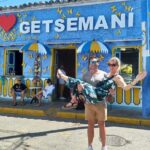
If Cartagena is all postcard beaches and big cathedrals, Getsemaní is the other side of the coin. This neighborhood is where resistance, music, and art show up in everyday life—on walls, in squares, and in how people gather at night. That’s what makes this tour different from the usual “here’s the spot” approach.
I like that the guide’s message is consistent: the past isn’t treated like it’s sealed in a museum. You’ll hear how segregated and insurgent people pushed back during the colonial era, and how that fighting spirit later fed artistic movements across cinema, painting, sculpture, dancing, and music. That context matters because you’ll start noticing details you’d otherwise miss.
You’ll also get a clear sense of why the area still feels proudly alive today, not stuck in nostalgia. The tour specifically calls out the Afro Uprising and frames it as resistance that continues to shape the neighborhood.
Other Getsemani tours in Cartagena
The 2.5-hour plan: pace, distance, and the wireless audio advantage
This is a 2.5-hour walking tour, so think “focused highlights” more than “every corner of Getsemaní.” You’ll cover about 8 km with some rest stops built in. In other words: comfortable shoes are not optional, and you’ll want to pace yourself.
Here’s what I really like: the tour includes a wireless audio system. That means you can keep moving, stop for a photo, or drift a step or two to check a mural—and you still hear the guide clearly. It’s a simple upgrade, but it changes the whole feel of a walking tour in a crowded neighborhood.
The tour is shared, so you’ll be with other people, and you’ll likely see the streets at their busiest points. The good news is the audio system helps you stay part of the story even when traffic, noise, and groups get in the way.
Where it starts: two meeting points depending on the day
Your meeting point depends on the day of the week, so don’t wing it based on memory.
- Monday to Friday: meet in the Plaza de la Proclamación, next to the Pope statue.
- Saturday and Sunday: meet in the Plaza de la Santo Domingo, next to the Botero statue of Gertrudis.
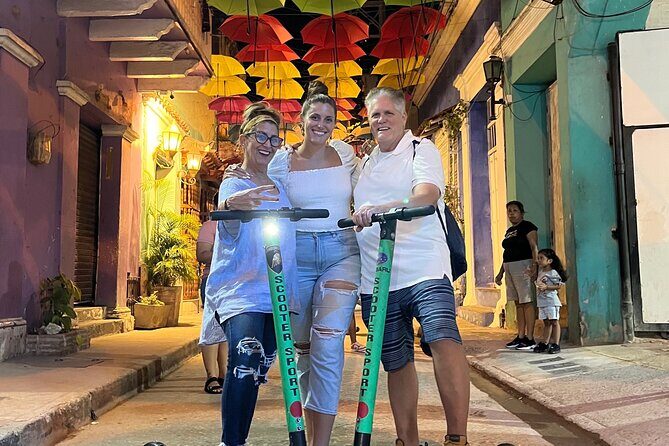
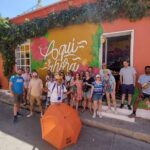
Arrive about 5 minutes early. After that, the group moves about two blocks to the next meeting and departure point with the guide. You’ll spot the team by their red umbrellas.
If you like smooth logistics, this is a big plus. It reduces that awkward guessing game in a busy plaza.
Centennial Park to independence commemoration: the neighborhood’s backbone
One of the first big anchors is Centenario Park, tied to the independence of Cartagena. This stop matters because it sets the tone for everything that comes after. Instead of treating Getsemaní as just “a cool area,” the tour connects it to the identity-building moments that shaped Cartagena.
You’ll learn how the neighborhood carried resistance energy long before it became known for street art and nightlife. That turns the rest of the walk from sightseeing into interpretation: you’re seeing why certain places and symbols became meaningful.
You’ll also get a sense of the cultural weight behind the celebrations and public spaces here. Even if you’ve been to Cartagena before, this framing can make the city feel new again.
Trinidad/Trinity Artistic Square: culture at night, not just by daylight
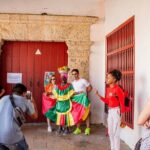
Next is Trinidad Artistic Square, where the cultural movement shows up strongly at night. This is a great stop for photos, but it’s also where the tour’s themes start to feel physical. You can see how art and music fit into daily life, not only in performances staged for tourists.
What I like is the way this stop connects to the broader story: the tour doesn’t separate “history” from “art.” It treats them as the same thread. The independence-era resistance that shaped the neighborhood also shaped later artistic expression—so a square like this becomes a living classroom.
One practical note: because this area can be active, you’ll want to keep your belongings secure. Crowds are part of the experience, and it’s easy to get distracted while watching street life.
Other graffiti and street art tours in Cartagena
Afro Uprising and present-day resistance: why the walls matter
The tour highlights Afro Uprising and explains how resistance is alive today. This section is where the neighborhood’s story becomes more than a set of dates. The guide’s goal is to show you the logic behind the neighborhood’s pride: people built identity through struggle, community, and creative expression.
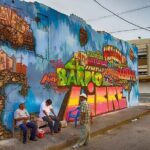
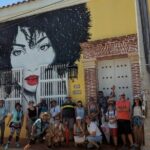
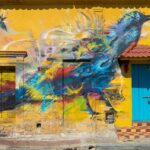
You’ll also hear how this history connects to what you’re seeing on the street—especially graffiti and other forms of street art as resistance. That’s important because many visitors treat graffiti like decoration. Here, it’s framed as communication. It’s a way of saying: we were here, we fought, and we continue.
If you’re the kind of traveler who likes to interpret what you see instead of just snapping pictures, you’ll probably get a lot out of this part.
Cultural street art and the idea of wide and narrow streets
One of the most distinctive themes is how the tour reads the neighborhood through street form—what the tour describes as wide & narrow streets and how they reflect tradition and history.
This matters for a couple reasons. First, the physical layout shapes how people gather, how sound carries, and how neighborhoods feel walkable or tight. Second, street art tends to appear where people naturally pause or pass through. So when the guide connects the art to the street shape, you start noticing patterns instead of random murals.
The tour specifically connects graffiti as a form of resistance to the neighborhood’s deeper story. So you’re not only asking what a mural shows—you’re asking why it shows up here and what it’s doing for the community.
This is also a good moment to slow down. Use the audio system to stay synced, then take a minute to read what’s in front of you.
The Well and other squares that anchor the story
The itinerary includes The Well Square (referred to in the tour description as The Well), along with other representative stops that help you understand daily life in Getsemaní. Squares like these tend to be where stories stick. People meet there. Conversations happen there. And when history is told around a local space, it feels more real.
You may also find that guides naturally point out small signals in the surroundings—where people gather, how the neighborhood breathes, and how tradition shows up in everyday rhythms. That’s the kind of detail that turns a walk into a genuine understanding of place.
San Felipe Fortress viewpoint: battles, victories, and dramatic angles
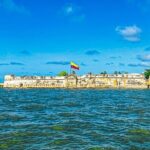
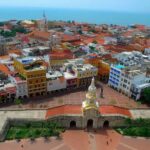
The tour ends with one of its most memorable viewpoints: San Felipe Fortress. The guide shares stories of battles and victories from this vantage point. Even if you’ve seen fortress views elsewhere, the key here is how the tour ties the height back to the neighborhood’s survival and resilience.
This is where you’ll likely pause the longest. The viewpoint is ideal for photos, but it’s also a moment to connect the earlier history to the bigger geography of the city. When you can see the layout and understand why a fortress mattered, the stories start feeling less abstract.
It also works well as a final chapter. You walk in with resistance-era context, and you walk out with a larger picture of Cartagena’s struggle and strength.
The included Corozo shot and local recommendations
This tour includes a small but meaningful taste of the area: a courtesy Corozo natural homemade shot. It’s the kind of included detail that makes a walking tour feel grounded. Even if you only sample a small amount, you get that extra link between story and everyday life.
At the end of the tour, you’ll also receive a wristband that comes with benefits and discounts with recommended local friends. You can also use the guide’s recommendations for lunch, coffee, and souvenirs. No hard selling—just practical suggestions from people who know what works.
Value check: is $9 really enough for all this?
At $9 per person, this tour is strong value for a few reasons.
You get:
- an English or Spanish-speaking guide with accurate, objective local Cartagena history
- wireless audio so you can actually follow the narrative
- key Getsemaní stops (including Centenario Park, Trinidad/Trinity Artistic Square, The Well, and San Felipe Fortress viewpoint)
- the Corozo shot
- local recommendations and wristband-based discounts
For a 2.5-hour walk, the price basically covers the experience design: guide + audio + curated route + included local flavor. The main thing you pay for separately is what you’d normally pay anyway—drinks, food, and souvenirs.
Who should book this tour
This is a good fit if:
- you like street art with context (not just photos)
- you want a short tour that still covers major landmarks in Getsemaní
- you care about history told through culture—music, resistance, and public spaces
- you prefer walking tours where audio helps you keep up without fighting the crowd
It’s probably not your best match if you:
- have mobility limitations (the tour is not suitable for wheelchairs or mobility impairments)
- hate walking long distances—about 8 km is a lot for 2.5 hours, even with stops
- don’t want to handle heat or sun without frequent breaks (bring water and sunscreen)
Practical tips so the tour feels easy
Bring:
- comfortable shoes
- hat
- camera (you’ll want it)
- sunscreen
- water
Plan behavior:
- smoking is not allowed
- no alcohol or drugs
- don’t litter
My best advice: treat the audio system like a tool for listening, not just convenience. Once you trust that you can hear the guide, you’ll feel freer to pause and look around without losing the thread.
Should you book Beyond Colombia’s Getsemaní tour?
Book it if you want Getsemaní’s story in a way that connects independence, Afro resistance, street art, and the fortress viewpoint. The wireless live system is a real quality-of-life upgrade, and the included Corozo shot plus local lunch/coffee/souvenir recommendations make it feel like more than just a route.
Skip or think twice if 8 km sounds like a stretch, or if you want lots of ticketed indoor attractions. This tour is built around outdoor sights, walking, and listening—not entrances and paid stops.
FAQ
FAQ
What language is the tour available in?
The tour is offered with an English or Spanish speaking guide, and the audio system also works in English or Spanish.
How long is the Getsemaní Art District tour?
The duration is about 2.5 hours.
How much walking should I expect?
You’ll walk about 8 km, with rest stops along the way.
Where do I meet the guide?
On Monday to Friday, you meet in the Plaza de la Proclamación next to the Pope statue. On Saturdays and Sundays, you meet in the Plaza de la Santo Domingo next to the Botero statue of Gertrudis.
How do I find the right group?
Look for the guides with red umbrellas by Beyond Colombia. Arrive 5 minutes early because the group then moves two blocks to the departure point.
Is the wireless audio system included?
Yes. A wireless live system is included, so you can hear the guide clearly while staying mobile and taking photos.
What’s included besides the tour guide and audio?
The tour includes a courtesy Corozo natural homemade shot and sightseeing of essential places in the Getsemaní neighborhood, plus recommendations for lunch, coffee, and souvenirs. You also receive a wristband with benefits/discounts with recommended local partners.
Are there any tickets or paid entrances?
No. The tour won’t take you to places where sudden extra charges apply, and tickets or entrances are not included.
What should I bring?
Bring comfortable shoes, a hat, camera, sunscreen, and water or your preferred hydration.
Is the tour suitable for people with mobility impairments or wheelchairs?
No. It’s not suitable for people with mobility impairments and it’s not suitable for wheelchair users.
Is the tour actually free to cancel?
You can cancel up to 24 hours in advance for a full refund.