REVIEW · CARTAGENA
“Essential Cartagena” Private Tour.
Book on Viator →Operated by "El Guiador" · Bookable on Viator
Cartagena feels like a living museum. This private 4-hour walk in the walled-city area turns landmark photos into context, with a guide who explains the port, the defenses, and the human stories that shaped Cartagena. I especially like how you can customize the route so the tour fits your pace and interests.
I also like the built-in “variety pack” of stops: plazas tied to trade and power, viewpoints from bastions over Cartagena Bay, and two museum breaks along the way. With bottled water and snacks included, you can keep moving without constantly hunting for a bite.
The main consideration is simple: you’re doing a lot of walking on uneven streets, with a moderate fitness level needed. Add rain to the mix and the day can shorten, since the experience depends on good weather.
In This Review
- Key things I’d plan around
- A private guide turns Cartagena into a story you can walk
- Start at the Torre del Reloj, then follow the walled-city logic
- Plaza de los Coches: where the city’s movement had a darker side
- Plaza de la Aduana: trade lanes, Spain’s reach, and accounting power
- Plaza de San Pedro Claver: faith focused on the enslaved
- Bastion views at Baluarte de San Ignacio and San Francisco Javier
- Parque de la Marina: Colombian navy pride in monument form
- Museo Naval del Caribe: one ticket you’ll pay, and why it’s worth it
- Plaza de Bolívar: Inquisition power, a major statue, and strange civic mixes
- Museo del Oro Zenú: gold artifacts that explain pre-Spanish life
- Plaza Santo Domingo and its Botero moment
- Plaza Fernandez Madrid: the church link to how the city got fresh water
- Plaza de San Diego and La Serrezuela: where food and daily life take over
- La Trinidad in Getsemaní: street art and a cooler side of Cartagena
- Camellón de los Mártires: the connection walk between worlds
- Ending where you started: Torre del Reloj closes the circuit
- Price and value: what $140 buys in the real world
- Practical tips so you enjoy the walk, not suffer through it
- Should you book Essential Cartagena?
- FAQ
- How long is the Essential Cartagena private tour?
- Where does the tour start and end?
- Is this tour private?
- What’s included in the price?
- What isn’t included?
- What kind of physical condition do I need?
- What happens if the weather is poor?
Key things I’d plan around
- Truly private, your group only: your guide can shift timing and focus to match you.
- A focused loop through iconic plazas and bastions: short stops that still teach you what matters.
- Great viewpoints without a big commute: bay and coastline views built into the route.
- One paid museum stop: Museo Naval del Caribe entrance is not included.
- Getsemaní street art in the mix: you see more than just the postcard center.
- Bring walking shoes: cobblestones and tight streets are part of the deal.
A private guide turns Cartagena into a story you can walk
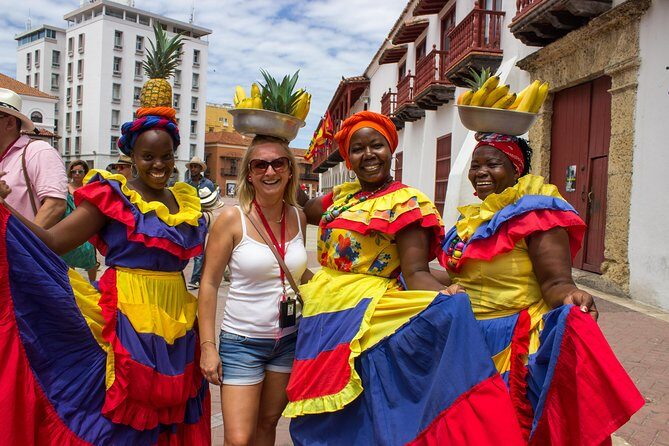
Cartagena can look straightforward on a map, but on foot it’s a maze of plazas, churches, and fort walls. A private guide helps you connect the dots fast, and that’s the real value here. You’re not just “seeing” places, you’re learning why they mattered.
This tour’s format makes it easy to steer. If you care more about defense, you’ll get more emphasis on bastions and the navy angle. If you want social history, you’ll spend time on places tied to slavery, the Inquisition, and the Jesuit legacy at San Pedro Claver.
Other private tours in Cartagena


Start at the Torre del Reloj, then follow the walled-city logic
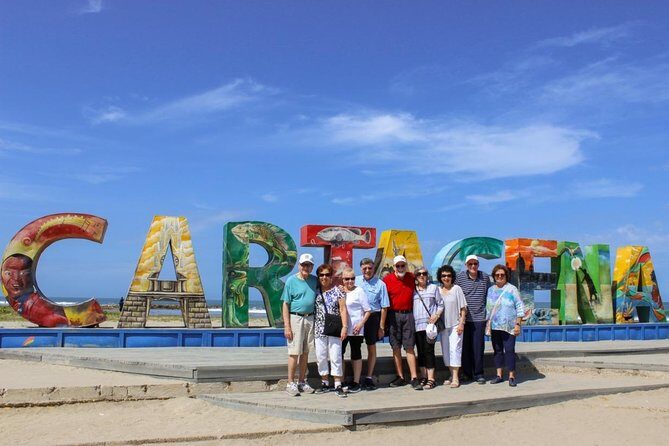
The meeting point is the Monumento Torre del Reloj at Boca del Puente in El Centro. You’ll work a circuit through the historic core and finish back at the same spot, which is a relief when you’re crunched on time.
The “tower-to-plazas-to-forts” rhythm is part of why this tour works. You don’t wander randomly. You move from entry points and trade hubs, to religious sites, to defensive viewpoints, then back through the city’s social and cultural pockets.
At the end, you’ll feel like you understand the shape of the city instead of just walking through it. That’s what good storytelling does when it comes with an actual route.
Plaza de los Coches: where the city’s movement had a darker side
One of your first stops is Plaza De Los Coches. This is where people entered the walled city, and it also ties to the slave trade and the area functioning as a transportation hub. There’s also a statue of the city’s founder, Pedro de Heredia.
If you like history that isn’t sanitized, this stop is a strong opener. The message is clear: Cartagena’s wealth and importance came through systems that caused real harm. Your guide’s job is to put the facts in plain language so it doesn’t feel like a lecture.
Time here is short, so you’ll want to listen closely and ask questions if something hits you.
Plaza de la Aduana: trade lanes, Spain’s reach, and accounting power
Next comes Plaza de la Aduana. This plaza connects to how gold, silver, and regional goods like tobacco, potatoes, sugar, and fruits were loaded for Spain via the Galeón Armada. It also served as a channel for imports moving from the metropolis to territories across South America.
Even if you’ve never cared about old shipping routes, this is the kind of “why this matters” stop that makes the rest of the city click. It’s hard to look at Cartagena’s walls and not wonder how ships, cargo, and bureaucracy all worked together.
Today, the Casa de La Real Contaduría—Spain’s kings accounting offices—is here, and it now functions as the mayor’s office of Cartagena. That’s a neat reminder that history isn’t locked behind glass.
Plaza de San Pedro Claver: faith focused on the enslaved
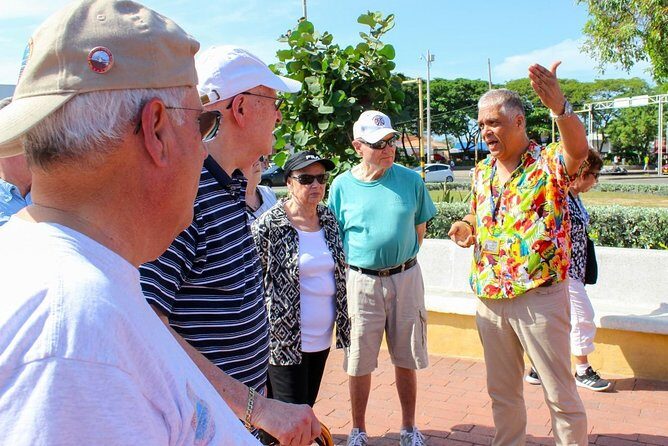
At Plaza de San Pedro Claver, you’ll visit the church dedicated to a Jesuit priest known for his work with enslaved Africans brought through this port. The site frames “miracles” not as magic tricks, but as human action and devotion.
This is one of those stops where the tour shifts from trade and buildings into people and moral responsibility. It’s emotionally heavy, but it adds balance. Cartagena wasn’t only defenses and wealth; it was also suffering, care, and resistance in different forms.
Keep your pace respectful here. The time is brief, but the subject has a lot underneath it.



Bastion views at Baluarte de San Ignacio and San Francisco Javier
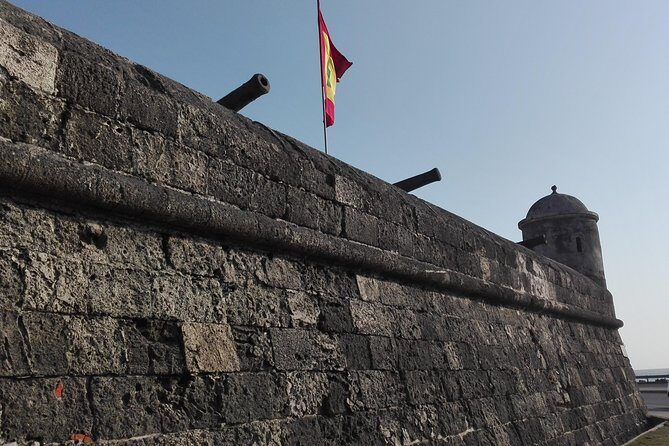
Two of the most satisfying moments come from bastions. First up is Baluarte de San Ignacio, where you get views over Cartagena Bay and the Bodeguita dock while learning how the city defended itself against pirates and enemies of the Spanish kingdom.
Then later you’ll reach Baluarte de San Francisco Javier. From here you can see the coastline and in the distance Bocagrande, where Spanish military engineers built an underwater jetty to hamper navigation. The idea was to force ships to pass through a guarded entrance to the bay at Bocachica.
These stops are short, but they teach you to read the city visually. If you stand where your guide tells you to stand, you’ll understand why walls and sea lanes were treated as one system.
If you’re prone to getting tired, these are the moments where you’ll actually want to pause and take in the view before moving on.
Parque de la Marina: Colombian navy pride in monument form
At Parque de la Marina, the focus shifts to maritime pride and national memory. You’ll learn about the history of the Colombian navy and Admiral José Padilla, known by colleagues as Prudencio for his bravery. The story highlights his defeat of the Spanish Armada with very few men and ships.
This is a useful counterweight to the Spain-focused trade and fortress context earlier. You’re seeing how Cartagena’s port identity kept changing hands of narrative, and how Colombians shaped their own version of the sea story.
Again, time is not long, so it’s worth keeping your attention on the key names and the “why” behind the monuments.
Museo Naval del Caribe: one ticket you’ll pay, and why it’s worth it
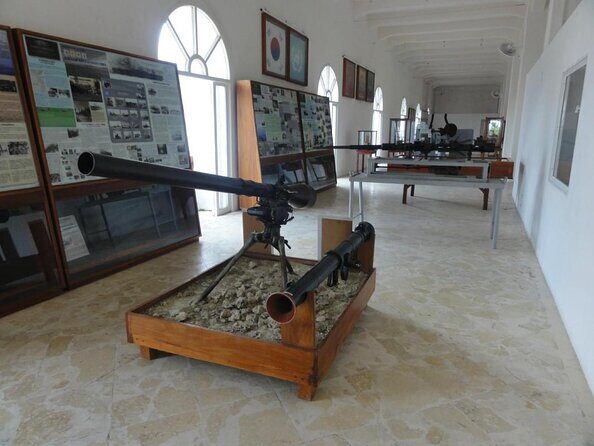
Your route includes Museo Naval Del Caribe, with about 30 minutes allocated. This museum offers a naval viewpoint on Cartagena de Indias—how geography and nature made it a perfect site for a defensive port, and how the city’s maritime life and defense evolved.
Important practical note: Museo Naval del Caribe entrance ticket is not included. If you don’t like paying extra on tours, this is the one item to plan for. The upside is that it’s a true shift from outdoor views to inside context, so it’s the kind of stop that can justify the whole day.
If you’re someone who learns best by seeing artifacts or models, you’ll likely appreciate the museum more than a quick photo stop.
Plaza de Bolívar: Inquisition power, a major statue, and strange civic mixes
At Plaza de Bolivar, you’ll see a cluster of landmark meanings. The Palacio de la Inquisición is here, along with a statue of Simón Bolívar, the Libertador of five countries. There’s also the Colombian beauty queens hall of fame.
This stop is fascinating because it shows how a city layers eras over each other. You start with trade and slavery, you move to faith work, and then you land in a plaza that holds symbols of power and control alongside modern cultural references.
It’s also one of your longer plaza moments, about 15 minutes, which gives you time to regroup and absorb.
Museo del Oro Zenú: gold artifacts that explain pre-Spanish life
Next is Museo del Oro Zenu, with about 30 minutes. Admission is listed as free for this stop, and the museum focuses on gold artifacts made by the Zenú culture that inhabited the area before the Spanish arrived in the 16th century.
This is your best “pre-colonial context” stop on the route. It helps you see Cartagena not only as Spanish-era wealth and European-era fortifications, but as a region with its own people and craftsmanship before those ships showed up.
If you’re short on time elsewhere in the city, this museum break is a strong use of the 30 minutes.
Plaza Santo Domingo and its Botero moment
At Plaza Santo Domingo, you’ll find Gertrudis, also known as La Gorda de Botero. You’ll also see the church of Santo Domingo, described as the first monumental construction in Cartagena.
Even if you think you’re not a museum person, you’ll probably enjoy this stop because it’s art meeting architecture in one easy walk-by. It also gives your brain a breather from the heavy themes of trade, slavery, and church history.
Take a couple of minutes for the statue photo, then reset and keep going. The day moves.
Plaza Fernandez Madrid: the church link to how the city got fresh water
At Plaza Fernandez Madrid, you’ll learn about how people in Cartagena got their fresh water supply. The stop includes Iglesia de Santo Toribio as a reference point.
Water systems matter in coastal fort cities. If you want to understand why a port could survive sieges and shortages, fresh water becomes part of the story. This stop helps you see the city’s survival logic, not just its decorative side.
Time is short here, so if water systems are your thing, ask your guide to focus on the practical angle.
Plaza de San Diego and La Serrezuela: where food and daily life take over
Plaza de San Diego is a picturesque break with a modern edge. You’ll hear about student life from the arts university, see a trendy side of the historic center, and notice lots of restaurants and historic buildings nearby. One specific reference is the Santa Clara convent, now a luxury hotel.
This is also where street food comes into the picture. If you want snacks you can buy right there, the route mentions options like arepa de huevo, caribañolas, and empanadas.
Then you walk by La Serrezuela, which used to be the bullring and multipurpose arena of Cartagena. Today it’s a high-end shopping mall and a venue for concerts and shows, so you get another reminder that old spaces can keep living, just with different uses.
If you’re traveling on a tight schedule, these stops are great because they don’t feel like homework. They feel like strolling, with context.
La Trinidad in Getsemaní: street art and a cooler side of Cartagena
Your route reaches Plaza de La Trinidad, where you’ll enter the neighborhood of Getsemaní. This is where the tour points you toward street art and colorful streets.
Getsemaní is a different mood than the more formal plazas closer to the center. You’ll feel it in the texture of the streets: less ceremonial, more lived-in. It’s also a good spot to slow down a touch and watch how people move through the neighborhood.
Be aware that weather can change how much of the tour you cover. One guide’s day was shortened by rain, and Getsemaní was mentioned as the part that sometimes gets pushed out when conditions are bad.
Camellón de los Mártires: the connection walk between worlds
After Getsemaní, you’ll walk along the Camellon de los Martires and the Parque Centenario. This segment connects Getsemaní and the Centro, and it also gives you a view of the Convention Center.
This isn’t a “big ticket” sight, but it’s important. It shows the city isn’t just a series of isolated monuments. It’s a working place with neighborhoods that connect, overlap, and share space with modern infrastructure.
Ending where you started: Torre del Reloj closes the circuit
You’ll return to the Torre del Reloj to complete the loop. This finish matters because it turns your walk into a circle you can mentally map later.
By the end, you should feel like Cartagena’s story has shape: entry points and trade, the port’s darker economics, faith responses to cruelty, and defenses built to control the sea.
And if you want one thing to remember from the whole day, it’s this: the guide’s job is to connect what you’re seeing right now to what came before.
Price and value: what $140 buys in the real world
At $140 per person for about 4 hours, the headline price can look steep until you compare what’s happening under the hood.
You’re paying for a private guide who can tailor the itinerary to your interests and ability level. You’re also getting water and snacks included, which is small but practical in a city where you’re walking more than you expect.
The tour also bundles a lot of free stops—many plazas and bastions are listed with free admission—so your day isn’t constantly “nickel-and-dimed” by ticket lines. The one exception is Museo Naval del Caribe, where you’ll need to cover the entrance ticket separately.
If you’re the type who hates group tours that move on autopilot, this private format is usually where the value lives.
Practical tips so you enjoy the walk, not suffer through it
Wear shoes you trust. The route includes cobblestone streets and a fair amount of walking, and even a 4-hour day can feel long when you’re navigating uneven pavement.
Bring a simple rain plan. This experience requires good weather, and in at least one case the rainy conditions meant the tour didn’t fully cover the last segment. If the sky looks questionable, plan to move more slowly and be flexible.
If you want to eat as you go, you’re in luck. The route explicitly mentions street food at Plaza de San Diego, and local fruit tastes and juices have also been part of the experience with guides like Stefania and Jose. Just remember that alcoholic beverages aren’t included.
Lastly, use your private time well. If there’s one topic you care about—naval defense, trade, or the human story behind the port—tell your guide early. That’s the easiest way to make sure your four hours feel like yours.
Should you book Essential Cartagena?
Book this tour if you want a private, story-focused walk that covers major historic Cartagena landmarks without wasting time. It’s a good fit for first-timers who want context fast, and for return visitors who’d rather understand what they’re looking at than just photograph it.
I’d skip it or plan differently if you have very limited mobility, because the walking is real and the streets can be rough. Also keep an eye on the weather, since poor conditions can shorten the route.
If your goal is to leave Cartagena with a clearer sense of how trade, defense, and people shaped this city, this one is a strong choice for your time.
FAQ
How long is the Essential Cartagena private tour?
It’s listed as approximately 4 hours.
Where does the tour start and end?
It starts at the Monumento Torre del Reloj, Boca del Puente in El Centro, Cartagena de Indias, and it ends back at the same meeting point.
Is this tour private?
Yes. It’s a private tour/activity, and only your group participates.
What’s included in the price?
The tour includes bottled water and snacks.
What isn’t included?
Alcoholic beverages are not included, and the entrance ticket for Museo Naval del Caribe is not included.
What kind of physical condition do I need?
The tour recommends travelers have a moderate physical fitness level.
What happens if the weather is poor?
The experience requires good weather. If it’s canceled due to poor weather, you’ll be offered a different date or a full refund.