REVIEW · CARTAGENA
Walking Tour Old City
Book on Viator →Operated by Mora Tourism · Bookable on Viator
Cartagena’s Old City feels like a living set. This 2–3 hour walk connects colonial plazas and classic landmarks to everyday details, with a small-group pace and a guide who keeps it clear. I love how Carlos threads the story of Cartagena and Colombia into what you’re seeing, and I like that the route balances big sights with practical stops, from Las Bóvedas to Getsemaní.
One watch-out: you’re mostly outdoors and the sun in Cartagena can hit hard. Come ready with comfortable shoes and real sun protection, and you’ll get a far more enjoyable walk—no rushing, no misery.
In This Review
- Key Highlights You’ll Actually Care About
- Old City on Foot: What a 2–3 Hour Route Gets You
- Price and Value: Is $40 Worth It?
- Small Group + Pickup Options: How It Feels to Join
- What to Bring (and Why): Sun, Shoes, and a Real Plan
- Las Bóvedas: Craft Market Inside a Former Military Garrison
- Plaza de San Diego: Colonial Squares and Famous Address Energy
- El Depósito Coffee Shop: Colombian Coffee Explained by Santiago Gonzales
- Teatro Adolfo Mejía: Claustro de la Merced and a Gabo Connection
- Plaza Santo Domingo: Old Civil Buildings and Fernando Botero’s Presence
- Catedral Santa Catalina de Alejandría: A Cathedral That Has Seen the City
- Plaza de San Pedro Claver: Pedro Claver’s Legacy and Naval Museum Energy
- Plaza de la Aduana and Torre del Reloj: Government Space to Slave Square
- Barrio Getsemaní Finish: Street Art Where Life Happened
- Who This Tour Fits Best (and Who Might Want Something Else)
- Should You Book It?
- FAQ
- How long is the walking tour?
- What does the tour cost?
- Is pickup available?
- What language is the tour in?
- How big is the group?
- Are entrance tickets included?
- What is the cancellation policy?
Key Highlights You’ll Actually Care About
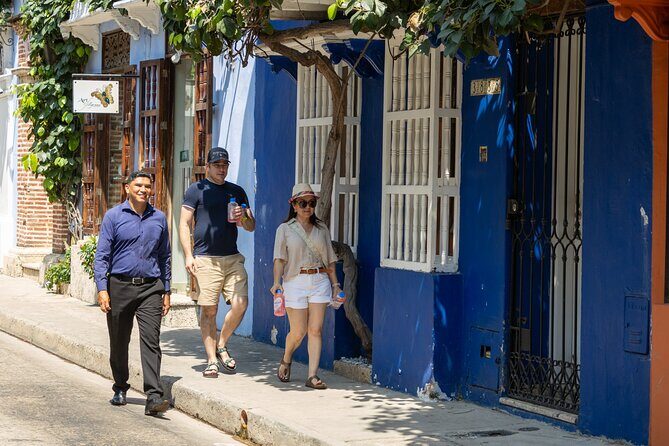
- Carlos is flexible and answers questions without derailing the flow.
- A coffee stop with Santiago Gonzales focuses on real Colombian coffee, not supermarket talk.
- Craft browsing at Las Bóvedas gives you something to do besides just look at buildings.
- You’ll hit the main cathedral-church-plaza circuit in a smart order, without feeling like you’re sprinting.
- End in Getsemaní so your tour finishes with street art energy just outside the walls.
- Max group size is 15, which keeps the walk friendly and manageable.
Old City on Foot: What a 2–3 Hour Route Gets You
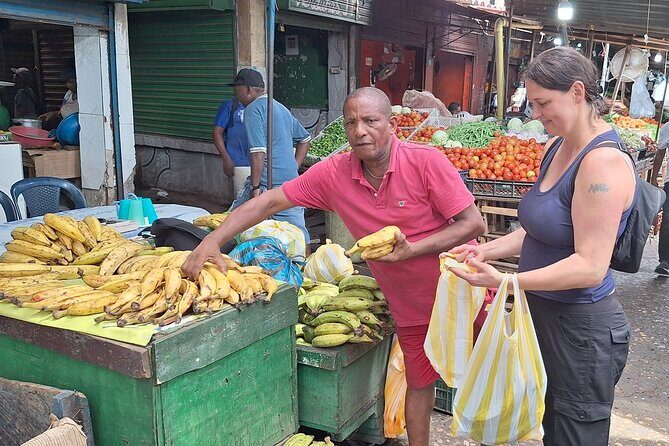
This is the kind of walking tour you do when you want context fast. The format is simple: you move through Cartagena’s core, stop often enough to catch details, and still finish within an easy morning/afternoon window. At roughly 2 to 3 hours, it’s long enough to understand the layout, but short enough that you don’t feel trapped in “sightseeing mode.”
For your brain, it helps that the route hits the big anchors—churches, plazas, and the cathedral area—then rounds it out with personality: craft shops, coffee, and street art. You start with older, heavier history and end with the more modern-looking texture of Getsemaní.
Other Walled City and Old Town tours in Cartagena


Price and Value: Is $40 Worth It?
At $40 per person, the price makes sense for a guided walk in Cartagena’s Old City. You’re paying for a professional bilingual guide and a guided route that keeps the stops meaningful, not random. This matters because the Old City is compact, but it’s easy to get turned around unless someone points out what you’re actually looking at.
Admission tickets can be a confusing part of tours. Here, the stops on the route are marked as admission ticket free in the description for each key location, and the guide-led focus does the heavy lifting. Still, the tour provider lists that entrance tickets are not included, so if any extra paid entry comes up at a specific stop, you’d handle that separately.
Small Group + Pickup Options: How It Feels to Join
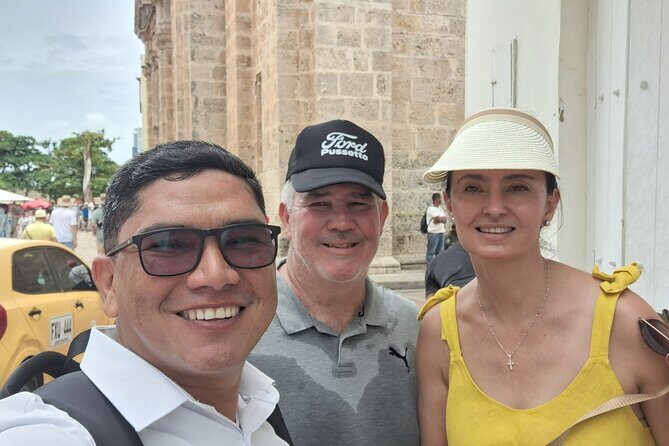
This tour caps at 15 travelers, so you’re not stuck behind a crowd. That small size helps for two things: you can ask questions, and you can actually hear explanations while walking through busy plazas.
Pickup is offered, which is a lifesaver if you’re staying a bit off the main routes. If you choose not to use pickup, the tour starts at Las Bóvedas San Diego and ends in Getsemaní. Either way, your day stays structured.
Also note the practical stuff: you get a mobile ticket, it runs in English, and it’s near public transportation. If you plan to connect this with other Old City exploring, you’ll be able to.
What to Bring (and Why): Sun, Shoes, and a Real Plan

You’re walking through plazas and streets under strong light, so the packing list isn’t optional. Bring sunblock, wear comfortable shoes, and if you can, take a sombrilla or hat. Even if you’re used to travel, Cartagena’s brightness can make the easiest walk feel longer than it is.
Moderate physical fitness is suggested. That doesn’t mean it’s extreme, but you should expect steady walking for the full route with a few short stops. Service animals are allowed, and the tour is near public transportation, which helps if you need a quick reset during your day.
Las Bóvedas: Craft Market Inside a Former Military Garrison
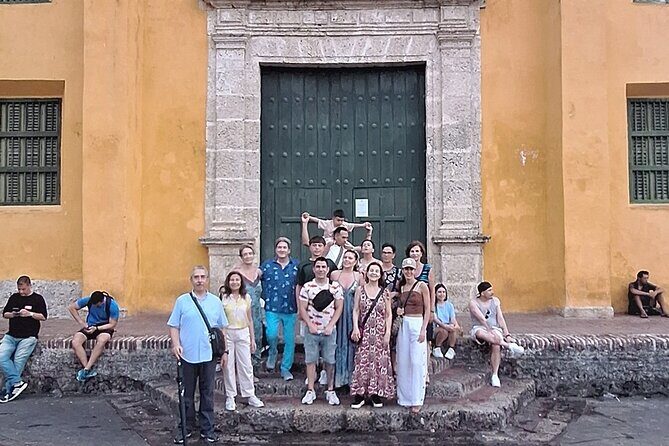
You begin at Las Bóvedas, a former military garrison built in the late 18th century. Today, it functions as an excellent craft market. The setting changes the shopping vibe instantly: you’re not just browsing stalls—you’re inside a structure with a past.
This is a great first stop because it gives you something to do with your eyes and hands. Look closely. Ask questions if you see materials you want to understand better. If you’re the type who buys one small “I’ll remember this later” souvenir, this is where it fits.
The only drawback here is also the most normal one: craft markets can tempt you into impulse buys. If you want value, set a budget before you start looking.
Other walking tours we've reviewed in Cartagena

Plaza de San Diego: Colonial Squares and Famous Address Energy
Next comes Plaza de San Diego, a colonial square surrounded by important buildings. One big reason it’s worth stopping: it connects a former convent of San Diego, now a School of Fine Arts, and the former convent of Santa Clara, now the Hotel Sofitel Legend Santa Clara.
That mix—sacred past turned into modern institutions—helps you understand how Cartagena keeps reusing spaces instead of freezing them in time. You also get a feel for the city’s current dining culture. Restaurants around here include Juan del Mar and La Cevichería, with Anthony Bourdain associated with the area through a famous visit.
The main thing to watch is time and attention. This is a short stop, so don’t wander too far looking for the “perfect photo spot.” Check what you’re meant to see first, then linger if the group pace allows.
El Depósito Coffee Shop: Colombian Coffee Explained by Santiago Gonzales
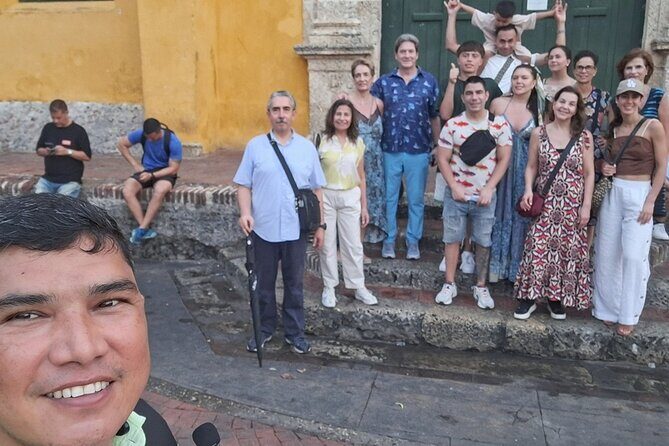
One of the best stops on the route is El Depósito – Coffee Shop. The highlight here is Santiago Gonzales, fourth-generation coffee-growing family, who explains traditional Colombian coffee in a way that feels grounded.
If you care about coffee beyond the basics, this is where the tour gives you something practical. You’ll learn how Colombian coffee culture works and what makes specialty coffee different from commercial blends. And yes, this is also the place where you can buy specialty coffee—so you’re not stuck deciding whether you like the idea or whether you want it in your kitchen later.
The only consideration: coffee shops can be popular, and this stop is timed. If you want to buy, decide what you want early so you’re not left trying to catch the group near the end.
Teatro Adolfo Mejía: Claustro de la Merced and a Gabo Connection

You’ll then reach Teatro Adolfo Mejía (Teatro Heredia), which is tied to the former Claustro de la Merced. The story of this place is part architecture and part cultural calendar. It now serves as the headquarters of Cartagena’s public university and functions as a theater for major events like classical music festival, literature festival, and film festival programming.
For fans of Gabriel García Márquez, there’s an additional reason to pay attention: his ashes and a small museum are located here. Even if you’re not a dedicated reader, the idea is powerful. A city’s creative energy is often tied to specific rooms and courtyards, and this is one of those spots.
This stop is shorter, so focus on the big cues: the cloister space and what it’s used for now. That’s what makes it click.
Plaza Santo Domingo: Old Civil Buildings and Fernando Botero’s Presence
At Plaza Santo Domingo, you’ll find the city’s oldest civil buildings, centered on the Convent of Santo Domingo. This is another place where the past isn’t locked away; it’s visible in the structure and in what surrounds it.
Don’t miss the sculpture by Fernando Botero. Even if you only know his style in passing, his work is instantly recognizable in Cartagena. It also adds a little contrast to the heavy stone of older religious structures.
A short stop here works well because the plaza is about orientation: it tells you where you are in the city’s identity, so the next church and cathedral area land with more meaning.
Catedral Santa Catalina de Alejandría: A Cathedral That Has Seen the City
Then you get to Catedral Santa Catalina de Alejandría, one of the oldest churches in Cartagena. Founded in the 16th century, it’s a colonial architecture standout, restored and preserved for current and future generations.
This is a stop that’s worth treating like a pause button. Even a quick look can help you understand why the city is so proud of its architectural survival. The cathedral is also the kind of place where the scale hits you in person—photos can’t quite do that justice.
If you want the most from the stop, keep it simple: look up, notice the exterior details, then step back and scan the façade again. That’s enough to catch the “why this matters” feeling.
Plaza de San Pedro Claver: Pedro Claver’s Legacy and Naval Museum Energy
Next comes Plaza de San Pedro Claver. This church connects to Pedro Claver, canonized in 1888, who long served slaves and other residents of Cartagena. It’s part religious architecture, part human story.
The area also includes the naval museum and some of the city’s best restaurants. That matters for you because it’s not a dead-end “look and leave” spot. After the explanation, you’ll understand why this corner of the Old City is still used.
If you’re hungry, you’ll be tempted to stop right away. Just remember your tour ends later in Getsemaní, so if you plan to eat twice, keep your priorities straight.
Plaza de la Aduana and Torre del Reloj: Government Space to Slave Square
Two quick but meaningful stops follow: Plaza de la Aduana and Torre del Reloj.
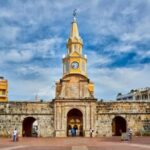
Plaza de la Aduana is tied to the house where the city hall and the SENA institution operate, plus modern buildings with local anecdotes you’ll hear during the walk. Torre del Reloj is especially important because it was formerly the Slave Square and now serves as a meeting place. It also includes the Sweets Gate and sits near some renowned bars and restaurants.
This pairing helps you connect daily life, government spaces, and history that shaped the city. One reason this works on a walking tour is that you can see how the city’s layout reinforces the stories.
If you’re sensitive to darker history, you might want to slow down mentally here. The tour moves on, but these stops are the kind where you can take a moment to absorb what you’re being told.
Barrio Getsemaní Finish: Street Art Where Life Happened
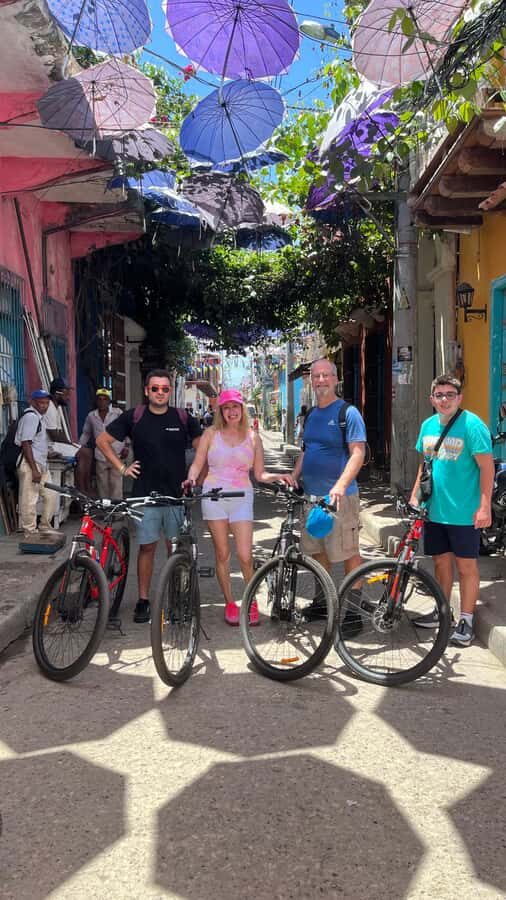
Your tour ends in Barrio Getsemaní, just outside the walls of Cartagena de Indias. Historically, it’s where free slaves and indigenous people lived during the colonial era, and today it feels colorful and full of street art and graffiti.
Ending here is smart. It changes your perspective from “historic monuments” to “people living around them.” You finish with energy rather than with another church or plaza that feels similar to the last one.
If you want to extend your day, this is the point where you can wander on your own and follow the street art and small streets. Your guided portion gives you enough grounding to explore without feeling totally lost.
Who This Tour Fits Best (and Who Might Want Something Else)
This tour is a strong fit if you want a guided Old City route in English with a small group and a guide who can adjust to special requests. It also works well if you like details that make places feel specific, not generic.
You might want a different option if you hate walking in heat, because the tour’s value comes from moving between many outdoor stops. With proper sun protection and shoes, you’ll be fine, but it’s not a “sit and be chauffeured” experience.
Coffee lovers, art fans, and anyone interested in Cartagena’s layered past—religious, civic, and cultural—will get extra mileage out of the stops.
Should You Book It?
Yes, if you want a focused Old City walk that mixes landmarks with hands-on culture. For $40, you’re getting a professional bilingual guide, a manageable group size, and a route that ends in Getsemaní instead of stopping at another viewpoint. The coffee stop with Santiago Gonzales is the kind of add-on that turns a basic walking tour into something you can remember and actually take home.
I’d book it especially if you like asking questions and want someone like Carlos to handle the “what am I looking at” part without making it feel like a lecture. Come prepared for sun and comfortable walking, and you’ll leave with better city sense than you’d get by bouncing between photos alone.
FAQ
How long is the walking tour?
It runs about 2 to 3 hours.
What does the tour cost?
The price is $40.00 per person.
Is pickup available?
Pickup is offered.
What language is the tour in?
The tour is offered in English.
How big is the group?
The tour has a maximum of 15 travelers.
Are entrance tickets included?
Entrance tickets are not listed as included, but the stops on this route are marked as admission ticket free in the tour description.
What is the cancellation policy?
You can cancel for a full refund if you cancel up to 24 hours before the experience start time. If you cancel less than 24 hours before, the amount paid is not refunded. The experience also requires good weather; if it’s canceled due to poor weather, you’ll be offered a different date or a full refund.