REVIEW · CARTAGENA
Shared Old Cartagena & Getsemani Tour with Wireless System
Book on GetYourGuide →Operated by Beyond Colombia · Bookable on GetYourGuide
This is how Cartagena talks to you. With the wireless audio system, your guide’s voice stays clear on crowded streets, so you actually follow the stories at every stop. I also love the mix of landmark views and street-level life, all packed into a tight 2-hour walk.
I really liked how the route connects the big-photo icons to the neighborhood details. You start at Santo Domingo Square and work through places like Plaza Bolívar and the Santuario de San Pedro Claver, then you transition into Getsemaní for murals and everyday energy. In one of the guide reviews I saw, Louis Carlos gets called out as a strong guide, and that matches what this kind of routing requires: someone who can keep the facts straight and the pace human.
One consideration: you’re walking a lot for a short time. The tour notes say you’ll cover about 8 km, with some crowded spots, and it isn’t listed as suitable for people under 6 or over 65. So if you’re sensitive to long walks or heat, plan hydration and wear comfy shoes.
In This Review
- Key highlights at a glance
- A 2-hour walk that links the Walled City to Getsemaní
- Meeting at Santo Domingo Square with red umbrellas and a receiver
- From Plaza de la Proclamación to Plaza Bolívar: the city’s public rooms
- San Pedro Claver and the colonial church-meets-street feeling
- Plaza de la Aduana, Plaza de Los Coches, and the Clock Tower entrance
- A practical tip
- City walls and the Santo Domingo bastion: views plus pirate-era stories
- Small drawback to plan around
- Camellón de los Mártires, Parque Centenario, and the walk between eras
- Calle del Guerrero and Calle de la Magdalena: street names that guide your eye
- Plaza de la Trinidad and Callejón Ancho in Getsemaní
- Getsemaní street art on Calle de la Sierpe: reading murals like a local
- Comfort, pacing, and the walk that adds up to about 8 km
- Price and value: why $13 can be a good deal here
- Who this tour suits best (and who should think twice)
- Should you book this Old Cartagena & Getsemaní tour?
- FAQ
- Where is the meeting point?
- What time should I arrive?
- How long is the tour?
- Is the wireless audio system included?
- What languages are available?
- How much walking is involved?
- What areas of Cartagena do we visit?
- Are tickets or entrances included?
- Does the price include transportation from my hotel?
- Can I record video or audio during the tour?
Key highlights at a glance
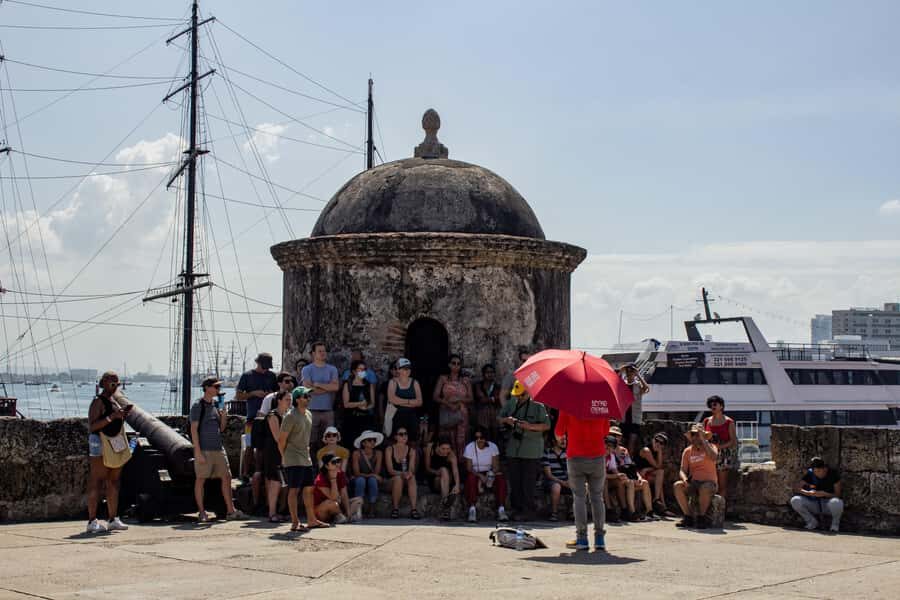
- Wireless receivers so you can hear the guide in busy lanes and still take photos
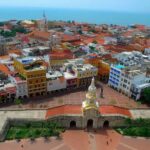
- Clock Tower and the Walled City entrance as your easy visual anchor from start to finish
- Santo Domingo Square to Plaza Bolívar with colonial plazas that feel lived-in, not museum-only
- City walls views with panoramic looks and pirate-era stories
- Plaza de la Trinidad and Getsemaní murals where the neighborhood identity shows in paint
- Small moments plus local tips on lunch, coffee, souvenirs, nightlife, and safety
A 2-hour walk that links the Walled City to Getsemaní
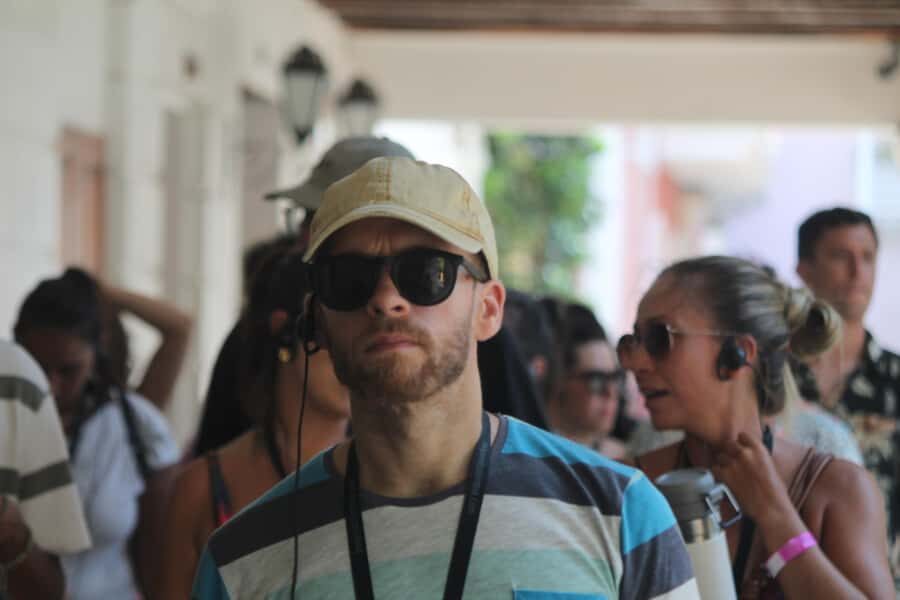
This isn’t a long, slow sightseeing day. It’s built like a guided circuit that starts inside the UNESCO-listed historic center and ends in Getsemaní, the neighborhood known for its street art, social life, and Afro-Caribbean cultural presence.
That “two worlds” idea is the heart of the value here. In the Walled City portion, you get the symbolism: the fortifications, the plazas, and the architecture that helped Cartagena defend itself. Then you step into Getsemaní, where the city’s identity is more visible on walls and in daily routines than it is behind official-looking facades.
At a practical level, it’s also a smart time choice. Two hours is enough to learn how to read Cartagena, not just enough time to snap photos and escape.
Other Getsemani tours in Cartagena
Meeting at Santo Domingo Square with red umbrellas and a receiver
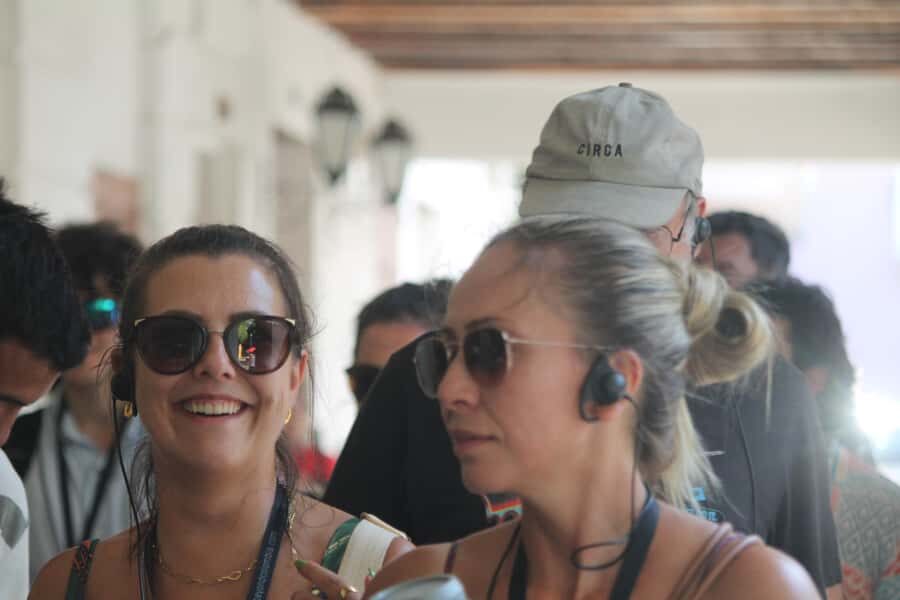
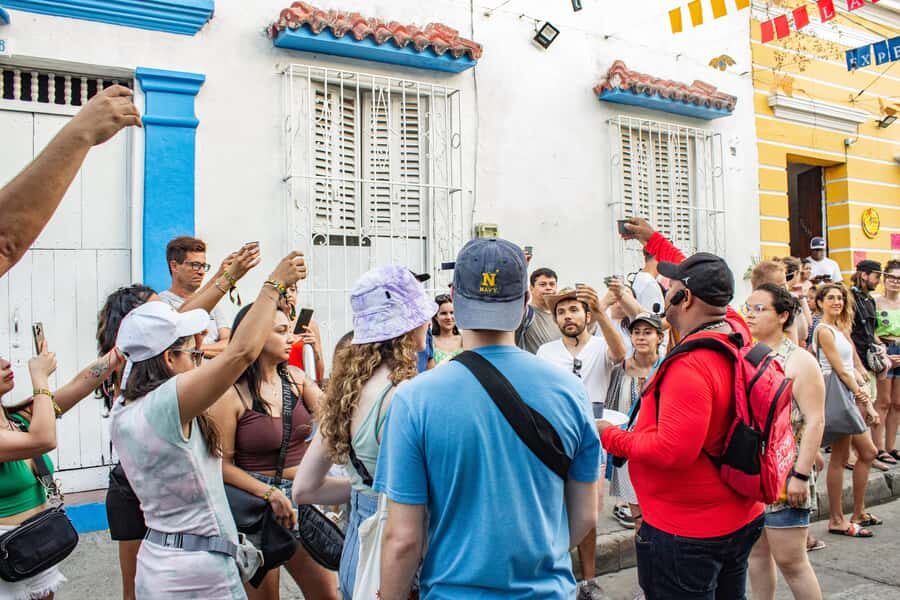
Your meeting point is Plaza de Santo Domingo, next to the Botero sculpture Gertrudis, with red umbrellas by Beyond Colombia. They ask you to arrive about 5 minutes early, mainly so you can get the wireless audio system before the group moves.
This matters more than you might think. Cartagena’s streets can get loud quickly—near plazas, around photo hotspots, and in tighter Getsemaní lanes. With the receiver, you’re not stuck trying to guess what your guide is saying over other people’s conversations. It also helps the group stay together without you constantly turning your head for directions.
You’re also walking, so treat the start like a warm-up: water ready, shoes on, and your phone charged enough for photos. The tour doesn’t include drinks or food, so you’ll want to plan a snack stop later.
From Plaza de la Proclamación to Plaza Bolívar: the city’s public rooms
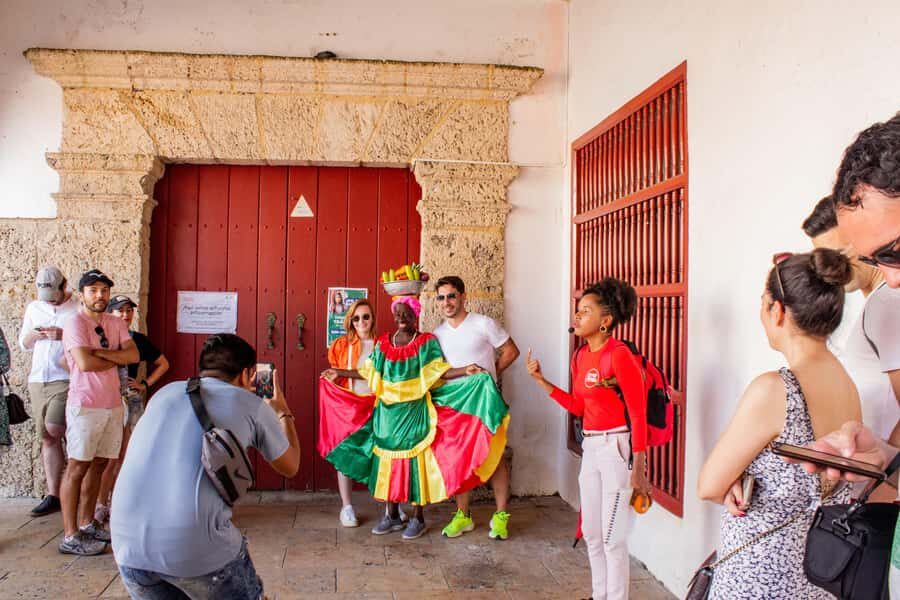
After you start at Santo Domingo Square, the early part of the route moves through major colonial plazas. You’ll spend guided time at Plaza de la Proclamación and Plaza Bolívar, and these places work like outdoor classrooms.
Plaza de la Proclamación is the kind of space that makes sense only once you understand what plazas were for: gatherings, announcements, and everyday civic life. When you stand in these squares with a guide, you stop seeing them as blank backdrops for pictures and start noticing the details your brain would otherwise miss—layout, sightlines, and how the surrounding buildings frame the square.
Then comes Plaza Bolívar, which is more than a landmark stop. The guide’s storytelling approach turns it into a reference point for understanding Cartagena’s layered past. Expect talk connected to religious influence and the larger power struggles that shaped life in the city center.
San Pedro Claver and the colonial church-meets-street feeling
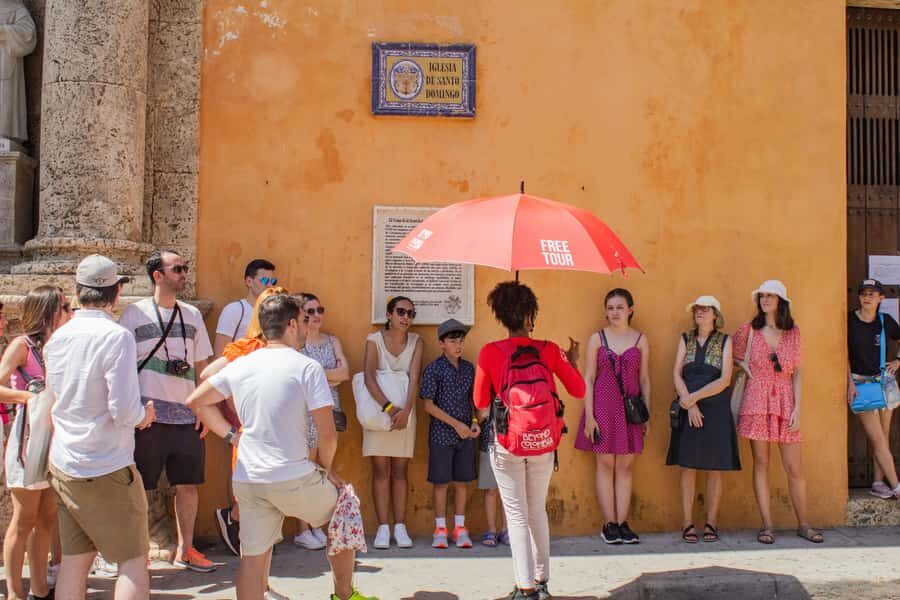
You’ll also visit the Santuario de San Pedro Claver. This is one of those stops that can feel rushed on quick tours, because people only look at the exterior and move on. Here, you get guided time for the meaning behind what you’re seeing.
For me, the real value is how a good guide connects a religious site to the broader social history of Cartagena. You’re not just hearing dates. You’re learning why certain symbols and institutions mattered, and how the city’s roles—trade, power, faith—show up in physical places.
If churches are your thing, you’ll appreciate this portion. If churches aren’t your thing, at least give this stop the full attention because it helps the rest of the route make more sense.
Plaza de la Aduana, Plaza de Los Coches, and the Clock Tower entrance
Next you move through Plaza de la Aduana and Plaza de Los Coches, two stops that add texture. These plazas sit in the flow of the Old City, so they give you a mix of architecture appreciation and real street atmosphere.
From there, you hit the Clock Tower Monument. The Clock Tower is one of Cartagena’s most iconic symbols, and it works as the visual “entry point” to the Walled City experience. If you want one moment that instantly makes the city feel real, it’s this. Your photos will come out better because you’ll know exactly why this spot is used so often as an emblem.


A practical tip
Keep an eye on your timing for pictures. You’ll often have brief moments to stop, and the wireless system helps you avoid losing the story while you frame a shot.
City walls and the Santo Domingo bastion: views plus pirate-era stories
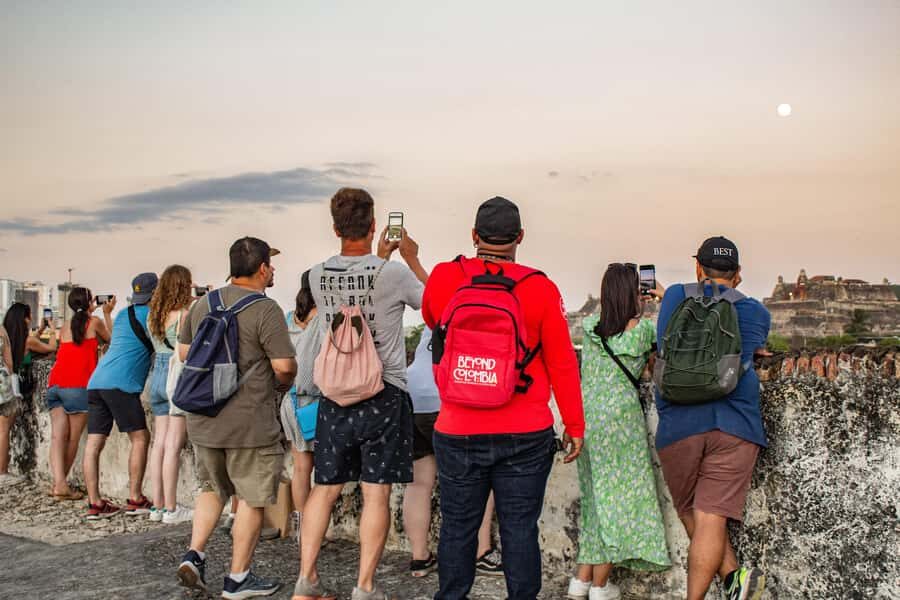
One of the big highlights is the City Walls experience, with views from the Santo Domingo bastion. Standing along the walls changes your understanding of Cartagena immediately. From down in the streets, the city can feel like layers of colorful buildings. On the walls, it becomes a defensive system.
That’s where the storytelling pays off. The guide talks about defenses and pirate-era stories—how battles and threats shaped everyday life. You don’t need to be a history nerd to enjoy this part. Even if you just like great views, you’ll appreciate how the city’s geography explains the dramatic features you’re seeing.
Small drawback to plan around
Wall areas can be windy, bright, and crowded at peak times. Wear sunscreen, hydrate, and be ready for short pauses while the group listens.
Camellón de los Mártires, Parque Centenario, and the walk between eras
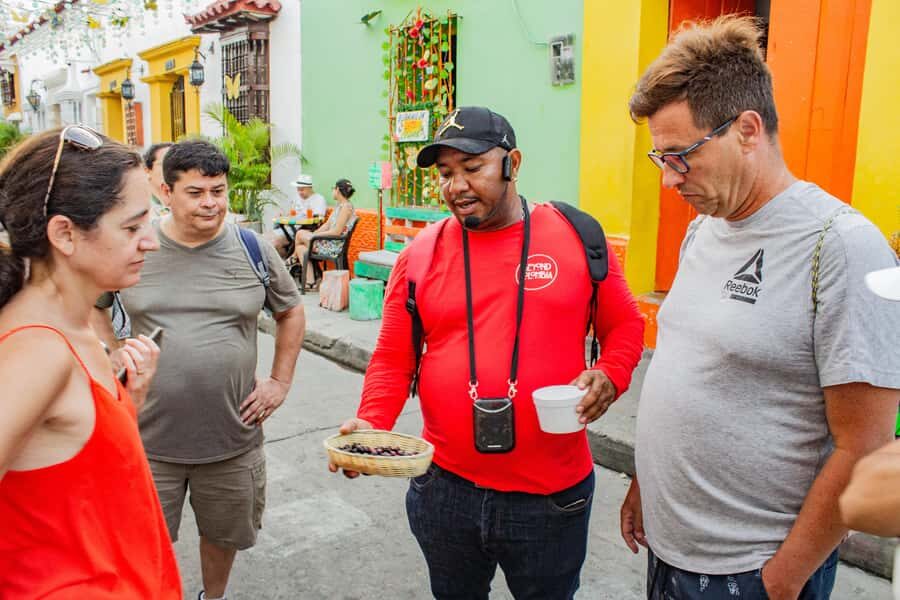
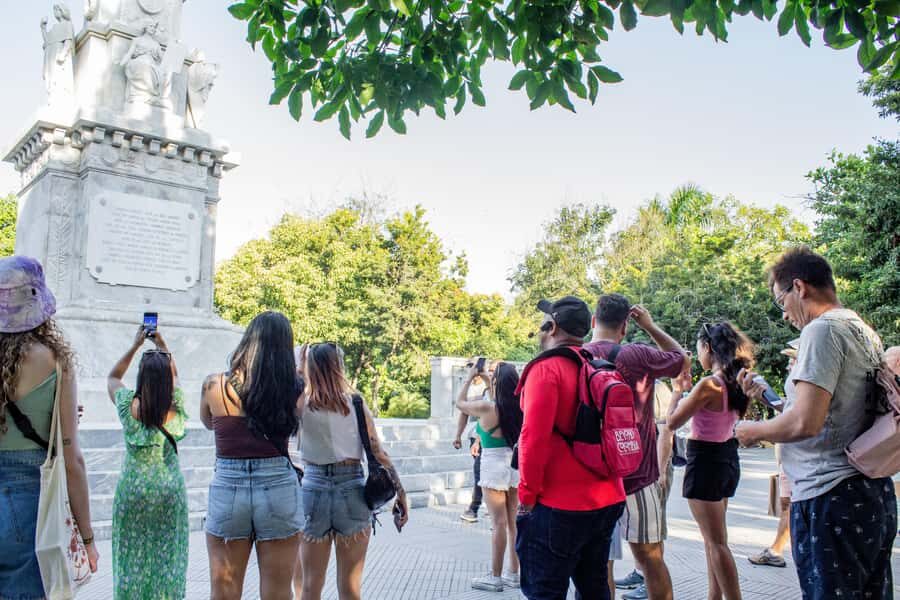
As you move onward, the itinerary includes Camellón de los Mártires and Parque Centenario. These are the in-between stops that keep the tour from feeling like a checklist of only the most famous monuments.
They help you understand how Cartagena’s historic center connects to the spaces where people would live, pass by, and work. It’s not only about big battles and famous figures. It’s also about how the city shaped daily movement and human routines over time.
This part of the route is useful if you want to come away with the ability to navigate the center on your own later. After a few guided turns like these, the city starts to look less random.
Calle del Guerrero and Calle de la Magdalena: street names that guide your eye
Then you get into the kind of streets that help you read the city visually. Calle de la Magdalena and Calle del Guerrero are both part of that transition from polished plaza time into smaller, more lived-in lanes.
When you walk streets like this with a guide, the city’s texture comes through: the scale of doors, the feel of corners, and how murals and architecture reflect local identity. You’ll probably notice that the guide’s voice makes it easier to keep your attention from slipping every time the group stops for a photo.
If you’re someone who likes to understand neighborhoods (not just sights), these street segments are where you start to feel Cartagena’s personality.
Plaza de la Trinidad and Callejón Ancho in Getsemaní
Once you reach Holy Trinity Square (Plaza de la Trinidad), the tour shifts energy. This is described as the social and historic heart of Getsemaní, and that rings true in how Getsemaní is experienced: community life happens here, not just tourism.
Plaza de la Trinidad is a key moment because it sets the tone for the last part of the route. This is where you learn how the neighborhood’s identity shows up in public spaces, and how people gather, share music and stories, and protect what makes the area theirs.
Then you’ll continue to Callejón Ancho, which gives you a different kind of viewpoint. It’s narrow, so it feels closer, more personal. Those are the streets where the “Cartagena beyond postcards” feeling kicks in.
Getsemaní street art on Calle de la Sierpe: reading murals like a local
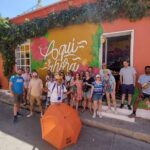
One of the listed highlights is Getsemaní street art, specifically along Calle de la Sierpe. This is one of the most practical photo opportunities on the tour, but it’s also more than a photo stop.
A good guide helps you notice what the murals represent—resistance, pride, and dreams—so you’re not just taking pictures of color. You understand why the paint is there. That changes how you walk the neighborhood, because suddenly you’re seeing the messages, not only the aesthetics.
If you care about culture and identity, this is the payoff section. If you only care about monuments, you might feel less wowed here—but the guide’s context usually makes it land.
Comfort, pacing, and the walk that adds up to about 8 km
Here’s the straightforward part: the tour is walking-heavy. The tour info says plan on about 8 km on foot, plus stops for listening. They don’t include transportation on the tour, and they mention resting stops, but you still need to think like it’s a workout.
Bring comfortable shoes and comfortable clothes. Bring water or your preferred hydration. The route goes through some crowded areas, so keep your belongings secure.
Also note the restrictions: no video recording and no audio recording. Photos are part of the experience, but filming seems to be discouraged. If you rely on video for your travel memory, you’ll need to adjust expectations.
Price and value: why $13 can be a good deal here
At $13 per person for about 2 hours, the value mainly comes from three things:
First, you’re getting guided storytelling that ties multiple places together—Old City plazas, walls, and Getsemaní streets—so you’re not paying separately for a few random stops.
Second, the wireless audio system is included. That’s a big deal in Cartagena, where street noise can wreck the quality of a shared walking tour. Being able to hear clearly also lets you move less anxiously and focus on the experience instead of constant micromanaging of your attention.
Third, you get local recommendations tied to lunch, coffee, souvenirs, nightlife, and safety. Even if you don’t use every tip, that kind of guidance is what helps you make the rest of your day work.
What the price doesn’t cover: drinks, food, souvenirs, and ticketed entrances. The tour states they won’t take you into places with sudden extra charges, which helps keep your total costs predictable.
Who this tour suits best (and who should think twice)
This tour is a strong fit if you want more than photos and you like understanding what you’re seeing—especially the way history shows up in architecture, plazas, and street art.
You’ll probably enjoy it most if:
- you like walking through neighborhoods and reading them with a guide
- you want a practical route that makes self-exploring easier afterward
- you care about Afro-Caribbean culture and local identity in Getsemaní
Think twice if:
- you have limited mobility or you get worn down by long walks
- you’re traveling with young kids (it’s not suitable for children under 6)
- you’re over 65 (it’s noted as not suitable for people over 65)
- you hate crowds or tight streets
If any of those apply, consider a shorter, more accessible option—or plan a slower day and use this route only partially on your own.
Should you book this Old Cartagena & Getsemaní tour?
I’d book it if you want a structured way to connect the Walled City to Getsemaní in a short window, and you care about hearing the stories clearly. The wireless system is a real quality-of-life upgrade on a shared walking tour, and the route design helps you see why Cartagena is famous and why it’s more than famous.
I’d skip it if you can’t comfortably handle about 8 km of walking, or if the no video recording rule would annoy you.
If you’re on the fence, pick it when you still have energy for a walking day, show up at Plaza de Santo Domingo on time for your receiver, and bring water. Do that, and you’ll leave with Cartagena in your head instead of just in your camera roll.
FAQ
Where is the meeting point?
Meet at Plaza de Santo Domingo next to the Botero sculpture Gertrudis. You’ll be looking for red umbrellas by Beyond Colombia.
What time should I arrive?
Plan to arrive about 5 minutes early so you can pick up the wireless audio system before the group starts.
How long is the tour?
The tour runs for about 2 hours.
Is the wireless audio system included?
Yes. Professional wireless audio receivers are included for clear sound even in busy streets.
What languages are available?
The live guide and the audio guide are available in Spanish and English.
How much walking is involved?
You should expect to walk about 8 km, with some resting stops during the route.
What areas of Cartagena do we visit?
You’ll see essential places in the Walled City (historic center) and in Getsemaní.
Are tickets or entrances included?
No. Tickets or entrances are not included, and the tour states it won’t take you to places with sudden extra charges.
Does the price include transportation from my hotel?
No. Transportation to and from your hotel is not included.
Can I record video or audio during the tour?
Video recording and audio recording are not allowed. Photos are part of the experience, but recording is restricted.