REVIEW · CARTAGENA
Getsemani Private Walking Tour
Book on Viator →Operated by Cartagena Freelance · Bookable on Viator
Getsemaní doesn’t wait for you—it shows up fast. This private, 2-hour walk threads together street art, colonial defenses, and practical photo moments, starting at the Torre del Reloj (Boca del Puente) and moving through neighborhood corners that feel lived-in rather than staged. I really like how the route balances soft, colorful culture (murals, umbrellas, plazas) with harder history you can actually point to.
Two things I especially enjoy: the mix of themes across short stops, and the way the guide can tailor the pace and focus. In my experience with this tour’s guide Angel, you get clear storytelling plus room for curiosity—history fans will get extra context, and even a simple walk can turn into a memorable day (one guest celebrated a birthday with Angel’s extra care). One drawback to plan for: you’ll be on your feet for the full 2 hours, and there are no meals or drinks included, so bring water if you’ll be out in the heat.
In This Review
- Key highlights if you like photos, plazas, and street-level history
- First stop: Torre del Reloj at Boca del Puente (and why it’s a smart start)
- Parque Centenario: wildlife plus a lesson in how spaces change
- Plaza de La Trinidad and the Holy Trinity church: independence story in the open
- Calle del Pozo: the photo stop that makes sense
- Cartagena narrow alley: umbrellas and murals you can walk through
- Baluarte El Reducto: colonial military strategy you can actually see
- Arte Getsemaní and Barrio Getsemaní: where street art becomes the street’s identity
- The rooftop viewpoint and sunset moment over Cartagena’s bay
- What the private format changes (and why two hours is the right length)
- Price and value: what $55 buys you in real terms
- Who should book this tour (and who might skip it)
- Should you book the Getsemaní Private Walking Tour?
- FAQ
- How much does the Getsemani Private Walking Tour cost?
- How long is the tour?
- What language is the tour offered in?
- Is this tour private?
- Where do I meet, and where does the tour end?
- Do I need an entrance ticket for the stops?
- What is included in the price?
- Are meals or drinks included?
- How do tickets work, and when will I receive confirmation?
- What is the cancellation policy, and is the tour suitable for service animals?
Key highlights if you like photos, plazas, and street-level history
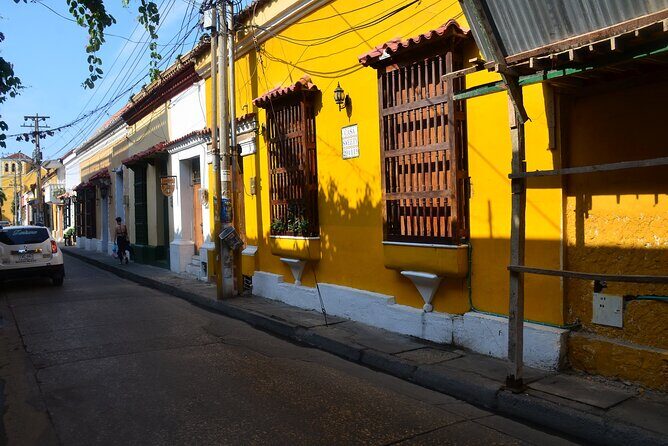
- Clock tower meetup in El Centro: easy landmark start at Monumento Torre del Reloj (Boca del Puente).
- Park stop with animals: Parque Centenario includes sloths, squirrels, monkeys, iguanas, and parrots (time-efficient, and fun even if you hate zoos).
- Independence-era landmarks: Plaza de La Trinidad is tied to the independence revolution and the Holy Trinity church.
- Photogenic alleys on purpose: Calle del Pozo and the narrow Umbrella-and-mural streets are built for quick, good shots.
- Fort architecture you can read: Baluarte El Reducto shows colonial military strategy in plain view.
- Street art in motion: Arte Getsemaní and Barrio Getsemaní focus on murals and the famous umbrella street vibe.
First stop: Torre del Reloj at Boca del Puente (and why it’s a smart start)
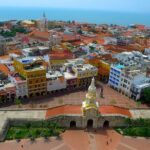
The tour begins at the Monumento Torre del Reloj in El Centro, right by Boca del Puente. I like this because it’s a big, obvious landmark. It also sets the mood: you start at the edge of the old city’s story, then peel off toward Getsemaní—where the neighborhood shows its everyday face.
From there, the pacing works like this: short walk, short stop, quick explanation, then you move again. In a two-hour private tour, that structure matters. It keeps the tour from turning into one long lecture or one long photo sprint where you miss the meaning of what you’re seeing.
If you’re the type who likes to orient fast, this start helps. You’ll know where you are, and you’ll understand how Getsemaní connects to the wider Cartagena picture as you go.
Other Getsemani tours in Cartagena
Parque Centenario: wildlife plus a lesson in how spaces change
Parque centenario is the first stop, and it’s not just a “stretch your legs” break. It’s a small window into the kind of public space Cartagena uses to mix recreation, education, and local life.
You can see animals there like sloths, squirrels, monkeys, iguanas, and parrots. The practical value: it’s an easy win if you’re traveling with kids, if you just want something light early in the tour, or if you’d rather break up the architecture stops with something different.
One consideration: parque time can feel a bit variable depending on where you are when you arrive and how quickly you move through the animal areas. I’d recommend keeping your phone charged and camera ready, because animals rarely cooperate for a perfect, slow pose.
Plaza de La Trinidad and the Holy Trinity church: independence story in the open
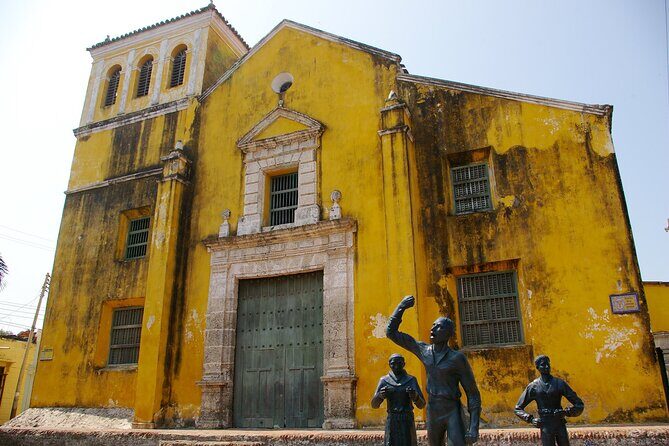
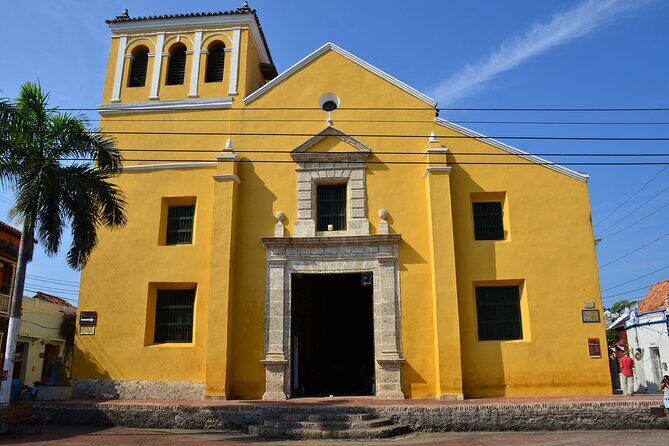
Next up is Plaza de La Trinidad, the main square in Getsemaní. This is where the neighborhood’s political backstory becomes real in front of you. The square is tied to the independence revolution, and it sits alongside the church of the Holy Trinity.
What I like here is the pacing of meaning. You’re not reading a timeline in a museum; you’re standing in a public space where people historically gathered—and that helps the story land. Squares like this are where neighborhoods “talk” to each other, and they’re often the reason specific streets and alleys became important.
Potential drawback: if you’re expecting an extended stop with lots of interior viewing, this is more of a “look, listen, connect” moment. Plan to use it for orientation and context, not for long exploration.
Calle del Pozo: the photo stop that makes sense
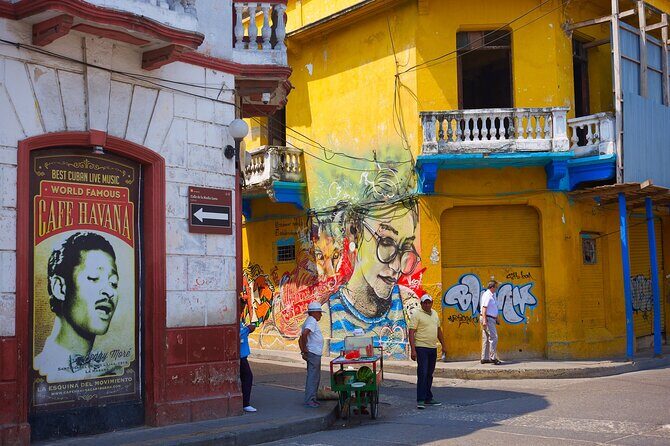
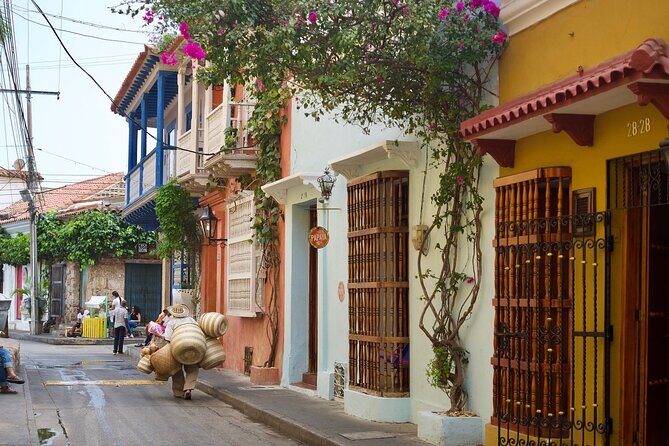
Calle del Pozo is next, and it earns its spot. This is one of the streets built for quick, satisfying photographs—narrow, atmospheric, and visually textured.
If you’re chasing good shots, you’ll appreciate how the guide times stops like this: you get the short explanation, then you have enough minutes to reposition and take photos without feeling rushed for the next location. I also like that it’s not just “pretty street, take picture.” It’s treated as part of the neighborhood’s walkable story.
One thing to watch: narrow streets can mean shade gaps and bright sun patches. If you’re shooting, keep an eye on contrast. If you’re sightseeing, keep an eye on where you step—these streets are for people, not your camera setup.
Cartagena narrow alley: umbrellas and murals you can walk through
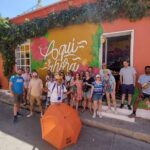
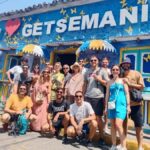
This section leans hard into Getsemaní’s signature look. You’ll move through a narrow alley where the scenery is decorated with umbrellas and murals—ideal for photos and also ideal for just slowing down to watch how the neighborhood lives.
I love this part because it’s not “tourist art from behind ropes.” It’s street-level creativity that you encounter while people are going about their day. That’s the difference between seeing a place and understanding it.
The practical side: bring your “walking shoes” even if you’re mostly there for photos. The alley areas are tight, and you’ll likely stop more often than you expect. Also, if you’re sensitive to crowds, this neighborhood can get busy depending on time of day.
Other walking tours we've reviewed in Cartagena
Baluarte El Reducto: colonial military strategy you can actually see
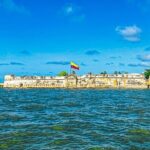
Now you switch gears. Baluarte El Reducto is where the tour turns from street art and photos to defense and architecture. You’ll see examples of colonial military strategy in the form of fortification design—clear shapes, functional placement, and a sense of how the city protected itself.
This is a great stop if you enjoy history, but it also works if you don’t. You don’t need to know dates to understand what you’re looking at: walls were built for a purpose, and the design choices reflect that.
In a well-run tour, this stop doesn’t feel like a history lecture. It becomes a set of visible clues. Once you see the fortification logic, it’s easier to understand the viewpoints and defensive thinking that pop up later.
Arte Getsemaní and Barrio Getsemaní: where street art becomes the street’s identity
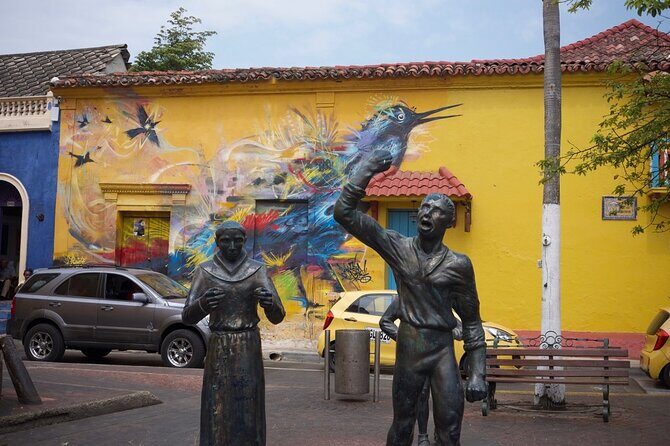
Two consecutive stops focus on art and neighborhood personality: Arte Getsemaní and the surrounding Barrio Getsemaní area.
Here’s what you can expect:
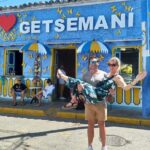
- Graffiti and street art in Getsemaní, with visuals that change how you experience the street.
- The famous “street of umbrellas” feel, where color isn’t just decoration—it’s part of the route.
I like this pairing because it changes your mindset. First you see art as individual pieces; then you see it as part of a larger environment. That’s when it clicks why Getsemaní looks the way it does. The neighborhood uses walls as communication, memory, humor, and identity.
Possible drawback: if you’re expecting a formal gallery experience with indoor pacing and seating, this is outdoor, walking-based. You’ll want to move with the guide, take your photos, and accept that the art is part of the street’s daily rhythm.
The rooftop viewpoint and sunset moment over Cartagena’s bay
One extra highlight you can look forward to during the tour: a rooftop stop from a strategically positioned hotel. From there, you’ll get a big-picture view across the bay of Cartagena and how it was defended, plus panoramic sight lines across directions like Bocagrande and toward San Felipe fortress and Convento La Popa.
This is the part that turns your “I saw places” day into a “I get how it all fits” day. When you’re on the ground, you see corners and facades. From a higher view, you start to understand why defenses were where they were and how the coastline shaped life.
If timing works, sunset from the city wall is another memorable moment mentioned with this tour. That’s a practical tip for you: if you can, wear layers you can handle at golden hour. Light changes fast in Cartagena, and you’ll want to keep your comfort while you enjoy the view.
What the private format changes (and why two hours is the right length)
This is a private tour, meaning it’s just your group. That matters more than it sounds. In Getsemaní, the streets can be narrow and the best photo spots can take a minute to reset. A private guide can manage that flow so you don’t feel like you’re being shoved through.
Two hours also helps. It’s long enough to cover multiple themes—wildlife, plazas, alleys, fortifications, and street art—without turning your feet into sandpaper. For most people, this feels like a strong first Cartagena day or a second-day “now I understand this place” revisit.
The review experience around guide Angel also points to something important: he can adapt. If you care more about history or current affairs, the pacing can flex. If you want more photo time, the stops can lean that way. That flexibility is hard to get in larger group tours.
Price and value: what $55 buys you in real terms
At $55 per person for about 2 hours, this tour is priced like a guided neighborhood experience, not a museum ticket day. The value part is that the route includes multiple major-looking stops without loading extra entrance costs onto you.
Based on the stop details, admission tickets at each listed location are free (Parque Centenario, Plaza de La Trinidad, Calle del Pozo, the Cartagena narrow alley/photo areas, Baluarte El Reducto, Arte Getsemaní, and Barrio Getsemaní). So you’re paying mainly for the guide and the structure: knowing what to look for, where to stand, and how to connect the visuals into a clear story.
What’s not included is also straightforward: no meals and no drinks like rum, beer, wine, juices, lemonades, or milkshakes. I’d treat the tour like an activity, not a food package. If you’re planning to enjoy a drink after, schedule it after the tour so you don’t feel rushed during the walk.
One more practical value point: this tour uses a mobile ticket, so you’re not stuck with printouts. If your phone’s already your lifeline in Cartagena, that’s a nice low-friction setup.
Who should book this tour (and who might skip it)
This is a good fit if you:
- Want a short, structured walk that still covers a lot of different Getsemaní “faces.”
- Like history you can see, not just hear.
- Care about photography and want help finding the right corners quickly.
- Prefer a private group pace, especially in tight streets.
You might want to choose something else if you:
- Hate walking and want minimal time on foot.
- Expect indoor museum-style stops with long viewing windows.
- Want a food-focused itinerary as your main goal.
Should you book the Getsemaní Private Walking Tour?
I’d recommend booking this tour if you want an efficient way to understand Getsemaní and Cartagena at street level. For $55 and about two hours, you get a well-balanced mix of photo-friendly streets, plazas with independence-era context, and fortification architecture—plus a guide who can shape the experience based on what you care about.
Book it especially if you’re the kind of traveler who likes the small stuff: a narrow alley with umbrellas, a plaza moment where history sits in public space, and a viewpoint that helps you connect the bay to the city’s defenses. Just come prepared for walking, and plan your drinks and meals around the tour rather than assuming they’re part of it.
FAQ
How much does the Getsemani Private Walking Tour cost?
The price is $55.00 per person.
How long is the tour?
The tour lasts about 2 hours.
What language is the tour offered in?
The tour is offered in English.
Is this tour private?
Yes. It is a private tour/activity, and only your group will participate.
Where do I meet, and where does the tour end?
You meet at the Monumento Torre del Reloj, Boca del Puente, El Centro, Cartagena de Indias. The activity ends back at the meeting point.
Do I need an entrance ticket for the stops?
Each listed stop includes admission ticket free.
What is included in the price?
The guided tours are included.
Are meals or drinks included?
No. Meals and drinks (rum, beer, wine, juices, lemonades, milkshakes) are not included.
How do tickets work, and when will I receive confirmation?
You receive a mobile ticket, and confirmation is received at the time of booking.
What is the cancellation policy, and is the tour suitable for service animals?
You can cancel for free up to 24 hours in advance for a full refund. Service animals are allowed, and the tour is near public transportation.