REVIEW · CARTAGENA
Champeta with us, it’s a vibe
Book on Viator →Operated by Black Legacy · Bookable on Viator
Cartagena turns rhythm into an evening plan. On a rooftop inside the walled city, Black Legacy teaches La Champeta and salsa with a welcome drink, plus context so you’re not just copying steps—you’re understanding them. You’ll feel the connection between Cartagena’s present-day music and its African roots.
I especially like the small group size (max 10) and the way the instructors keep things friendly and clear. Names you may hear in the mix include Jesus Cartel, Brian, and Neider/Nader, with the teaching style focused on breaking moves into bite-size parts, then practicing until it clicks.
One thing to consider: this is rooftop dance class time, so it depends on good weather. If rain or poor conditions hit, you may be offered a different date or a refund, and the session is only about 1 hour 30 minutes starting at 5:30 pm.
In This Review
- Key things that make this Cartagena dance class special
- A Rooftop Cartagena Dance Class That Actually Makes Sense
- Meeting at Maloka Hostel: The Smooth 5:30 pm Start
- La Champeta Lessons: The African Roots and Cartagena Identity
- Salsa + Champeta Practice: How the Steps Stay Friendly
- The Rooftop Factor: Views, Atmosphere, and Staying Comfortable
- Who’s This Best For (and When to Skip It)
- Value Check: Is $35 for 90 Minutes a Good Deal?
- What You’ll Leave With: More Than a Few Steps
- Should You Book This Cartagena Champeta and Salsa Class?
- FAQ
- What is the location for this experience?
- When does it start?
- How long is the class?
- How much does it cost?
- What will I learn during the session?
- Is there a welcome drink?
- How big is the group?
- Can beginners participate?
- Will I get music to take home?
- What happens if the weather is bad?
- What is the cancellation policy?
Key things that make this Cartagena dance class special
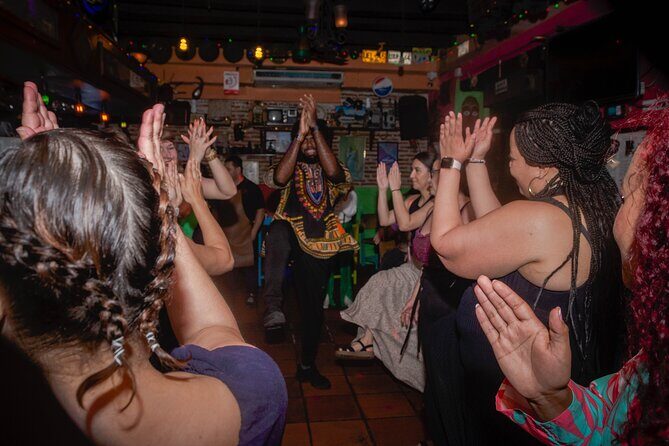
- La Champeta is the star, with a clear explanation of where it came from and why it matters in Cartagena
- Rooftop inside the walled city, so you get the vibe without the chaos of a late-night club
- Welcome drink at the start, which helps you loosen up fast (and makes solo travelers feel included)
- Salsa + champeta instruction, not just watching, so you actually leave knowing how to move
- Max 10 people, which means more attention while you learn
- Playlist sent after the class, so your memory has a soundtrack
A Rooftop Cartagena Dance Class That Actually Makes Sense
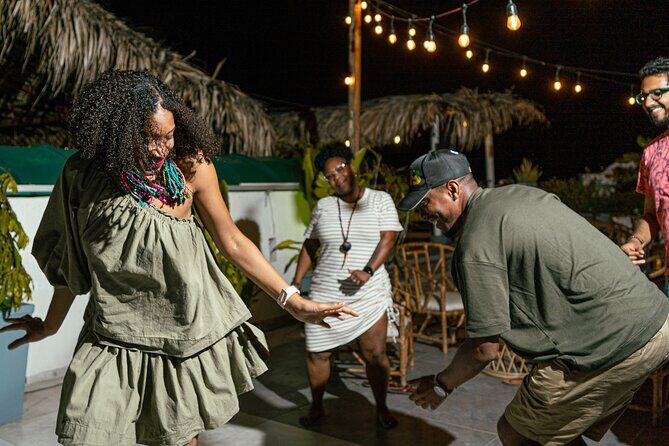
If you’re looking for a fun night in Cartagena that still feels rooted in local culture, this is the kind of activity that works. The setting matters: you’ll be on a rooftop inside the historic walled city, which keeps the experience feeling special and contained. It’s not a “tour of dance” where you watch from the edge. You’re in the middle, learning a rhythm and building confidence while the evening air does its job.
The big win here is that the dancing isn’t separated from meaning. La Champeta is introduced as Cartagena’s local rhythm, tied to the city’s connection with Africa. It’s described as emerging from the periphery and becoming part of Cartagena’s identity—so when you move to the beat, the story isn’t floating in the background. It’s part of why the steps feel different.
And you get two styles in one session: salsa and champeta. That combination is great if you want something social, learnable, and immediately useful for later nights out (even if you only remember the basic patterns). You’re not stuck learning one narrow dance form; you’re getting a broader feel for how Latin rhythms move through Cartagena.
Other salsa and dance classes in Cartagena


Meeting at Maloka Hostel: The Smooth 5:30 pm Start
You meet at Maloka Hostel & Lounge, in the historic center area (Cl. 36 #9-111, San Diego, Cartagena de Indias). The start time is 5:30 pm, and the session runs about 1 hour 30 minutes.
This timing is smart for a lot of visitors. You’re early enough to feel fresh and engaged, but late enough that you can turn the rest of the evening into something fun. If you’re doing other activities earlier in the day, you’ll want to leave room, because this class is a focused block of time.
When you arrive, the vibe is set right away with a welcome drink. That small detail matters more than it sounds. It helps you mingle quickly, and it keeps first-timers from feeling like they’re walking into a dance class that’s already in full motion.
Also worth noting: this experience has a maximum of 10 travelers, and it’s commonly booked in advance (on average, about 23 days ahead). If you want a specific day, it’s smart to book sooner rather than later.
La Champeta Lessons: The African Roots and Cartagena Identity
La Champeta isn’t treated like a random dance trend. You get a real mini lesson on what it is and where it comes from. The instructors explain that champeta is local to Cartagena and that it reminds people of the connection the city has with Africa. They also frame its rise as something that emerged from the periphery of the city—then grew into part of Cartagena’s identity.
That context changes how you experience the rhythm. Without it, you might just think, Okay, this is a dance with a strong beat. With it, you start picking up the attitude behind the movement—why the music carries pride, community, and history.
You’ll learn the basic patterns first, then build up. Expect the teaching to be structured: step breakdowns, practice time, and repeated chances to get the rhythm into your body. The goal isn’t perfection. It’s getting to the point where the dance feels natural enough that you’re not counting every motion.
If you’re the kind of person who likes to learn while you have fun, you’ll appreciate how the explanations are woven into the class. The tone stays upbeat, but the cultural message stays clear.
Salsa + Champeta Practice: How the Steps Stay Friendly
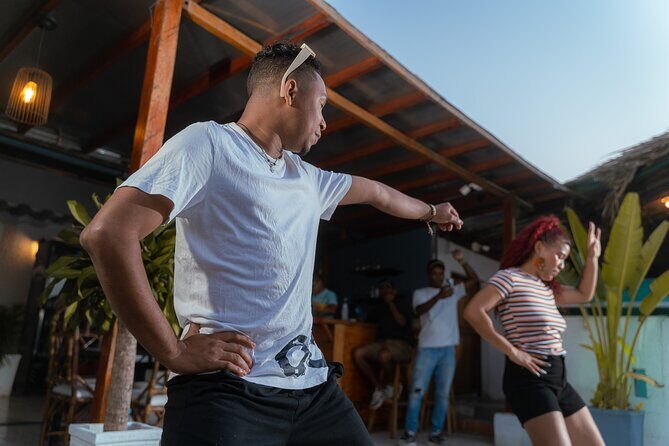
This isn’t a show where you watch professional dancers and hope you can match them. You’re guided through the movement, then given time to practice in the group. The instruction style is built for a mixed crowd—people who dance a lot, people who dance sometimes, and people who don’t really dance at all.
A few teaching details come up repeatedly in how the class is described:
- the steps are broken down clearly
- the crew keeps energy high without making it stressful
- the instructor adapts to the group’s level
- you practice combinations rather than just one isolated move
So if you’ve never taken salsa classes, you’re not automatically behind. The class is set up so you can catch up through repetition and coaching. If you’re more experienced, you still get value because you’re learning the champeta flavor and how to connect it to salsa rhythms.
You’ll likely notice how the class builds toward a salsa finale. That’s a nice payoff moment, especially if you’re doing this on a trip where you want one activity that feels memorable and also gives you something you can do again at home—or at least you can recognize the rhythm the next time you hear it.
And yes, it’s a workout. Not a gym workout, but moving for 90 minutes with real rhythm takes energy.
The Rooftop Factor: Views, Atmosphere, and Staying Comfortable
Rooftops can be hit-or-miss on travel. Here, the setting feels like a feature, not a compromise. You’re high enough for atmosphere—plus, because it’s inside the walled city, it feels like you’re part of the historic evening, not just standing in a random street corner.
The rooftop also influences how the class feels socially. It’s big enough to move around, but it’s not so huge that you feel lost in a crowd. With the max group size of 10, you generally keep that “we’re doing this together” feeling.
Comfort is also part of the experience design. The crew is described as friendly and patient, and that matters when you’re doing something physical in front of others. If you’re traveling solo, you’ll usually prefer activities like this over ones where you have to find your way into a conversation later. Here, the welcome drink and the group practice do that work early.
And if you care about photos and video, the energy and coaching are set up in a way that makes it easy to get footage without awkward chaos. The class keeps the atmosphere Instagram-friendly, but it still feels like learning, not just posing.





Who’s This Best For (and When to Skip It)
This works especially well for:
- Solo travelers who want a social setting without needing to already know people
- Friend groups and girls trips that want a shared activity with real laughs and movement
- People who want Afro-Colombian culture explained in a way they can feel physically
- Anyone who wants a fun night that also teaches something practical
It’s also a solid choice if you want an “activation activity” early in your Cartagena evening. You learn the basic moves, you get the story behind the music, then you’re ready to enjoy the city after class.
When you might reconsider: if you only want a low-energy activity, or if you’re dealing with serious mobility limits, this is still a dance class. Even though most people can participate, you’ll be moving for about 90 minutes and learning steps. And because it’s rooftop-based, you should also be okay with weather-related changes.
Value Check: Is $35 for 90 Minutes a Good Deal?
$35 for a 1 hour 30 minute cultural dance class in Cartagena is not a bargain you’ll find everywhere, but it also isn’t overpriced for what you get. Here’s why the value makes sense:
You’re paying for multiple things at once:
- instruction in two rhythms (salsa and champeta)
- a welcome drink right at the start
- cultural context about champeta’s African roots and Cartagena identity
- coaching for a small group (max 10), which reduces the “one teacher for too many people” problem
- a follow-up playlist message so the experience doesn’t end when the music stops
Also, the format is efficient. You’re not spending your evening searching for a lesson, comparing studios, or figuring out where to practice. You’re getting a complete package in a tight time window.
And for solo travelers, the “value” is sometimes about more than price. A structured, guided activity like this can save you from an entire night of figuring out what to do next. You leave with new rhythm knowledge and a shared moment you can talk about easily.
What You’ll Leave With: More Than a Few Steps
By the end of the session, you’ll likely take away three practical things:
- a basic understanding of La Champeta and why it matters in Cartagena
- a set of salsa moves you can recognize and partially reproduce later
- a playlist of popular songs sent to you after the class
That last part is sneakily important. A playlist helps you keep learning after you leave. It turns the class into a two-part experience: what you do live, then what you revisit with music later on your trip.
And if you came just to have fun, you’ll still get that. The class is built around energy, community, and getting comfortable enough to move without overthinking.
Should You Book This Cartagena Champeta and Salsa Class?
I’d book it if you want a cultural activity that’s fun first, but still serious about meaning. The rooftop setting in the walled city makes it feel like a real Cartagena evening, not a generic nightlife add-on. The small group size and teaching style make it approachable, even if you don’t dance much.
I’d skip it if you prefer passive sightseeing only, or if you know you’ll be frustrated by a short time window. You’re committing to a focused 5:30 pm block that lasts about 1.5 hours, and it depends on good weather.
If you’re deciding between a dance class and another “sit and look” option, this one is hard to beat for value, energy, and cultural payoff.
FAQ
What is the location for this experience?
It takes place in Cartagena, Colombia, and the meeting point is Maloka Hostel & Lounge in the historic center (Cl. 36 #9-111, San Diego, Cartagena de Indias, Bolívar). The activity ends back at the meeting point.
When does it start?
The start time is 5:30 pm.
How long is the class?
It lasts about 1 hour 30 minutes.
How much does it cost?
It costs $35.00 per person.
What will I learn during the session?
You’ll learn La Champeta and salsa, with dancing instruction during the class.
Is there a welcome drink?
Yes. The experience starts with a welcome drink.
How big is the group?
The maximum group size is 10 travelers.
Can beginners participate?
Yes. Most travelers can participate, and the steps are taught with clear instruction and practice time.
Will I get music to take home?
After the session, you’ll receive a message with a playlist of the most popular songs.
What happens if the weather is bad?
This experience requires good weather. If it’s canceled due to poor weather, you’ll be offered a different date or a full refund.
What is the cancellation policy?
Free cancellation is available. You can cancel up to 24 hours in advance for a full refund. If you cancel less than 24 hours before the start time, the amount paid is not refunded.