REVIEW · CARTAGENA
City Tour in Chiva through the City of Cartagena
Book on Viator →Bookable on Viator
Cartagena rolls by on a chiva bus. I like how this tour blends waterfront drama with real fort details, and you kick off near the Clock Tower and Pegasos Pier in the city’s emancipation zone. The certified guide keeps the facts coming while you hop between standout viewpoints and photo spots.
I also love that you don’t stop at the postcard version of Cartagena. You get an included guided visit inside Castillo de San Felipe de Barajas, then finish with a walking look through the Historic Center. One thing to consider: the chiva isn’t air-conditioned, and it can get hot and crowded, so plan for heat and bring water when you can.
In This Review
- Key Highlights You’ll Actually Feel
- A Chiva Ride That Makes Cartagena Feel Like Cartagena
- Starting Near the Clock Tower, Pegasos Pier, and Independence Park
- Bahia Time: Where Cartagena Became the Gateway to America
- The Old Shoes and the Letters of Cartagena: Small Stops, Big Photo Payoff
- Castillo de San Felipe de Barajas: The Included Guided Fort Visit
- India Catalina Passing By: A Legend With a Real Role
- Historic Center Walking Tour and the Clock Tower Area
- Price and Value for a 4-Hour Guided Mix
- Language, Group Comfort, and Other Real-World Considerations
- Who This Tour Fits Best (and Who Should Rethink It)
- Should You Book This Chiva City Tour?
- FAQ
- How long is the Cartagena City Tour in a chiva?
- What’s included in the $35 price?
- Do I get a guided visit inside Castillo de San Felipe de Barajas?
- Is bottled water or soda included?
- Is the chiva bus air-conditioned?
- Do I need to speak Spanish for the tour?
Key Highlights You’ll Actually Feel
- Chiva transport changes the whole pace of the day, turning the drive into part of the experience
- San Felipe de Barajas entrance is included, with a guided visit once you’re inside
- Great photo timing at key monuments like the Old Shoes and the Letters of Cartagena
- Bay views from the commerce gateway area give you context for why Cartagena mattered
- Historic Center walking wraps it up with UNESCO-listed sights and the Clock Tower area
A Chiva Ride That Makes Cartagena Feel Like Cartagena
A lot of tours in Cartagena try to move fast and see everything. This one does the same in a smart way, but the chiva bus adds something different. Instead of sitting in a regular vehicle, you’re up high, you’re moving past landmarks, and the city feels like it’s flowing around you.
It’s also a practical format. You spend time where it counts: bayside viewpoints, the major fortress, and then a focused walking segment in the Walled City area. Reviews mention how guides kept groups on schedule and kept people engaged, even when the group included English speakers mixed into Spanish-speaking passengers.
The only consistent downside is comfort in the heat. Multiple people noted the chiva can be very hot, with no AC or fans. And one review specifically said the ride requires climbing up about three rungs of a ladder to get in. If you’re dealing with mobility limits, think carefully before booking.
Other chiva party bus tours in Cartagena



Starting Near the Clock Tower, Pegasos Pier, and Independence Park
The first stretch sets the tone: you begin in the area tied to Cartagena’s emancipation story, right in front of the current Clock Tower and near the Pegasos Pier and Independence Centennial Park. This matters because it frames what you’re about to see. Cartagena isn’t just pretty buildings. It’s a city shaped by conflict, trade, and independence movements.
From there, the drive includes key urban landmarks as you head toward the water. You pass the Convention Center area and then head to the inner bay views. This early movement is useful if it’s your first day in Cartagena. You start learning the layout right away: where the waterfront sits, where the major landmarks cluster, and how the Walled City relates to the sea.
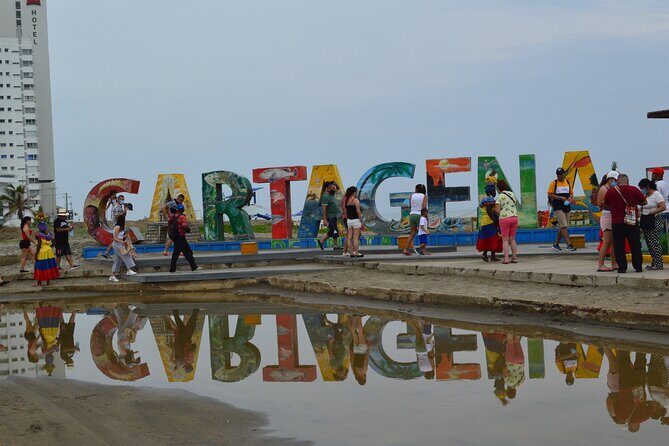
There’s also a quick monument stop early on. The Letters of Cartagena is a tall monument built with recycled materials, listed at around 2.40–2.60 meters. It’s basically a built-in photo checkpoint, which is great if you like getting pictures without hunting for perfect angles for too long.
Bahia Time: Where Cartagena Became the Gateway to America
One of the most valuable parts of this tour is the bay segment, because it gives you context beyond the walls. Cartagena’s bay served as a commercial gateway to America thanks to its strategic location and natural conditions. When you’re standing there, the city walls stop feeling like decoration and start feeling like defense.
The tour includes a short stop (about 15 minutes) with admission free. That length isn’t “spend an hour staring at the horizon.” It’s “see enough to understand the place and then keep moving.” For many visitors, that’s the right formula. You get the sun-and-sea views and the sense of scale, then you move on before you overheat.
Practical tip: use the bay stop to orient yourself. Look for where the big fort sits relative to the water. Later, when you’re at Castillo de San Felipe de Barajas, you’ll understand why it was built where it was.
The Old Shoes and the Letters of Cartagena: Small Stops, Big Photo Payoff
This tour uses monuments like punctuation marks. You hit them briefly, you learn just enough, and you get a lot of picture time.
Two examples:
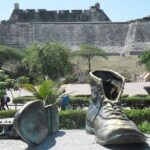
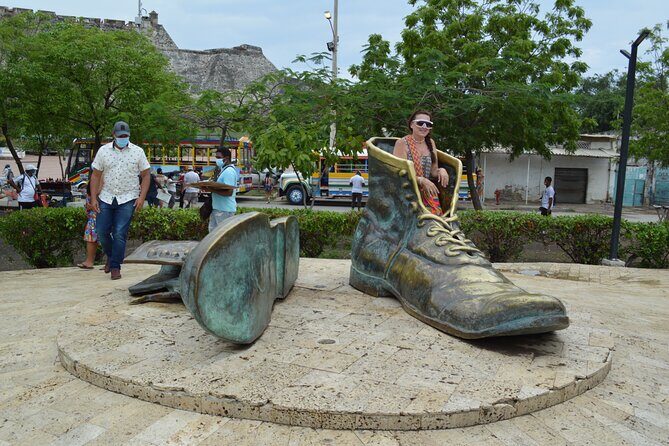
- The Monumento a los Zapatos Viejos honors a poet connected to the city and represents pride in humble origins and a sense of belonging. People tend to like this stop because it’s not just a viewpoint. It’s a human story in metal and stone.
- The Letters of Cartagena stop is quick, visual, and easy. It’s also useful if you want one clean photo without trekking deeper into streets.
These stops run with free admission. That matters in a city where you’ll often be paying ticket after ticket. Here, you get satisfying moments that don’t add to your budget.
If you’re traveling with someone who doesn’t love history, these monuments help keep everyone happy. They’re visual, fast, and memorable without demanding long attention spans.
Castillo de San Felipe de Barajas: The Included Guided Fort Visit
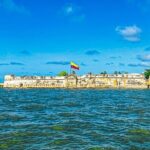
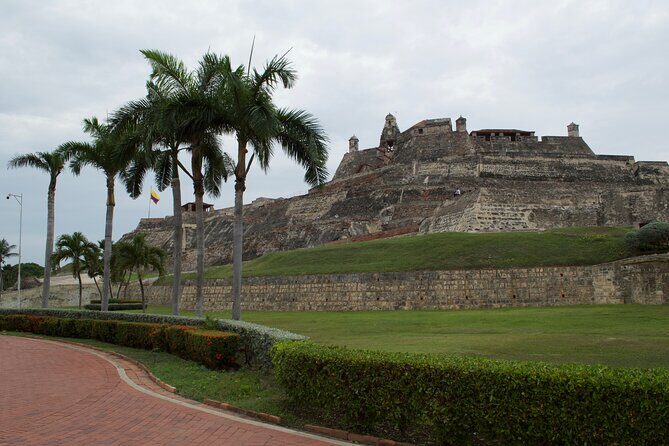
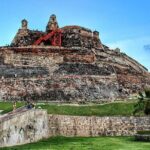
This is the main event. The tour includes the entrance to Castillo de San Felipe de Barajas, built in 1657 during the Spanish colonial era. It sits on a hill called San Lázaro, and it’s often described as one of Colombia’s major wonders of fortification.
Why this stop is worth your time: forts in Cartagena weren’t built for tourists. They were built to survive. The fort saw repeated attacks by the English and French, including a major capture in the late 1600s when the French commander Baron de Pointis took the castle in mid-1697. Having a guide explain this gives you a map in your head for what you’re looking at.
You also get a guided tour once inside, and the stop runs about 1 hour 30 minutes. That’s long enough to go beyond surface-level sightseeing. You’ll get a clearer sense of how the Spanish designed for defense and how the fort fits into the wider story of the city’s survival.
Comfort note: once you’re walking inside, you’re more likely to be exposed to sun and uneven surfaces. Wear shoes with grip. Bring a hat if you have one. Several reviews stress how hot the day can be, so dress like you’ll be outside for real.
Other city tours we've reviewed in Cartagena


India Catalina Passing By: A Legend With a Real Role
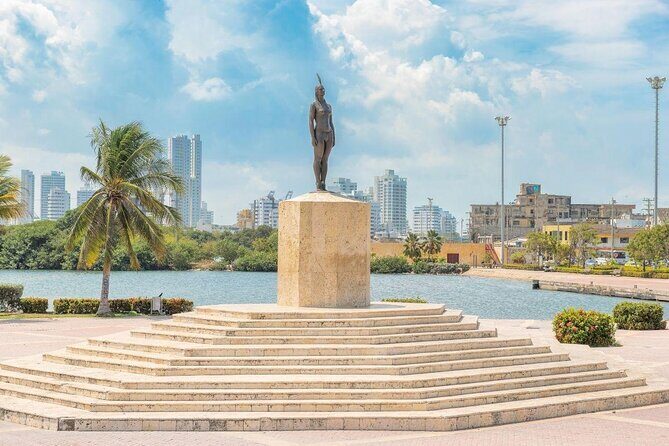
The drive-by stop for Monument to India Catalina is short, but it’s meaningful. It’s described as a tribute to American roots and tied to the sculptor Eladio Gil. The legend around Catalina is central to how people explain early encounters in the region: she’s presented as born in nearby Galerazamba, later sold as a slave in Santo Domingo, then brought to Cartagena as an interpreter by Pedro de Heredia in 1533.
You don’t get a long lecture here. Think of it as a “pause and remember this story” moment as you head toward the Historic Center.
If you like understanding why monuments get placed where they do, this is a good one. It also helps you connect the earlier bay and fortress stops to the human story behind the city’s growth.
Historic Center Walking Tour and the Clock Tower Area
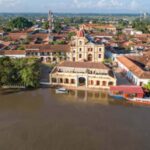
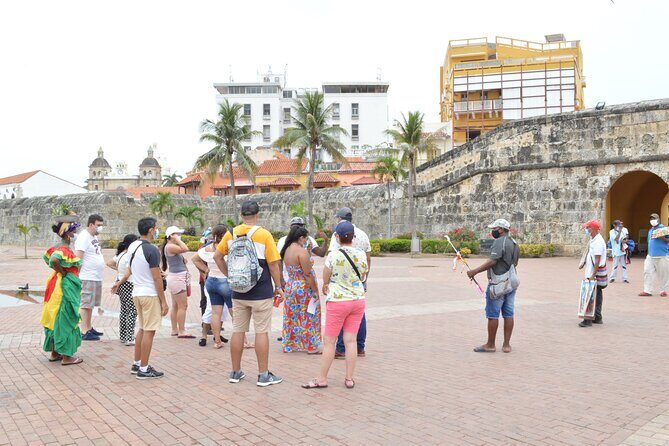
The final portion shifts from riding to walking, and that change is important. You’re not just seeing from a bus. You’re stepping into the Walled City’s streets and getting a feel for how the pieces connect: churches, convents, monasteries, squares, colonial buildings, and houses and palaces with strong identities.
This portion is aimed at the Historic Center, recognized as UNESCO World Heritage since 1984. The walking segment runs about 30 minutes, with admission free.
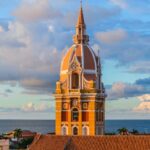
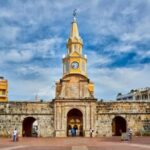
You also end at the Torre del Reloj (Clock Tower), also tied to the Puerta del Reloj or Boca del Puente concept. One of the most interesting details here is that the side arches were once used as a chapel and an armament room. Today, they function as walkways open to the public, which means you can still experience the structure in a practical way.
That end helps you finish with something symbolic. You start in the emancipation zone by the Clock Tower area and you close the loop at the same landmark family of spaces, but now you’ve seen the fortress and the old city context in between.
Price and Value for a 4-Hour Guided Mix
At $35 per person for about 4 hours, this tour is priced in the “reasonable first-day activity” range for Cartagena. Here’s what you’re paying for, beyond the bus ride:
- Private transportation + chiva transport: you’re not navigating transfers and taxi timing
- A certified guide: the stories and explanations can make the monuments and fort feel coherent
- Included entrance to Castillo de San Felipe: that’s the expensive-feeling part on many city tours
A key value point: you’re getting both the big fortress stop and the walking segment through the UNESCO-recognized area. A lot of tours in Cartagena either focus on the Walled City only or focus on the fortress only. This one mixes them so you build a fuller understanding in one afternoon.
What’s not included is simple: bottled water and soda. With the heat being a known issue in multiple reviews, plan ahead. If you buy water before you meet your group, you’ll thank yourself later.
Language, Group Comfort, and Other Real-World Considerations
This tour can be great for mixed-language groups, but language support isn’t guaranteed in the same way every time. Several reviews praised guides who provided strong English translation and included English speakers actively. Other reviews noted a guide who didn’t speak English, which made parts of the experience feel less rewarding.
So here’s the practical move: if you need explanations in English, confirm that you’ll have English support before you book, or at least ask what language the guide will use for your departure.
Comfort is the other real-world issue:
- No AC or fans were mentioned by multiple reviewers
- Some people felt the chiva was crowded
- The ladder-like entry step might be a barrier for some travelers
And then there’s the shopping reality of tour days. One review mentioned a stop at an emerald store and a sales pitch that took time. Another mentioned a jewelry-store shopping stop during the walking portion. This isn’t always a dealbreaker, but if you don’t want pressure or don’t want extra time in shops, tell yourself in advance that this may happen and plan your mindset.
Who This Tour Fits Best (and Who Should Rethink It)
This is a strong pick if:
- It’s your first time in Cartagena and you want an efficient mix of bay views, monuments, and major fort sights
- You want guided context, not just photos
- You like the idea of seeing the city from both a vehicle and your own feet
It might be less ideal if:
- You’re extremely heat-sensitive. The chiva ride can be rough in full sun.
- You need step-free access. The chiva entry involves climbing.
- You rely on English explanations only and want zero chance of translation problems. The guide language can vary by group.
Couples and solo travelers often like it because you’re not stuck in a long walking slog with no breaks. Families also tend to enjoy the chiva itself, as long as everyone can handle the warmth and the entry step.
Should You Book This Chiva City Tour?
I’d book it if you want a practical Cartagena overview in one afternoon, with the real advantage of an included guided visit to Castillo de San Felipe de Barajas. It’s also good value for the mix of logistics: you cover the bay area, hit major monuments, and finish in the Walled City zone.
I’d think twice if you’re not comfortable with heat, or if you need consistent English support and step-free access. In that case, look for an alternative that clearly matches your comfort needs and language requirements.
Overall: this is one of those tours that earns its ticket fee by connecting the city’s defense, waterfront commerce, and old-street atmosphere into a single route. Dress for sun, bring water, and you’ll have a strong first hit of Cartagena.
FAQ
How long is the Cartagena City Tour in a chiva?
The tour lasts about 4 hours (approx.).
What’s included in the $35 price?
The price includes private transportation, chiva (bus) transportation, a tour guide, and entrance to Castillo de San Felipe de Barajas.
Do I get a guided visit inside Castillo de San Felipe de Barajas?
Yes. The Castillo entrance is included with a guided tour.
Is bottled water or soda included?
No. Bottled water and soda are not included.
Is the chiva bus air-conditioned?
Reviews mention it is not air-conditioned and can be very hot, with no fans.
Do I need to speak Spanish for the tour?
A guide is provided, but language support can vary. Some departures include English translation, while other experiences were less effective for visitors who did not understand Spanish. If you need English, confirm language support before booking.