REVIEW · CARTAGENA
Cartagena Walking Tour
Book on Viator →Operated by cartagena caribbean tours · Bookable on Viator
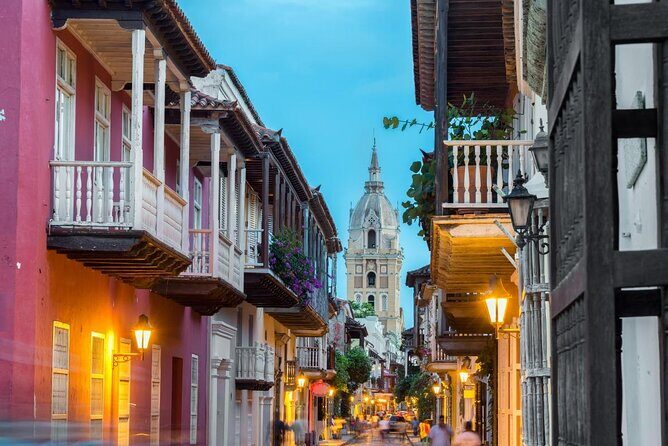
Cartagena tells its story one corner at a time. This 2-hour private walking tour moves you through the Cartagena de Indias Walled City and into Getsemaní, tying together the conquest, colony, republic, and today in a way that feels human—not like a textbook.
I love that it’s set up as a private tour for just you and your party, so the pacing stays friendly and questions don’t get swallowed by a big group. I also love the way the route blends famous landmarks with lesser-known stops, so you get the feel of both Centro Histórico and Getsemaní street life.
One thing to plan for: timing. If you’re arriving by cruise, traffic and taxi lines can blow up your schedule. One late group ended up missing the meeting, then had to scramble to switch plans.
In This Review
- Key Things That Make This Cartagena Walk Worth It
- Why This Cartagena Walking Tour Feels Like a Real City
- Price and What You Really Get in 2 Hours
- Meeting at the Clock Tower and Staying on Track
- Inside the Walled City: Camellón de los Mártires and the Indigenous Roots
- The Clock Tower Area to Portal de los Dulces: Slavery-Era Streets With Context
- Plaza de la Aduana and the Commercial Side of Cartagena’s Old Economy
- Museo de Arte Moderno Cartagena: Art Stops for the 1950s and Beyond
- San Pedro Claver: Church Architecture With a Human-Rights Connection
- Baluarte de San Ignacio and Plaza Bolívar: Walls, Defense, and Pirate Talk
- Plaza de la Proclamación: What You See vs. What You Pay For
- Getsemaní Through Calle San Juan: Graffiti, Umbrellas, Music, and Local Energy
- What to Wear, Bring, and Do With Your Photos
- Should You Book This Cartagena Walking Tour?
Key Things That Make This Cartagena Walk Worth It
- Private, small-group feel: your guide keeps the pace and Q&A focused on your group (operator max is small).
- A route that connects eras: conquest, colony, republic, plus modern 21st-century Cartagena in one continuous walk.
- Included admissions at many stops: you don’t have to self-manage ticket lines at most photo stops.
- Enslavement-route context, handled directly: you’ll see plazas and streets tied to the slave trade and its legacy.
- Getsemaní street culture: graffiti, music, umbrellas, and street scenes you’d likely miss on your own.
- A built-in break: the walk includes a park stop with shade and animals (yes, really).
Why This Cartagena Walking Tour Feels Like a Real City
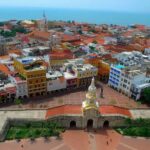
Cartagena is famous for postcard views. This tour is better at something else: showing you how the city actually “works” as you walk it. You start inside the symbolic walled space, where the streets and squares carry layers—Spanish conquest days, the colonial period, the republic years, and then the modern city pressing right up against it.
What I like is the balance. You’re not only collecting monuments. You’re connecting them. Your guide talks about what happened where—conquest battles, pirate and corsair attacks, and the Indigenous and African influences shaped by Caribbean mix-and-match history. That kind of context makes the colors and architecture feel earned.
There’s also a practical payoff. If you’ve never been to Cartagena, you quickly learn the geography. You’ll know which streets and squares matter, which neighborhoods change vibe, and where to go next after the walk.
Other walking tours we've reviewed in Cartagena

Price and What You Really Get in 2 Hours
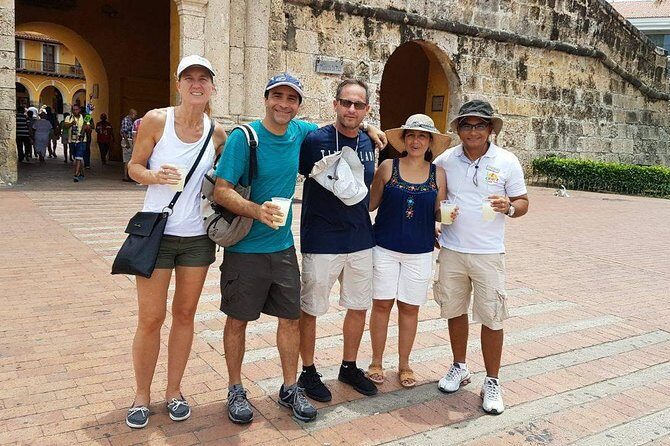
At $74 per person for about 2 hours, this is priced like a solid “first day in Cartagena” experience. You’re paying for two things: a guide who can explain what you’re seeing, and a route that’s designed to cover key sites without you guessing your way around.
Here’s where the value shows:
- Guided admissions are included at many stops (you’ll see this in how the tour is structured).
- Bottled water is included, which sounds basic until you’re walking under the sun.
- It’s private for your party, which matters because you can move at a sensible pace and still ask questions.
The tradeoff is simple: it’s only a two-hour walk. That means you’ll get guided highlights and interpretation, not a slow museum marathon. If you want to linger in doorways, you’ll need to save that for after your tour ends.
Meeting at the Clock Tower and Staying on Track
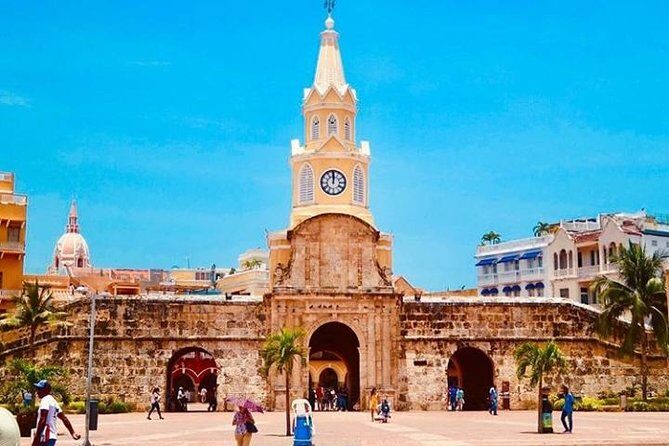
The meeting point is at Monumento Torre del Reloj, Boca del Puente, El Centro. The tour ends back at that same meeting point, which helps a lot when you’re trying to fit the rest of your day—shopping, lunch, or hopping to a different area.
Two practical notes:
- Wear comfortable walking shoes. The pace is mostly friendly, but you’re covering multiple squares and streets.
- If you’re on a cruise day, build in extra buffer time. One late group got stuck in taxi and traffic delays when multiple ships dumped thousands of people into the same area. That’s not rare. Cartagena can be very schedule-sensitive.
Also, the tour can run with up to 15 travelers (small headcount), and it’s described as private for your party. Translation: you’re unlikely to feel like you’re in a crowd herd.
Inside the Walled City: Camellón de los Mártires and the Indigenous Roots
The tour begins in the Centro Histórico zone tied to the Corralito de Piedra (the walled, symbolic heart of Cartagena). Your first real learning stop is the Camellón de los Mártires / Plaza de Cervantes.
This is where you get your bearings and the first big historical thread: the Indigenous people who were before and during the Spanish arrival. That matters because Cartagena often gets framed as Spanish vs. pirates vs. slavery. Starting with the Indigenous presence helps you see the city as layered from the start, not just “built by Europeans.”
At this stage, you’re also getting geographic orientation. Your guide verifies reservations, helps you locate where you are in the city, and sets expectations so you don’t spend the first 20 minutes wondering where to look.
The Clock Tower Area to Portal de los Dulces: Slavery-Era Streets With Context
Next you move to the Torre del Reloj, often described as the Golden Key of Cartagena. This section isn’t just decorative. Your guide frames the clock tower area and then connects it to streets and the enslavement-route story that follows through Porto Carrero and Candilejo.
Then comes the Monumento a Pedro de Heredia. The guide uses the monument stop to link Cartagena with Colombian literature and with Miguel de Cervantes’ relationship to the city. That creative thread might sound random until you realize something: in Cartagena, art and politics have always been close neighbors. Your guide helps you see those connections rather than treating history as separate boxes.
After that, you’ll reach the Portal de Los Dulces—important as a symbol tied to female activity during slavery, with descendants who continue related traditions today. This is one of those stops where the tour gives you a human detail. It’s not only about systems. It’s about how people lived inside the system.


Plaza de la Aduana and the Commercial Side of Cartagena’s Old Economy
The walk continues to Plaza de la Aduana, a key place for the commercialization of merchandise, including the enslaved. The tour points out important buildings around this square, including the Municipal Hall.
Why this stop matters: it keeps you from treating slavery-era history as something that only happened in distant places. It happened in the city’s working spaces—in plazas where trade and public life intersected. If you’re the type who likes your history tied to real locations (instead of vibes), you’ll appreciate how your guide anchors the story here.
One watch-out: some of the tour’s “context” mentions later places of interest where entry isn’t included. In this area, though, you’re mostly moving through the story space rather than trying to cram extra ticketed stops.
Museo de Arte Moderno Cartagena: Art Stops for the 1950s and Beyond
From the trading plazas, you pivot to art at the Museo de Arte Moderno Cartagena. Here the tour treats art like a continuation of cultural identity—especially Caribbean and Latin American art from the 1950s.
Your guide also points toward other collections you may want to notice:
- the Gold Museum (with samples of Indigenous pieces from the Colombian Caribbean)
- the Emerald Museum (described as featuring stones considered among the most beautiful in the world)
A quick reality check: the tour gives you the museum thread and direction, but it’s not a full-day museum visit. If you love museums, you’ll likely want to come back for more time after your walk.
San Pedro Claver: Church Architecture With a Human-Rights Connection
Next is Plaza de San Pedro Claver, which centers on San Pedro Claver, known as Slave of the Slaves. You’ll see the architecture of the church and the museum-monastery named for him.
The tour also ties this site to modern thinking through a Human Rights headquarters connection. That blend—faith-era architecture plus human-rights framing—helps the stop land. It’s not only about what people believed. It’s about what they tried to change.
If you’ve ever felt museums and churches can be either too dry or too sacred to understand, this stop has a middle way: your guide explains the why, and you can look without feeling lost.
Baluarte de San Ignacio and Plaza Bolívar: Walls, Defense, and Pirate Talk
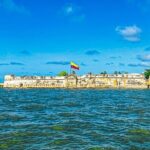
The walk moves to Baluarte de San Ignacio, a bastion built to defend Cartagena’s bay from pirate attack. This is where the tour gets extra fun—your guide uses the walls and defenses as a lens for how Cartagena handled threats.
Then you reach Plaza Bolívar. The tour continues with pirate and corsair stories tied to bastions and Spanish military construction strategies. You also get a moment to refresh here, which is welcome because by now you’ve had plenty of standing and walking.
Practical note: plazas mean sun exposure. If you did this on a hot day before, you know the drill. In one guide-led experience, Rafael even tried to find shade and cooler sites for the group. So pay attention to that—if you need breaks, ask.
Plaza de la Proclamación: What You See vs. What You Pay For
At Plaza de la Proclamación, the guide points out several places of interest, including the palace of the Inquisition and a passage where beauty queens of Colombia are exhibited, plus the gold museum.
Here’s the key detail: entrance tickets to those specific places are not included as part of the tour. Your guide will refer to them within the tour story, but you’d need to decide separately if you want to pay and go inside.
This is actually helpful for you. You’ll leave knowing what’s worth your money if you want to extend the experience. The tour keeps it flexible rather than forcing you into extra costs mid-walk.
Getsemaní Through Calle San Juan: Graffiti, Umbrellas, Music, and Local Energy
Now you shift from the walled core into Barrio Getsemaní, and the vibe changes fast—in a good way. This part of the tour focuses on graffiti, music, customs, folklore, trade, and architecture.
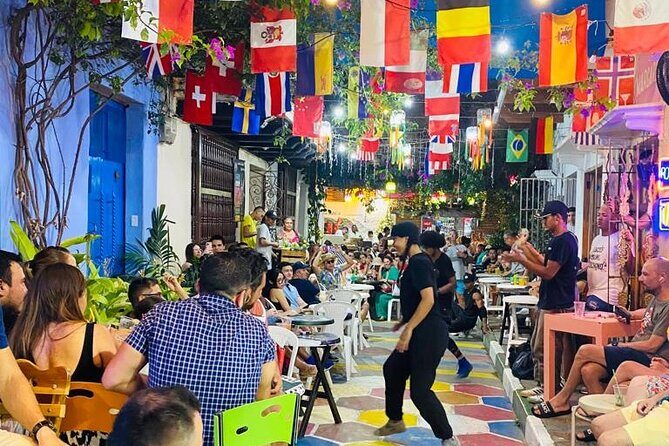
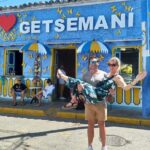
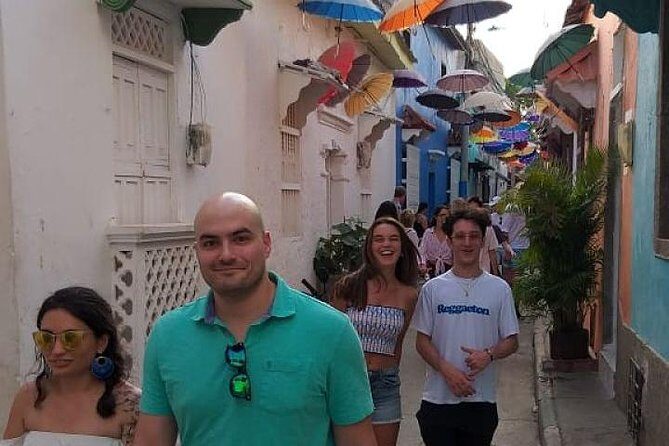
You’ll walk one of the city’s most colorful cultural corridors, with details like the umbrellas (connected to advertising), street art, and the local feel of everyday life layered over older streets.
Then you get to Parque Centenario, which is a nice reset. Your guide talks about the park as a kind of green lung—set in a former railway station—and you may spot animals like sloths, squirrels, and iguanas. Even if you don’t see every animal, the point is the break: shade, trees, and a chance to cool down before you head back into the street.
After the park, you continue along Calle de San Juan, where the tour references local cultural figures and vibes tied to places you can see and smell in the city. You’ll hear about Blas de Lezo, Gabriel García Márquez, Mister Black, and Joe Arroyo, plus graffiti and café culture.
Finally, the tour ends near Plaza de La Trinidad and up through Callejón Ancho to the end of the route along Calle San Juan with salsa and African champeta as the closing energy. This is where you feel Cartagena as a living music city—not just a historical set.
What to Wear, Bring, and Do With Your Photos
Because this is a walking tour with multiple squares and streets, your main constraints are:
- Comfort: sport-style clothes are suggested (optional), and comfortable shoes are the real star.
- Heat management: even in the best itinerary, you’ll be outdoors. If it’s hot, do what the good guides do—watch for shade, pause when offered, drink the included water.
- Photo strategy: the tour includes famous landmarks and also smaller corners. If you want good photos without constant crowd pressure, morning starts can help. One experience ran early (8am) and the streets were noticeably calmer for pictures.
If you want souvenirs, plan for it at the right time. You’ll pass through areas where shopping and cafés naturally fit the walk, but don’t let browsing slow your pacing if you’re worried about returning somewhere.
Should You Book This Cartagena Walking Tour?
Book it if:
- You want a guided first look at both the Walled City and Getsemaní.
- You care about history that includes the enslavement-era sites and not just the pretty parts.
- You like tours where your guide connects culture, architecture, and street life in a single route.
- You want a private setup where your group gets attention and the tour stays manageable at about two hours.
Skip it or reconsider if:
- You’re on a tight schedule from a cruise and you can’t absorb delays from traffic. Plan extra time, or you risk a stressful day.
- You want a slow, deep museum experience. This is more about moving, learning, and getting oriented than lingering for hours.
My bottom line: this tour is a strong “start here” choice. You’ll walk away with a mental map of Cartagena and a clearer sense of how the city’s layers connect—then you can pick what to revisit on your own.