REVIEW · CARTAGENA
Cartagena Deluxe for Cruises – Private City Tour
Book on Viator →Operated by Guianza Express S.A.S · Bookable on Viator
Cartagena can feel like a postcard. This private cruise-friendly tour turns that into a route you can actually enjoy, with a bilingual guide and a plan you can shape to your pace. I like the private format, and I like the morning-or-afternoon choice that helps you dodge some of the worst heat and cruise crowds. You’ll also get a smooth flow between viewpoints, forts, and the iconic plazas inside the Ciudad Amurallada.
The best part is how the guide can steer the day. I’ve seen examples of guides like Yuliana building the route around a ship schedule, and other staff stepping in with practical help when mobility needs came up. One thing to watch: this is not a strictly history-only day. You may encounter stops that focus on crafts or shopping, so if that is not your style, you should set expectations early with your guide.
In This Review
- Key highlights I’d plan around
- Private city tour that works for cruise schedules
- Stop 1: La Popa Convent and the city’s best view
- Stop 2: Castillo de San Felipe de Barajas, built to stop pirates
- Stop 3: Las Bóvedas, soldiers’ quarters turned crafts market
- Stop 4: a landmark built in 1911
- Stop 5: Inside the Walled City on foot or by vehicle
- Stop 6: Plaza Santo Domingo and Botero’s La Gorda
- Stop 7: Plaza de Bolívar, the city’s meeting place
- Stop 8: Torre del Reloj, Cartagena’s international image
- Optional: 18 Karats jewelry factory and emerald mining lessons
- What you get for $240 and why it can be worth it
- Timing: morning or afternoon is more than a preference
- Practical considerations that can make or break the day
- Who this tour is best for (and who should skip it)
- Should you book Cartagena Deluxe for Cruises?
- FAQ
- How long is the Cartagena Deluxe private city tour?
- Can I choose a morning or afternoon departure?
- Is this tour private or shared?
- What’s included in the price?
- Are entrance fees included for the main sights?
- What cancellation options do I have?
Key highlights I’d plan around
- Private guide, private route: you can personalize the day rather than follow a rigid group script.
- La Popa Convent panorama: the best big-city view stop, with a guided monastery visit included.
- San Felipe de Barajas fort: a major 17th-century defense story, with admission included.
- Las Bóvedas craft and emerald focus: a shopping stop with a strong historical setting behind it.
- Walled City walking or rolling: explore on foot or by vehicle, which matters on cobblestones.
- Optional 18 Karats emerald factory visit: learn about emerald origins and buy if it fits your interests.
Private city tour that works for cruise schedules

This is built for people arriving by cruise ship. That matters because Cartagena’s biggest sights are popular, and timing can make the difference between photos with breathing room and photos taken while you’re dodging elbows. You get a private group only, plus pickup and drop-off from your start point in the Cartagena cruise area, so you don’t waste time hunting for buses.
Plan on about four hours on the clock. You’ll also want smart casual clothes and at least a moderate level of physical comfort, since you’ll be outdoors and moving between stops. The good news: the route mixes short walks with time in an air-conditioned vehicle, so you’re not stuck doing everything on sharp cobblestones in the sun.
And then there’s the guide. This tour offers a bilingual guide, and it can be run by a multi-lingual guide depending on availability. In practice, that flexibility is a win: you get real explanations instead of just a list of stops, and you can ask for more detail at whichever spot you care about most.
Other city tours we've reviewed in Cartagena


Stop 1: La Popa Convent and the city’s best view
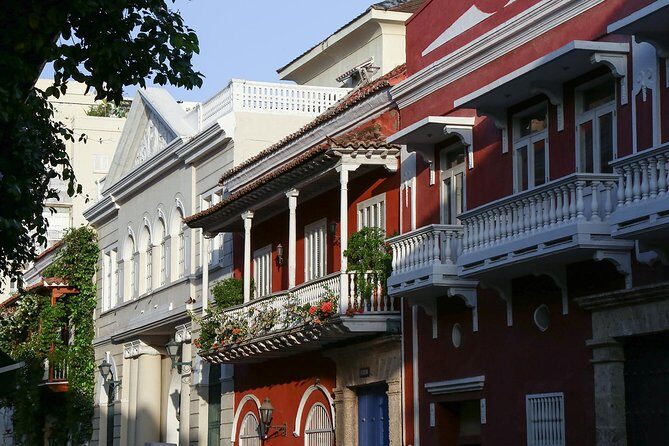
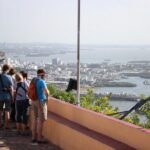
Your first major hit is La Popa Convent, often treated like Cartagena’s natural balcony. The idea is simple: go uphill early (or later in the day, depending on your departure) and get a wide look over the city’s layout, water, and fortress-lined coastline.
You also get an included guided visit to the Monastery of la Candelaria on top of the hill. That turns the view stop into something more than a photo break. You’re not just standing there admiring rooftops; you’re also hearing context about the religious site and what it means in Cartagena’s story.
One small drawback to keep in mind: this is a hilltop stop. The tour notes call for moderate physical fitness, so if you have mobility limits, bring that up before you go. A private guide can often adjust how much you walk and how you time the uphill moment.
Stop 2: Castillo de San Felipe de Barajas, built to stop pirates
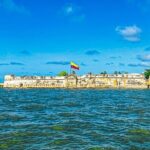
Next comes Castillo de San Felipe de Barajas, one of the standout fortifications in the Americas. The tour frames it clearly: built in 1656 to protect Cartagena from pirate attacks. That date alone signals why this place is more than a scenic ruin. This was a working defensive machine designed to control approaches and buy time.
You get a choice here based on mobility and pace. You can do a shorter photo stop (about 15 minutes), or you can take a longer guided visit (about 30 minutes) if you’re not restricting movement. That’s smart planning. Forts are big, and “seeing everything” is not realistic if you want comfort.
Even if you only do the photo stop, you’ll leave with a clearer sense of Cartagena’s strategic value. The city didn’t grow because it was pretty (it is pretty). It grew because the location mattered, and this fort was built to make sure enemies didn’t walk right in.
Stop 3: Las Bóvedas, soldiers’ quarters turned crafts market
Las Bóvedas is where the tour adds personality. During colonial times, these spaces were residential buildings for soldiers—the barracks part is the key. Today, it functions as the kind of place where you can appreciate and buy local crafts.
The tour specifically highlights handicrafts and Colombian emerald items in gold and silver. In other words, this is not a quiet museum-style pause. It’s an interactive stop where you can talk to vendors, browse, and learn the story behind what you’re seeing.
The time here is about 30 minutes, and admission is free. That makes it a useful break: you’re not paying another ticket, and you’re not locked into a long sit-down. Still, consider your preferences. If you want fewer shopping moments, tell your guide you’re looking more for history and views than for sales pitches. A private guide can often steer the order of what you see.
Stop 4: a landmark built in 1911
After the craft-focused section, the route includes a stop connected to a specific historical marker: something built in 1911, described as 100 years after the independence of Cartagena. That kind of anchor date is exactly how you make sense of a city that looks like layers of eras piled on top of each other.
The tour details don’t attach this moment to a named building in the way the fort and convent are named, so think of it as a quick context stop. It’s there to connect the older defensive era to the later period when the city’s identity kept evolving.
This is also where the private format really helps. If you’re the type who likes to know the why behind a structure, ask your guide to explain what the 1911 landmark meant at that time. If you’d rather just keep moving, you can keep it short.
Other private tours in Cartagena


Stop 5: Inside the Walled City on foot or by vehicle
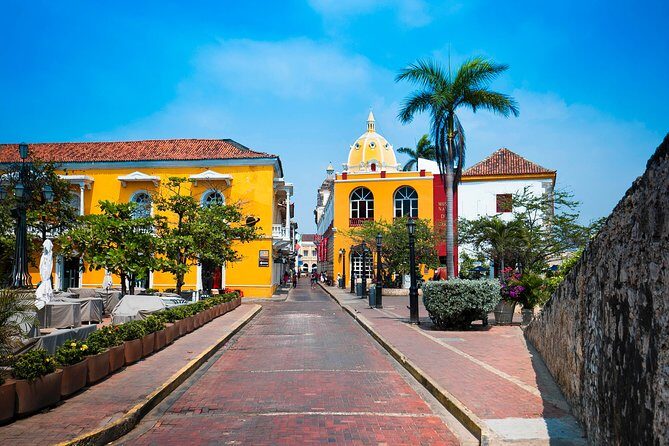
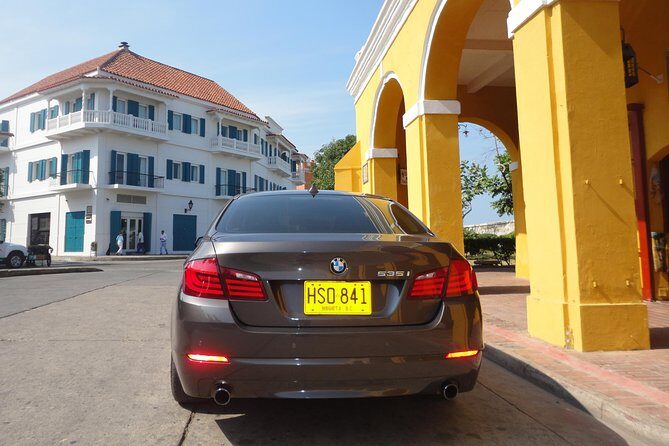
Now you enter the heart of the matter: the Walled City of Cartagena. The tour approach is flexible here. You can explore on foot or from the vehicle, depending on your comfort level and what you’re hoping to see.
Inside the walls, you get the texture Cartagena is famous for: narrow streets, churches, and houses with balconies, plus small squares where the city slows down. This is where photos look like paintings because the streets force interesting angles.
Here’s the practical truth: the cobblestones and heat can be a lot, especially on a tight four-hour schedule. The vehicle option helps you keep the day enjoyable. You’ll still get your walking time, but you’re not forced into marathon mode.
Admission for the walled city portion is listed as free. That matters for value. You’re paying mostly for the guide, the route efficiency, and the included sites—not for every single block inside the walls.
Stop 6: Plaza Santo Domingo and Botero’s La Gorda

Next stop is Plaza Santo Domingo, described as the oldest square in the walled city. It’s a good pick because it connects two different kinds of interest.
On the one hand, you have architecture and place. On the other, you have art. The tour calls out Santo Domingo Church and La Gorda de Botero, made by the famous Colombian artist Fernando Botero.
This is an easy stop to love because it’s compact. In a small square, you can get church views, street-life energy, and one recognizable sculpture that keeps showing up in Cartagena images for a reason.
It’s also a nice breather in the route flow. After viewing forts and craft stalls, it’s a more relaxed “stand and look” moment.
Stop 7: Plaza de Bolívar, the city’s meeting place
Then you’ll reach Plaza de Bolívar, built in honor of Simón Bolívar. The tour notes it’s the main meeting place in Cartagena—basically the social heart of the city.
Plazas like this can either feel generic or feel alive depending on timing. With cruise schedules, the best-case scenario is that you catch it during a calmer window, especially if you choose an earlier departure. Your guide can also help you place what you’re seeing in context, so it doesn’t turn into just another big open space.
Admission here is free, so again, you’re spending time on place and people rather than paying ticket after ticket.
Stop 8: Torre del Reloj, Cartagena’s international image
Finally, you end at Torre del Reloj—the international image of Cartagena. It’s the kind of landmark that instantly says you’re in the real deal, not just a themed stop.
Expect this to be a visual wrap-up. You’ll likely be taking photos, checking the scale of streets around the tower, and using it as a final marker for what you’ve already seen: the defensive city, the religious viewpoints, the craft and market energy, and then the civic center inside the walls.
Admission for this stop is listed as free, so this isn’t a “pay to look” moment. It’s a “you came to Cartagena, and this is one of the symbols” moment.
Optional: 18 Karats jewelry factory and emerald mining lessons
If you want the emerald angle, there’s an optional stop at 18 Karats Jewelry. The tour positions it as a jewelry factory where you can learn more about emeralds and the three important mines: Muzo, Chivor, and Coscuez.
The tour also says it’s recommended for acquiring a beautiful Colombian emerald. Admission is listed as free for this option.
Two practical notes to help you make this fit your trip:
- Decide your goal first. If you’re there mainly for history and architecture, you can skip this. If you’re specifically interested in emeralds, you’ll get more meaning out of the visit by asking questions about the mines you’ve heard about.
- Keep expectations realistic. Jewelry shopping can run long if you get pulled into comparisons. With a private guide, it’s easier to keep it under control, but you still need to say how much time you want.
What you get for $240 and why it can be worth it
At $240 per person, you’re paying for convenience and control. For a cruise visitor, that’s the real currency: not getting stuck in lines, not losing hours to transportation confusion, and having a guide who can adjust to your pace and interests.
This tour includes:
- Hotel pickup and drop-off
- Luxury air-conditioned vehicle
- Bottled water
- Coffee and/or tea
- Entry fees to Popa Monastery and Saint Pedro Claver Church
- A bilingual tour guide
- A mix of included admissions at specific stops (like Popa and San Felipe)
Food isn’t included. That’s normal for tours like this. On a four-hour schedule, you’ll likely manage snacks or a planned meal before or after.
The value math usually comes down to one question: do you want a private guide and efficient route planning? If yes, the price starts to make sense fast. If you’d rather roam independently and accept some chaos, you might feel this is more than you need.
Timing: morning or afternoon is more than a preference
You can choose a morning or afternoon departure, which changes the whole feel of the day. The review examples I’ve seen align with a pattern: starting early helps reduce crowd pressure and heat. That’s especially relevant for an itinerary that includes outdoor viewpoints and the walled streets.
If you’re sensitive to sun, choose the earlier departure when you can. If you’d rather relax before your tour and see the city in softer light, go afternoon. Either way, your guide can help you keep the pacing realistic for the cruise schedule.
Practical considerations that can make or break the day
Because this is private and structured, your experience will depend on how clearly you communicate your priorities.
If you want history-focused time, say it plainly. There’s a chance some parts of the day lean toward crafts or sales-oriented conversations. A private guide can still keep things moving, but you have to ask.
If mobility is a concern, bring it up before departure. The tour notes say it requires moderate physical fitness, and the itinerary includes an option for shorter or longer visits at the fort. In practice, the driver and guide can adjust how you move around the walled streets to avoid a lot of painful cobblestone walking, but don’t assume that happens automatically.
Also, the itinerary includes an optional emerald jewelry factory. If you don’t want that stop, confirm you’re skipping it so you don’t end up with time pressure later.
Who this tour is best for (and who should skip it)
This works best for:
- Cruise passengers who want maximum Cartagena in a short window
- People who like a mix of panoramas, forts, and plazas
- Travelers who want a private guide and the flexibility to steer the day
- Anyone who prefers AC transport and fewer forced long walks on cobblestones
You might skip it if:
- You want an all-afternoon free-roam day with zero structure
- You strongly dislike shopping stops and don’t want any market-style time
- You plan to request major changes to the route on the fly without warning your guide
Should you book Cartagena Deluxe for Cruises?
If your goal is a smooth, guided highlights tour with real context—without the stress of figuring out routes inside the walls—this is an easy yes. I particularly like that you’re not stuck choosing between views and comfort: you get the hilltop panorama, the big defensive story at San Felipe, and then the classic plazas in the walled city, all wrapped in a private day with AC transport.
Book it if you’ll use the private advantage. Tell your guide what matters most, including whether you want to keep the craft and jewelry time short. Skip the optional emerald stop if you’re not shopping. Do that, and you’ll get a Cartagena day that feels like it was built for you, not for the clock.
FAQ
How long is the Cartagena Deluxe private city tour?
It runs about 4 hours (approx.).
Can I choose a morning or afternoon departure?
Yes. You can choose either a morning or afternoon departure.
Is this tour private or shared?
It’s private. Only your group participates.
What’s included in the price?
The tour includes bottled water, hotel pickup and drop-off, a bilingual tour guide, entry fees to Popa Monastery and Saint Pedro Claver Church, coffee and/or tea, and a luxury air-conditioned vehicle.
Are entrance fees included for the main sights?
Yes for key paid stops listed in the itinerary, such as La Popa Convent/Monastery and Castillo de San Felipe de Barajas. Other areas like Las Bóvedas and the major plazas are listed as free on the route.
What cancellation options do I have?
You can cancel for a full refund up to 24 hours before the experience starts. If you cancel less than 24 hours before, the amount paid isn’t refunded.