REVIEW · CARTAGENA
Private Walking Tour through Kalamari and Getsemaní in Cartagena
Book on Viator →Operated by Cartagena Freelance · Bookable on Viator
Cartagena becomes a story as you walk, and this private 3-hour stroll through Getsemaní and the surrounding historic center turns street corners into real context. I especially like how the route mixes picture-ready spots with meaning, from Calle del Pozo to umbrella murals, and how guide Angel Gomez brings names, dates, and characters to life in a way that makes the city feel personal, not like a checklist. The one trade-off: the pace is quick, with short stops at each highlight, so you’ll need extra time later if you want to linger.
One possible drawback to plan around is the brisk pace. Many stops are around seven minutes, so it’s more “see everything in one pass” than “slow down and stay awhile.” Also, while most parts run smoothly, there’s at least one report of a guide not showing up, so I’d confirm the meeting point the day of and keep an eye on timing.
In This Review
- Key highlights worth circling in your plan
- Start at Torre del Reloj: your shortcut into the old streets
- Parque Centenario: where Cartagena pauses for sloths and parrots
- Plaza de La Trinidad: Getsemaní’s independence origin in one square
- Calle del Pozo: the photography stop that earns its time
- Umbrella alleys and murals: Getsemaní’s “look up” moment
- Baluarte El Reducto: colonial military thinking in stone
- Walled City of Cartagena: the 17th-century wall walk
- Arte Getsemaní and Barrio Getsemaní: graffiti with a reason
- Plaza de Los Coches, Plaza de la Aduana: trade and city center energy
- Plaza de San Pedro Claver and Plaza de Santa Teresa: faith and photo angles
- Café del Mar Ltda.: sunset watching from a bastion position
- Price and logistics: is $136 per person actually good value?
- Should you book this Cartagena walk?
- FAQ
- How long is the Private Walking Tour through Kalamari and Getsemaní in Cartagena?
- How much does the tour cost?
- Is the tour offered in English?
- Is this a private tour?
- Where do you meet, and where does the tour end?
- What’s included in the price?
- What’s not included?
- Do I get a mobile ticket?
- Are service animals allowed?
- Can I cancel and get a full refund?
Key highlights worth circling in your plan
- Wildlife break at Parque Centenario: sloths, squirrels, monkeys, iguanas, and parrots in a small, free admission stop.
- Getsemaní’s independence origin at Plaza de La Trinidad: the main square plus the Holy Trinity church tied to the revolution story.
- Calle del Pozo and umbrella photo lanes: classic Cartagena angles with murals and overhead decoration.
- Baluarte El Reducto and the 17th-century wall walk: military design you can actually read, not just look at.
- Plazas with big names and big purpose: Aduana for trade, San Pedro Claver for faith and remembrance, Los Coches as a city core.
- Café del Mar Ltda. sunset stop on a bastion: music and a drink option (your cost), timed for that end-of-walk feeling.
Start at Torre del Reloj: your shortcut into the old streets
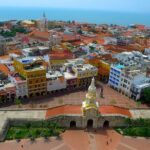
The tour starts at the Monumento Torre del Reloj at Boca del Puente in El Centro, which is a smart launch point because you’re already near the web of lanes that define Cartagena’s historic layout. You’ll also finish back at the same meeting spot, so you’re not stuck figuring out how to retrace your steps or find a separate pickup.
Because it’s a private walking tour, it’s designed for your group only. That matters here: when you’re moving through tight alleys and busy plazas, you want the “what am I looking at” part handled for you, not guessed on your own. The format also makes it easier to slow down if you spot a mural you really want to photograph, or speed up if your feet are already filing a complaint.
Also note the practical stuff: you’ll get a mobile ticket, the tour is in English, and the experience includes the guided portion only. Everything else, like food and drinks, is up to you.
Other Getsemani tours in Cartagena
Parque Centenario: where Cartagena pauses for sloths and parrots
Stop 1 is Parque Centenario, and it’s not just a park break. This one is a commemoration tied to Cartagena’s independence story, and it doubles as a quick fauna stop with sloths, squirrels, monkeys, iguanas, and parrots.
What I like about this stop is the change of rhythm. After you’ve been walking through stone streets and plazas, the park gives you a different kind of “wow,” and it’s a very short detour at about seven minutes. Since it’s listed as free admission, you can treat it like a low-commitment perk, not another budget item.
The main consideration is time. At only a few minutes, you’re not going to get a full zoo-style experience. But that’s exactly why it works in a 3-hour route: it gives you a memorable Cartagena detail without eating your whole afternoon.
Plaza de La Trinidad: Getsemaní’s independence origin in one square
Next up is Plaza de La Trinidad, the main square in Getsemaní where the independence revolution began, plus the Holy Trinity church right there in the same spotlight. This is the kind of stop that sounds historical on paper, but becomes clearer once someone connects events to the streets you’re standing in.
In practice, this stop helps you understand why Getsemaní feels the way it does today. Plazas are where communities gather, argue, celebrate, and organize. When you have a guide pointing out the “why here” part, the architecture and layout start telling a story instead of just being background scenery.
The drawback is also the same as the rest of the itinerary: the visit is short. You’ll get the key points and the emotional anchor, but if you love religious buildings or you want to read every plaque, you’ll probably want to come back later on your own for extra time.
Calle del Pozo: the photography stop that earns its time
Calle del Pozo is quick, but it’s called out for a reason: it’s great for photography. If you enjoy street-level visuals, this is one of those lanes where the details seem to multiply the closer you look—small angles, old-world textures, and that Cartagena look that doesn’t require heavy effort to photograph well.
What makes this stop genuinely useful on a guided walk is the timing. You’re moving in sequence through the city, so you’re not wasting time hunting for a photo angle. A good guide will also help you keep your bearings so you’re not wandering in circles while other people post for the perfect shot.
Because it’s only about seven minutes, your best move is to treat it like a quick photo sprint. Take a few wide shots, then slow down for the close-up textures. Don’t burn your whole camera battery here and miss the later umbrellas and plaza views.
Umbrella alleys and murals: Getsemaní’s “look up” moment
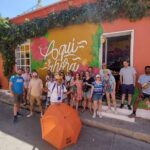
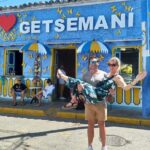
One of the signature parts of this walk is the decorative streets in Getsemaní, especially the umbrella theme. You’ll pass a narrow alley with decorations featuring umbrellas and murals, then later hit Barrio Getsemaní for the street-of-umbrellas vibe again.
This is the Cartagena that people talk about for a reason: it’s playful, visual, and instantly recognizable. But the guide angle matters. When you understand where these neighborhoods fit into the larger story of the city, the art feels less like decoration and more like identity.
There’s also a small “photos only” reality check. Umbrella streets are popular, and you may have company in the lane. If you’re traveling with someone, agree on a quick plan: who takes what, how many photos, and when you move on.
Other walking tours we've reviewed in Cartagena
Baluarte El Reducto: colonial military thinking in stone
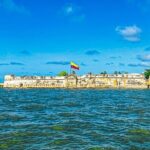
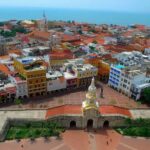
Stop 5 is Baluarte El Reducto, and it’s described as a place to see architecture and colonial military strategy. This is one of the best stops for people who like to understand how cities worked, not just how they look.
Here’s how it typically pays off: once you’re looking at a bastion with the idea of defense in mind, details that seem decorative actually read like tools. This is where your guide’s job becomes obvious. They translate shape and placement into function, so you can connect the wall system to the historical reason it existed.
The watch-out is that this is still a walking tour with short pauses. You might not get the full “stare at every viewpoint” experience. But you’ll leave with enough context to appreciate the larger wall walk that follows.
Walled City of Cartagena: the 17th-century wall walk
Now you get the big one: the Walled City of Cartagena, including a tour of the wall and military constructions of the 17th century. This isn’t a vague “look at the walls” moment. It’s meant to show how the fortifications functioned and why they were designed the way they were.
This is a classic stop for first-timers because Cartagena’s identity is tied to its defense. The walls turn the whole city into a kind of map, with lines of sight, boundaries, and strategic thinking built into the physical space.
Two practical considerations. First, you’ll be moving and standing in a lot of open-air spots. Wear comfortable shoes. Second, if you’re not big on fortifications, ask your guide to focus the explanation on what you can actually see from where you’re standing, not on broad background.
Arte Getsemaní and Barrio Getsemaní: graffiti with a reason
You’ll also pass Arte Getsemaní, described as graffiti and art in the Getsemaní neighborhood, and then spend time in the umbrella-focused street area. If you usually treat street art as just visuals, this stop can change your approach.
The value of having a guide here is simple: they connect the art to the place. Even in short visits, you can start to see how the neighborhood’s character shows up in murals and public expression. It helps you notice which spots are painted for color, which spots are painted for message, and how the city’s layered past shows up in present-day walls.
Because the time is limited, you’ll want to pick your priorities. If you care about art, look for signature styles or repeated motifs. If you care more about architecture, let murals be a bonus, not the main event.
Plaza de Los Coches, Plaza de la Aduana: trade and city center energy
As you continue, the route leans into Cartagena’s civic heartbeat with Plaza de Los Coches and Plaza de la Aduana.
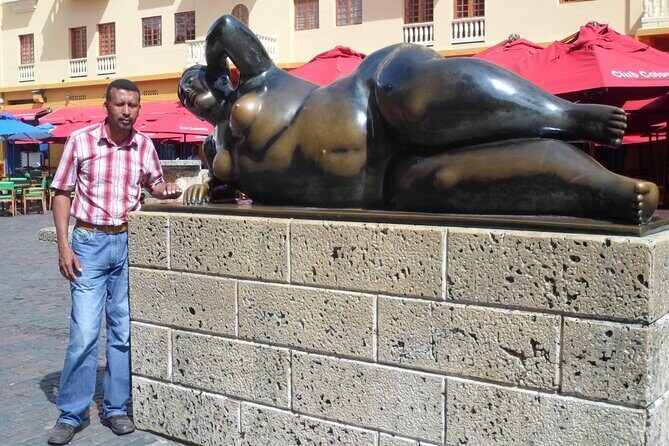
Plaza de Los Coches is described as emblematic and in the heart of the city. Plaza de la Aduana is the bigger historic punch: it was the epicenter of trade in Cartagena during the colonial era. Those two plazas work well together because they show different kinds of “center.” One feels like a meeting place, the other points to commerce and power.
This is also where guided context adds real value. A plaza can look like just another open square until someone explains why it mattered. Once you get the trade angle for Aduana, you can better imagine how goods, people, and wealth moved through the city.
These are short stops, so use them to reset your mental map. Take a couple photos, note landmarks, and then move on with a better sense of where you are.
Plaza de San Pedro Claver and Plaza de Santa Teresa: faith and photo angles
You’ll also visit Plaza de San Pedro Claver, described as a beautiful ecclesiastical construction and a key remembrance site: it’s where the remains of San Pedro Claver Corberó are. He’s described here as servant of the Ethiopians forever.
This is a powerful stop for a few reasons. First, it gives the tour emotional weight beyond architecture and commerce. Second, it ties Cartagena’s story to a specific person and mission, helping you understand the city’s religious and moral legacy rather than just its physical defenses.
Then the tour includes Plaza de Santa Teresa, a place suitable for photographs. That one is more about visuals and calmer angles, which is a nice balance after the heavier San Pedro Claver moment.
Again, the only consideration is time. You’ll get the main facts and the right vibe, but you won’t have time to read everything. If that theme hits you, do a second visit later.
Café del Mar Ltda.: sunset watching from a bastion position
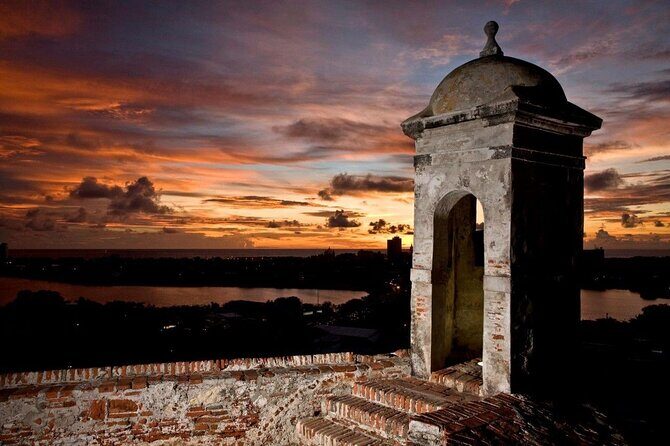
The last stop is Café del Mar Ltda., described as an ideal place to watch a sunset, enjoy music, and have a drink in a bastion setting. This is a fun way to close the tour because it shifts you from walking-and-listening mode to sitting-and-savoring mode.
Two key points. Drinks and any meal-style items are not included, so if you want rum, beer, wine, juices, lemonades, or milkshakes, you’ll pay on-site. Second, the “ideal for sunset” idea means this stop is meant for relaxed views, not a quick photo-and-go.
If you want value here, decide what you want from the last 10–20 minutes: a drink, a music break, or just the view while you catch your breath. Either way, you’re finishing at a spot that matches the tour’s focus on layers of Cartagena, from defense to culture to street life.
Price and logistics: is $136 per person actually good value?
At $136 per person for about 3 hours, this is not a budget add-on. But it can be very good value if you care about interpretation, not just motion.
Here’s why the price can make sense:
- It’s private, so you’re paying for a guide’s time and attention for your group only.
- Stops include free admission at the listed sites, which helps control costs during the walk.
- The route mixes different themes: wildlife, independence-era context, street art and umbrellas, fortifications, and major plazas.
- A strong guide makes a huge difference. In the ratings, Angel Gomez is repeatedly praised for being friendly and for changing how people experience the city, with engaging storytelling and lots of detailed context.
The other side of the coin is what you’re buying: short visits. Many stops are brief, so you’re not getting hours inside a single site. You’re buying the ability to cover a lot of ground while someone helps you connect what you’re seeing.
Also, the tour is offered in English. In one reported case, the guide adjusted spontaneously to German when there was only one participant, which suggests flexibility. That said, English is the official offering listed.
Finally, the itinerary doesn’t include food or drinks. If you plan to eat a full meal during the tour, you’ll need to budget extra. If you’re happy with water and then a drink at the end, you can keep it simple.
Should you book this Cartagena walk?
Book it if you want a guided, structured walk that covers the highlights of Getsemaní and the historic walled city area without you having to build a perfect route on your own. It’s especially a smart choice for first-timers who want to understand the city’s layers: independence, trade, religion, street art, and military design.
Skip it if you hate brisk pacing and you know you’ll want long indoor stops. This tour is built for momentum. It’s also not the best fit if you want a calm, low-energy day, because the route moves through many highlights in a short window.
My bottom line: if you’re okay with short stops and you value a guide who can turn streets into stories, this private walking tour is a solid use of your time in Cartagena.
FAQ
How long is the Private Walking Tour through Kalamari and Getsemaní in Cartagena?
It lasts about 3 hours.
How much does the tour cost?
The price is $136.00 per person.
Is the tour offered in English?
Yes, the tour is offered in English.
Is this a private tour?
Yes. It’s private, and only your group will participate.
Where do you meet, and where does the tour end?
You meet at Monumento Torre del Reloj Boca del Puente, El Centro, Cartagena de Indias, and the tour ends back at the meeting point.
What’s included in the price?
The guided tour is included.
What’s not included?
Meals and drinks are not included, including items like rum, beer, wine, juices, lemonades, and milkshakes.
Do I get a mobile ticket?
Yes, the tour includes a mobile ticket.
Are service animals allowed?
Yes, service animals are allowed.
Can I cancel and get a full refund?
Yes. You can cancel for free and receive a full refund if you cancel up to 24 hours in advance of the experience’s start time.