REVIEW · CARTAGENA
FULL TOUR WITH LUNCH IN FAVORITE PLACE OF ANTHONY BOURDAIN
Book on Viator →Bookable on Viator
Cartagena hits hard, and it’s delicious. This private 3-hour walk strings together the Walled City landmarks, Getsemaní street life, and a lunch stop at Mercado de Bazurto—the place linked to Anthony Bourdain’s favorite food in Cartagena. It’s the kind of route that helps you understand why people fall for this city so fast.
I like that the tour is story-led and human. Guides such as Adalberto, Daniel, Dan, Alberto, and Mr. Gonzalez show up with humor, patience, and a real sense of place, and they make room for quick photo stops and store breaks when something catches your eye. You’ll also get a lunch built around real Cartagena food, not a tourist plate designed to disappear.
One consideration: it’s still a walking day in Cartagena heat. You’ll cover a lot of streets, and the time at the market for lunch can feel short if you want to browse every aisle for a long time.
In This Review
- Quick highlights you’ll actually care about
- Meeting in San Diego Plaza: the best way to start smart
- Plaza Santo Domingo and Bolivar Park: where postcard Cartagena meets real context
- Saint Peter Claver and Customs Square: understanding the slavery route without getting lost
- Portal de los Dulce and the Clock Tower zone: the city’s power and survival story
- Camellón de los Mártires and Centenario Park: a break with shade, trees, and animals
- Getsemaní in Plaza de la Trinidad: independence-era stories plus nightlife energy
- Mercado de Bazurto: eating like Cartagena, not like a tour bus
- Price and pacing: what $67 gets you in 3 hours
- Who this tour fits best (and who should choose another plan)
- Should you book this Cartagena tour?
- FAQ
- FAQ
- What time does the tour start?
- Where is the meeting point?
- How long is the tour?
- How much does it cost?
- Is this tour private?
- Are any admissions required for the stops?
- What’s included in the experience?
- Is it okay if I use public transportation?
- Are service animals allowed?
- Do I need good weather?
- Can I cancel for a full refund?
Quick highlights you’ll actually care about
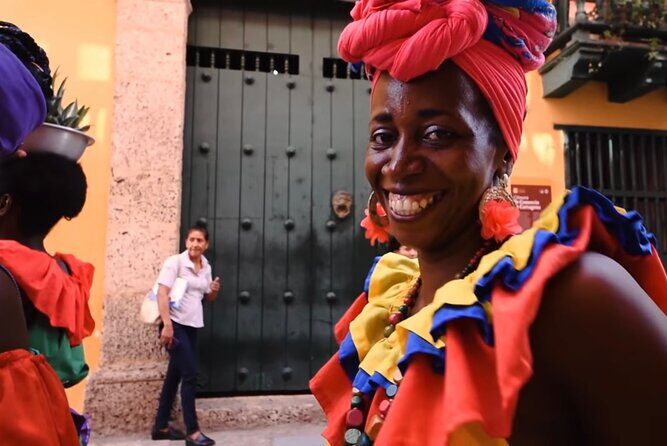
- Walled City walk with major squares and viewpoints like Plaza Santo Domingo and the Clock Tower area
- Slave-route sites explained in plain language, including Saint Peter Claver and Customs Square landmarks
- Getsemaní at Plaza de la Trinidad, including independence-era references and the neighborhood’s nightlife pulse
- Mercado de Bazurto lunch tied to Anthony Bourdain’s favorite spot
- Parque del Centenario stop where you can spot animals like sloths and iguanas (when you’re lucky)
Meeting in San Diego Plaza: the best way to start smart

The tour begins at Plaza de San Diego, right in Cartagena’s historic center. This is a good starting point because you’re not starting “from nowhere.” You’re already inside the old-city feel, surrounded by restored streets, colonial details, and the kind of corners where history and daily life overlap.
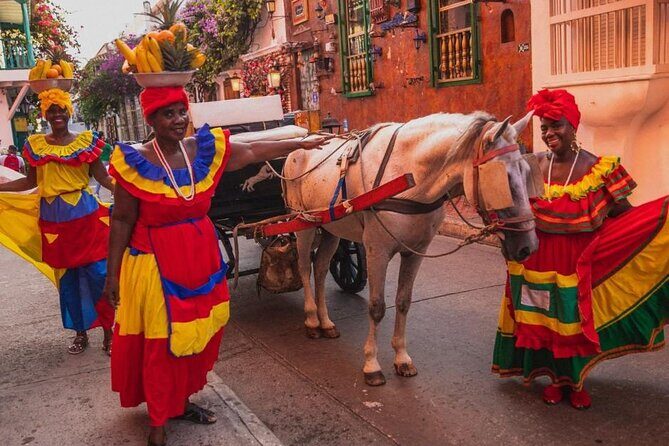
From here, the route threads through the San Diego area—near the Santa Clara hotel and around the old convent buildings tied to the Fine Arts school that dates back to 1608. Even if you don’t read every plaque, you’ll feel the age of the place in the architecture and the way the streets are laid out: narrow lanes, open squares, and that signature Cartagena look with bright facades and ironwork balconies.
If you want to make the day easier on yourself, plan for the weather. Cartagena can turn into a sweat test. Start with light layers, bring water, and wear shoes you can handle on uneven stone.
Other Anthony Bourdain style food tours in Cartagena


Plaza Santo Domingo and Bolivar Park: where postcard Cartagena meets real context
Next, you’ll spend time around Plaza Santo Domingo, one of the most famous squares in the Walled City. The big draw is how much is happening around it—church architecture on one corner, colonial buildings lining the edges, and a square that works equally well for a photo break and a pause to let the stories sink in.
Then the tour moves into the Simón Bolívar Park area. This area matters because it sits at the center of a cluster of Cartagena landmarks. You’ll hear how the park area connects to major sites around it such as the Cathedral of Saint Catherine of Alexandria, the Palace of the Inquisition, and the Zenu Gold Museum area. You don’t need to “collect” museums to understand the city here. The setting alone helps you see how Cartagena’s power moved—religion, government, wealth, and trade.
This is also where a good guide earns their money. A great guide keeps the stop moving without turning it into a boring checklist. If your guide is Adalberto (or another of the names that often shows up in past tours), you can expect humor plus real explanations in human terms.
Saint Peter Claver and Customs Square: understanding the slavery route without getting lost
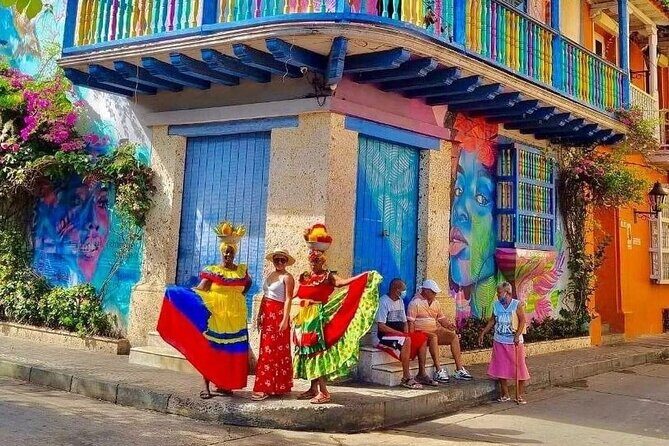
One of the most important parts of this walk is the slavery-route sequence. It’s not vague, and it’s not decorative. You’ll see landmarks connected to Saint Peter Claver, Slave of Slaves, and the church and museum-monastery that bears his name and is tied to human-rights work.
From there, you’ll continue to the historic area where trade systems—including the merchandise connected to slavery—were organized. You’ll hear about the old Customs Square and the civic buildings that surrounded it, including the Municipal Hall.
Why this segment is valuable for you: it gives the Walled City meaning beyond paint and stone. Cartagena’s beauty is real. But understanding the systems behind it helps you connect the dots between what you see and what people endured.
It’s also a moment to slow down. If you’re the type who likes to take notes or absorb museum-style facts, you’ll likely want to ask questions. If you prefer quick context, that works too—you can keep moving and just let the guide’s explanation do the heavy lifting.
Portal de los Dulce and the Clock Tower zone: the city’s power and survival story
As you keep walking, the route passes areas tied to everyday life and symbolic space. One stop includes the Portal de los dulce, described as a symbol of women’s activity during the slavery era, along with traditions carried forward by descendants. Even without a long stop, the idea lands: Cartagena wasn’t only shaped by grand leaders; it was also shaped by labor, food, craft, and family networks.
Then you reach the Golden Key of Cartagena, also known as the Clock Tower area. The route works its way through surrounding plazas, including Plaza del Ecuador and Plaza del Esclavo, as the tour follows part of the slavery route through nearby streets such as Porto Carrero and Candilejo. You’ll also hear about Pedro de Heredia welcoming you in this zone.
This part of the tour is great if you like “walking geography.” You can see how a square, a street corner, and a landmark connect—how the city funnels people through certain paths. It’s also where many first-timers start to feel like they can navigate on their own.
Camellón de los Mártires and Centenario Park: a break with shade, trees, and animals
After the heavy historical beats, the tour gives you a breath of air. You’ll pass through the Camellón de los Mártires, an emblematic site related to Cartagena’s emancipation events from 1810–1821. Even if that period is new to you, the setting helps it make sense. The street and monument feel like a stage built for memory.
Then comes the fun, practical stop: Parque del Centenario (Centenario Park). This park is described as one of Cartagena’s “lungs,” and it’s also tied to the former railway station—so it’s a relic-style space with trees and shade. And yes, you might spot animals as you pass through. You can sometimes see sloths, squirrels, and iguanas.
This stop matters because it resets your energy. If you’ve been walking in heat, this is your chance to drink water, catch your breath, and feel like you’re in a real park rather than just ticking boxes.
A few more Cartagena tours and experiences worth a look


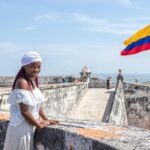
Getsemaní in Plaza de la Trinidad: independence-era stories plus nightlife energy
Next you shift to Barrio Getsemaní, a neighborhood famous for its street culture. The tour specifically references Forbes naming Getsemaní as the fourth coolest neighborhood in the world, ahead of places like Sants in Barcelona, Navy Yard in Washington, and Amsterdam Noord. Even if you don’t care about ranking lists, it signals something real: this neighborhood has personality that people notice.
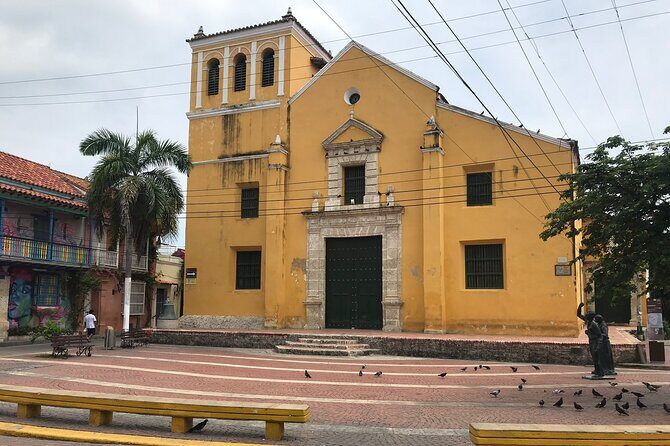
You’ll spend time around Plaza Trinidad, where the vibe is described as lively. It’s also noted as not fully gentrified, with families who have lived in the same houses for multiple generations. That matters because the square doesn’t feel like a theme park. It feels like a place where people keep living.
This stop also includes independence-era context. You’ll hear about the Holy Trinity church, founded in 1643, and how the area was connected to local decision-making around naming the square in honor of independence support in 1811.
There’s also a story of confrontations tied to streets called Arsenal Street and Barahona Beach Street, plus Getsemaní parties featuring public fandangos and a float that carried young women nicknamed goddesses. It’s colorful history, but the real takeaway for you is this: Getsemaní is where Cartagena’s social life shows up in public.
If you want a practical tip: as you move through this area, keep your bag zipped and your phone secure. Nightlife zones are where pickpocketing risks tend to rise simply because there are more distractions.
Mercado de Bazurto: eating like Cartagena, not like a tour bus
The final major stop is Mercado de Bazurto, highlighted as Chef Anthony Bourdain’s favorite place in Cartagena. This is not a small boutique market. It’s a public market and also a key supply center for the city of Cartagena de Indias, drawing high foot traffic from different social strata.
What you’re likely to experience here is straightforward: you walk through food, you smell food, and lunch happens in the middle of it. The tour frames the lunch as Real Cartagena food, with options that can include meats, chicken, seafood, fish, and other food curiosities. Even if you’re not sure what you’ll eat, the market setting makes the flavors feel more “real” than restaurant dining alone.
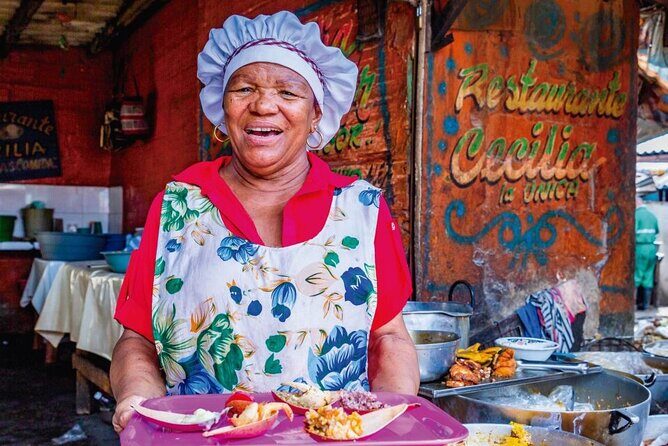
One review detail that’s useful: a lunch stop commonly mentioned by guests is Cecelia’s, described as delicious. Since the tour’s focus is the Anthony Bourdain-linked lunch spot in the market area, it’s a good sign that the meal is meant to be part of the story, not an afterthought.
Important practical note from real experience accounts: the market and crowded streets can be a place for theft attempts. If you do this tour, treat it like a day where you should go light. Skip flashy jewelry. Keep valuables tucked away. One guest had a necklace ripped off during the market transition, and the guide reportedly went out of their way to try to help track it down later—yet the best outcome is preventing the problem in the first place.
Price and pacing: what $67 gets you in 3 hours
At $67 per person for about 3 hours (and booked on average 38 days in advance), this is good value if you like two things: seeing the old city with an actual narrative, and eating a meal that’s tied to local market life.
Here’s why it feels worth it:
- You get multiple major zones (Walled City, Getsemaní, and the Bazurto market) without having to piece together directions and research.
- You get lunch included at the market area that’s connected to Anthony Bourdain’s favorite spot.
- It’s private, meaning only your group participates. That often translates into a better pace match—more time for a question, less time waiting behind other tour groups.
One pacing reality to know: this is a short tour. The market lunch portion may not feel like an hour of open-ended browsing. If your dream is to spend a long time photographing stalls and learning every ingredient, you might want extra time on your own later.
Who this tour fits best (and who should choose another plan)
This tour fits you well if:
- You’re a first-timer who wants high-impact sightseeing without a full-day commitment.
- You like history, but you also want the day to end with food and street life.
- You prefer a private guide where you can ask questions and move at your group’s pace.
You might want to consider a different option if:
- You hate walking in heat and crowds, even with shade breaks.
- You want a long, detailed market walkthrough rather than a lunch-focused market visit.
- You’re the type who expects every part to be perfectly smooth—some routes can involve short rides between areas, and comfort varies with vehicle size.
Should you book this Cartagena tour?
I’d book it if you want the best “starter mix” for Cartagena: Walled City landmarks, Getsemaní neighborhood stories, and a lunch at Mercado de Bazurto tied to Anthony Bourdain’s food reputation. At $67, you’re paying for time, guidance, and access to a local-meal moment you can’t easily reproduce on your own without research.
Book it with two assumptions: you’ll be walking, and the market portion is centered on lunch rather than an all-day shopping tour. If that matches what you want, you’ll likely feel like you got your bearings fast and ate like Cartagena.
FAQ
FAQ
What time does the tour start?
The tour starts at 10:00 am.
Where is the meeting point?
The meeting point is Plaza de San Diego, Cl. 39 #809, San Diego, Cartagena de Indias, Bolívar, Colombia.
How long is the tour?
It lasts about 3 hours.
How much does it cost?
The price is $67.00 per person.
Is this tour private?
Yes. It’s described as a private tour/activity, so only your group participates.
Are any admissions required for the stops?
The tour lists admission ticket free for the stops provided.
What’s included in the experience?
It includes a full tour with lunch at the market area associated with Anthony Bourdain’s favorite spot.
Is it okay if I use public transportation?
Yes, the activity is described as near public transportation.
Are service animals allowed?
Yes, service animals are allowed.
Do I need good weather?
Yes. The experience requires good weather. If it’s canceled due to poor weather, you’ll be offered a different date or a full refund.
Can I cancel for a full refund?
Yes. You can cancel up to 24 hours in advance for a full refund.