REVIEW · CARTAGENA
ULTIMATE FULL CITY TOUR with ANTHONY BOURDAIN’s STYLE LUNCH
Book on Viator →Bookable on Viator
Cartagena hits your senses fast—and this tour feeds that fast. You’ll spend about 3 hours moving through classic squares and churches in the Walled City, then cut into Getsemaní, finishing at Bazurto Market for a set lunch that’s all about real local flavors.
I especially like the way it gives you both the postcard Cartagena and the harder side, using landmarks tied to the slave trade and human rights. I also like the lunch setup: no menu wandering, just a straightforward plate at Bazurto Market that keeps the day from turning into a food-hunt marathon.
One drawback to consider: this is hot, humid, and walk-heavy. If you’re sensitive to long foot time in the sun, or if you’d rather avoid wet-market smells and mud, think carefully before booking.
In This Review
- Quick take: what makes this tour work
- The 3-hour rhythm: how the route actually feels
- Walled City starts at San Diego Plaza: your orientation shortcut
- Walled City squares: Clock Tower, cathedral power, and the slavery route
- Getsemaní: Plaza de la Trinidad and the legends that explain a neighborhood
- Bazurto Market lunch: strong smells, set plates, and why locals like it
- Walking pace, heat, and comfort tips that matter
- Price and value: what you’re paying for (and what’s included)
- Who this tour fits best
- Should you book this Anthony Bourdain-style lunch tour?
- FAQ
- How long is the tour?
- What time does it start, and where does it begin?
- Does the price include lunch?
- Is the tour private?
- What language is the tour offered in?
- What if the weather is bad or you need to cancel?
Quick take: what makes this tour work

- Walled City orientation in one go: you hit the Clock Tower area and major squares without getting lost on your own.
- A slavery-history route, not just pretty streets: key stops connect commerce, churches, and emancipation landmarks.
- Getsemaní nightlife energy by daylight: Plaza de la Trinidad sets the mood with local life and street legends.
- Bazurto lunch is included: you eat typical Cartagena food right where locals shop.
- Private tour for your group: only your group participates, so the pacing tends to feel more controlled.
- Expect conditions at a market: wet ground and strong smells are part of the experience for some people.
The 3-hour rhythm: how the route actually feels
This isn’t a “sit-down and admire” tour. It’s a walk-first experience, stitched together by short stops and big changes in atmosphere. You start in the San Diego neighborhood in the historic center area around 10:00 am, then transition from colonial stone and grand plazas into the livelier streets of Getsemaní, and finally end at Bazurto Market for lunch.
The pace makes sense for Cartagena: you’ll cover a lot of ground in a short time, and you’ll also be moving through neighborhoods that feel different by the hour. Early on, the Walled City delivers architecture and orientation. Later, Getsemaní shifts toward music, food, and street-level energy. By the time you reach Bazurto, you’re in full “eat where the action is” mode.
One practical tip: wear shoes you don’t mind getting scuffed. In the Walled City you’ll be on uneven old streets. At the market you may deal with wet patches and muddy-looking areas—exactly the kind of detail that can ruin a day if you show up in delicate sandals.
Other Anthony Bourdain style food tours in Cartagena


Walled City starts at San Diego Plaza: your orientation shortcut
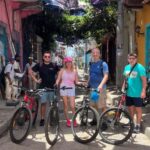
Your meeting point is at Plaza de San Diego, right in the historic center. The area works as a smart launch pad because it’s tied to real city life, not just tourist paths. In this plaza area you’ll find the Santa Clara hotel and the Higher School of Fine Arts, housed in older buildings connected to the San Diego convent (built in 1608).
I like this kind of start because it helps you get your bearings fast—and Cartagena’s Walled City is easy to feel turned around once you start following streets branching in every direction. Starting here also puts you close to the neighborhood streets that lead naturally into the squares you’ll visit next.
From there, the tour feeds you straight into the core Walled City experience: churches, colonial houses with wrought-iron balconies, bright squares, and iconic landmarks like the Clock Tower. If you’ve got limited time, this is the part of Cartagena where a guide really earns their keep—because you’re not just seeing buildings, you’re learning how to mentally map the whole area.
Walled City squares: Clock Tower, cathedral power, and the slavery route
The Walled City section is where the tour really earns its “full-city” promise. You’ll pass through major squares that function like outdoor rooms—each one tied to a specific slice of Cartagena’s story.
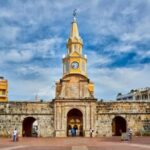
- Clock Tower / Golden Key area: The Clock Tower is an easy anchor. Once you know where it sits in your mental map, the rest of the old city starts to click. You’ll also hear references to the Golden Key of Cartagena and nearby plaza transitions.
- Plaza Santo Domingo: This square sits at the heart of the old city. It’s named for the Church of Santo Domingo and lined with colonial-style buildings that look great in photos—but more importantly, they show you how the old city concentrated power and community around civic space.
- Proclamation Square (Cathedral Square): Here you connect the dots between religious and government authority. You’ll see the Cathedral of Saint Catherine of Alexandria and the Cabildo of Cartagena (government headquarters for Bolívar).
- Simón Bolívar Park / Plaza: The park area is described as one of the oldest urban parks in Cartagena and a hub for several landmark buildings around it. You’ll hear the names connected to the palace of the Inquisition and the Zenú Gold Museum, among others. Even if you’re not going inside everything, the way the tour strings these together helps you understand why this section mattered.
Then comes the darker, more important thread: slavery-era commerce and its physical footprint in the city. The route includes references to the old Customs Square, where marketing merchandise—including that of slaves—was historically important. You’ll see significant civic buildings there, including the Municipal Hall.
You also pass the Portal de Los dulce, described as symbolizing women’s activity during slavery times and traditions carried forward by descendants. And you’ll reach Saint Peter Claver, known as Slave of Slaves. You’ll see the architecture of the church and museum-monastery tied to his name and described as a Headquarters of Human Rights.
I appreciate tours that don’t stop at the aesthetic. Cartagena’s colonial charm has a cost behind it. This itinerary doesn’t pretend otherwise—it threads those facts into the geography, so the history lives where you’re standing.
One note for your expectations: this isn’t a “quick photo stops only” route. You’ll walk through the spaces and absorb what each place represented. That’s valuable, but it also means you’re on your feet longer and thinking more.
Getsemaní: Plaza de la Trinidad and the legends that explain a neighborhood
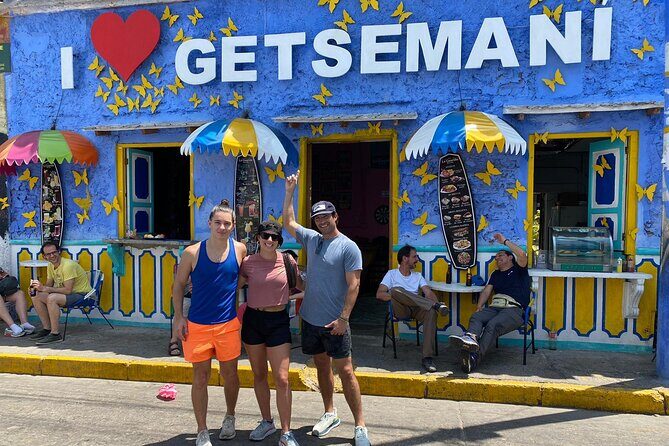
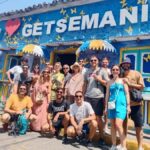
After the Walled City, the tour shifts to Getsemaní, centered on Plaza de la Trinidad (also where the tour ends). Getsemaní has a reputation for local life that hasn’t been fully smoothed over for visitors, and the itinerary leans into that.
This plaza is described as a lively public square, with families living in the same houses for generations and a nightlife scene that includes chatting, fast food sales, and even aerobics and Zumba-type workouts when energy rises in the neighborhood.
I also like that the tour gives you stories that help the neighborhood make sense. One example: a street legend about a giant rattlesnake. The story goes that in 1608 a mayor dedicated time to watching the street because something crawling with a bell was rumored—until he discovered the snake. Whether you treat it as legend or folklore, it adds personality to the streets you’ll actually walk.
You’ll also connect the plaza name to the Church of the Holy Trinity (founded in 1643). Later, the Cabildo decided it would be called Liberty Square in honor of inhabitants supporting an independence feat in 1811. Then you get the entertainment side too: public fandangos, decorated floats, music, and the idea of “goddesses.” It’s the kind of neighborhood storytelling that makes the place feel lived-in, not staged.
If your plan is to experience Cartagena beyond the obvious historic postcard, Getsemaní is the right pivot. Just keep in mind that by afternoon and evening the energy can rise quickly. If you’re tired, it helps to have realistic expectations about noise and motion near the square.
Bazurto Market lunch: strong smells, set plates, and why locals like it
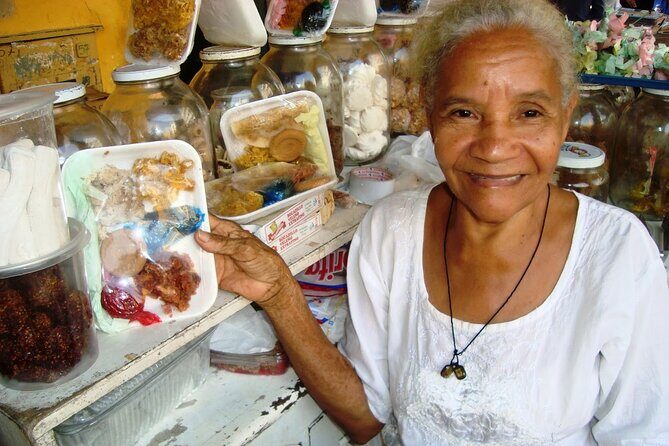
The tour ends at Mercado de Bazurto, framed as the heart of the market where you’ll eat typical Cartagena-style food. This is the part of the tour that feels most like a “food day” experience rather than a museum day.
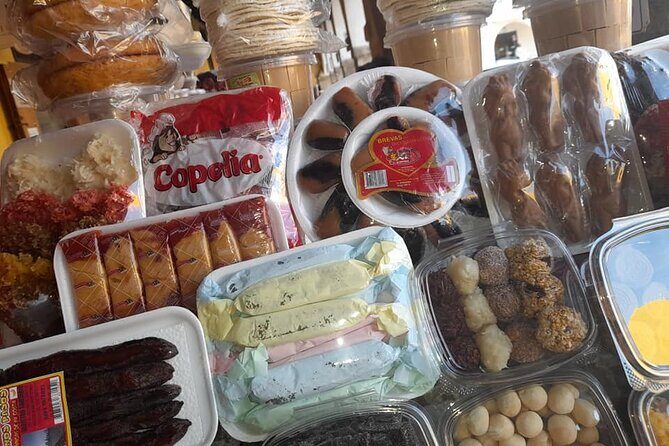
You’ll be eating a set lunch—not a choose-your-own-adventure menu. Typical dishes mentioned include meat, chicken, seafood, fish, and other local items. In one firsthand account included in the overall feedback, the meal was described as fried fish with coconut rice, shredded cabbage, and sweet plantain.
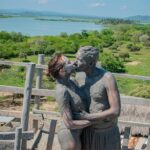
Now for the honest part: markets don’t politely hold back. One of the strongest negative notes tied to this tour is about the market’s condition—described as wet, muddy, dingy, and smelly, with a small hole-in-the-wall setup and a tiny sink for hand-washing. That won’t match everyone’s idea of a “nice lunch.”
Still, that’s also the appeal for many people. Bazurto is where you watch Cartagena’s food system in motion. If you want authenticity over comfort, this is the right landing spot. If you’re expecting a clean, curated restaurant, you’ll likely feel disappointed.
My advice: go with your expectations tuned to a working market. Bring your appetite, accept the environment, and focus on the food rather than trying to judge the place like a dining room.
Other city tours we've reviewed in Cartagena


Walking pace, heat, and comfort tips that matter
This experience depends on good weather and involves a walking tour through multiple stops. Cartagena can be brutally warm and humid, and the itinerary includes long stretches where shade isn’t guaranteed.
One person flagged that the walking can feel arduous in heat and humidity, with only a small water bottle provided. Even without that exact situation happening to you, plan to bring your own water if you’re the type who gets dry easily.
There’s also an important practical note from the feedback you should take seriously: one account said the guide has narrow angle glaucoma with limited peripheral vision. The person described moments where they felt the guide was unaware of their exact position when they stopped to look around.
I can’t verify anything beyond what’s written, but you can still act smart. If you prefer a guide who can fully monitor your group members at every pause, or if you have specific needs, consider asking the operator ahead of time how they handle regrouping and sightlines.
Bottom line: this is best for people who are comfortable with walking, staying flexible in hot weather, and accepting market conditions as part of the deal.
Price and value: what you’re paying for (and what’s included)
At $67 per person for about 3 hours, value comes down to two things: what’s free and what’s included.
The itinerary indicates that some major stops in the Walled City and Getsemaní have admission free (at least for the tour’s ticketed aspects). The meal at Bazurto is covered with admission ticket included, meaning your lunch is part of the price rather than an extra cost you have to hunt for.
You’re also getting an English-language guide and a private tour for your group. That combination can be a good deal in a city where you otherwise might pay for a guide just to get oriented.
If you do like to walk and you’re hungry for a market-food lunch, $67 can feel fair. If you’d rather take your time in fewer places, or if you want a cleaner, more polished food stop, you may feel the money isn’t matching your comfort level.
One more practical point: the tour is often booked in advance (around 8 days on average). If your trip dates are firm, I’d reserve early so you don’t get stuck with fewer time options.
Who this tour fits best

This is a strong match if you:
- want one guided loop covering Walled City landmarks, Getsemaní energy, and a market lunch
- like food that’s local and set rather than “restaurant hopping”
- enjoy learning why places matter, even when the subject is difficult (slave trade and human rights landmarks)
It’s a tougher fit if you:
- hate wet-market conditions or strong smells
- need a very low-walking plan
- are uncomfortable with uneven streets and weather-dependent timing
If you’re a solo traveler, the private group format can also help you feel less alone on the streets. You’re not stuck finding your way while tired and hot.
Should you book this Anthony Bourdain-style lunch tour?
I’d book it if you want a Cartagena day that’s equal parts orientation, neighborhood story, and market lunch—and you’re okay with rough edges like heat, walking, and working-market smells.
I’d think twice if your idea of a great lunch is spotless surroundings and lots of choice, because this ends at Bazurto with a set plate and the reality of a market environment. And if you rely on the guide to keep eyes on everyone during stops, it’s worth checking how regrouping works, given the accessibility note shared in feedback.
If you’re the type who likes to travel with your senses switched on—and you don’t need everything to feel comfortable—this tour can be a memorable way to spend your limited time.
FAQ
How long is the tour?
It runs for about 3 hours.
What time does it start, and where does it begin?
It starts at 10:00 am at Plaza de San Diego (Cl. 39 #809, San Diego, Cartagena de Indias).
Does the price include lunch?
Yes. The market stop includes admission ticket included and you’ll eat a set lunch at Mercado de Bazurto.
Is the tour private?
Yes. It’s listed as a private tour/activity, meaning only your group will participate.
What language is the tour offered in?
It’s offered in English.
What if the weather is bad or you need to cancel?
It requires good weather. Free cancellation is available, and you can cancel up to 24 hours in advance for a full refund.